Vaishno Devi and the Cave of the Goddess
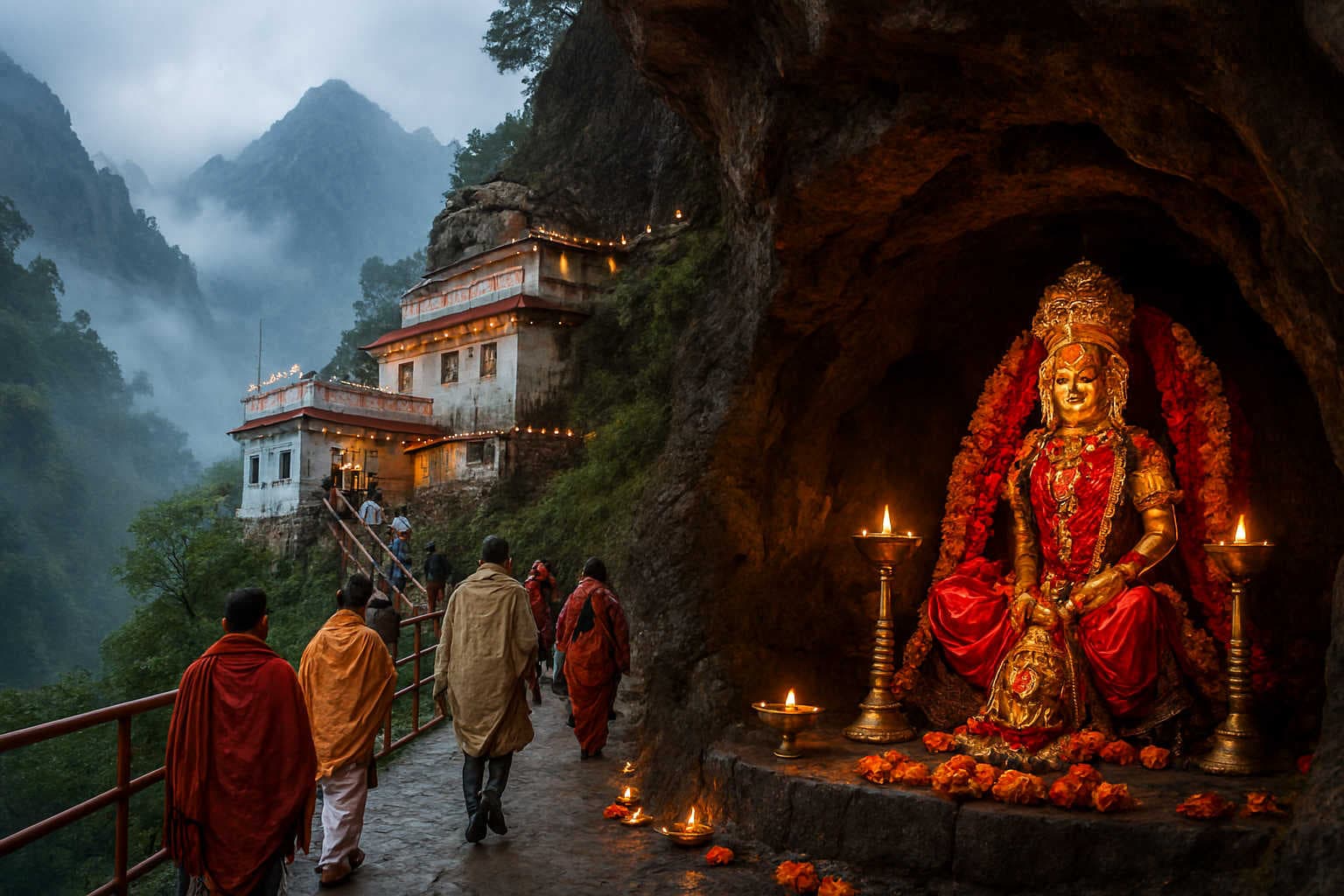
Nestled in the triple peaks of the Trikuta Mountains in Jammu and Kashmir, the sacred shrine of Vaishno Devi is one of India’s most revered Shakti Peeths. Millions of devotees visit the temple every year, trekking through rugged Himalayan terrain to seek the blessings of the Goddess, who embodies divine energy, protection, and fulfillment of wishes. The cave of Vaishno Devi holds mythological, spiritual, and cultural significance, making it a central site for Hindu devotion and Shakti worship.
The Legend of Vaishno Devi
According to Hindu mythology, Vaishno Devi is an incarnation of Goddess Shakti, created to destroy evil and protect righteousness. During the time of Tarkasura, a demon who terrorized the world, the Goddess manifested in the form of Vaishnavi to restore cosmic balance. She chose the remote Trikuta Mountains as her dwelling, providing a safe haven for devotees and a site of spiritual refuge.
The Goddess instructed her devotees to seek her in the cave, where she could provide blessings and guidance. Vaishno Devi’s energy is said to reside in the cave, accessible to all sincere seekers who approach with devotion, humility, and faith.
Spiritual Significance of the Cave
-
Place of Divine Power: The cave is a spiritual epicenter, radiating Shakti energy that purifies the mind, body, and soul.
-
Path of Devotion: The trek to the cave symbolizes devotion, discipline, and perseverance, reminding devotees that spiritual fulfillment requires effort and focus.
-
Connection with the Goddess: The sanctum inside the cave houses the triple rock formations (Pindies) representing the three forms of the Goddess—Maha Kali, Maha Lakshmi, and Maha Saraswati, signifying divine completeness.
The Pilgrimage Experience
The journey to Vaishno Devi is both physical and spiritual. Devotees trek about 12 kilometers uphill from the base at Katra, passing through forests, streams, and rugged mountains. The pilgrimage teaches several lessons:
-
Persistence: The challenging climb symbolizes overcoming obstacles on the spiritual path.
-
Faith: Sincere devotion and trust in the Goddess bring spiritual strength and blessings.
-
Community: Pilgrims often travel together, sharing experiences, prayers, and mutual support, reflecting unity in faith.
Rituals and Worship
Inside the cave, rituals are focused on honoring the Goddess and seeking her blessings:
-
Darshan of the Pindies: The rock formations symbolize the Goddess’s omnipresence, and devotees offer flowers, saffron, and prayers.
-
Aarti and Bhajans: Devotional songs and prayers are sung daily, creating a sacred and immersive spiritual atmosphere.
-
Prasad and Offerings: Devotees offer coconuts, sweets, and other items as a gesture of devotion, gratitude, and humility.
Mystical Aspects of Vaishno Devi
Several mystical elements surround the cave:
-
Trikuta Peaks: The Goddess resides in the heart of these three mountains, emphasizing divine protection from all directions.
-
Natural Phenomena: Many devotees report miraculous experiences, visions, and blessings during the trek and inside the cave.
-
Energy Vibration: The cave is believed to radiate a unique Shakti vibration, elevating the consciousness of those who enter with devotion.
Cultural and Historical Significance
Vaishno Devi has been a spiritual center for centuries, influencing Hindu culture, traditions, and pilgrimage practices:
-
Inspiration for Faith: The story of the Goddess inspires courage, righteousness, and devotion among millions.
-
Integration with Local Culture: The pilgrimage promotes cultural continuity, local economy, and hospitality traditions.
-
Enduring Spiritual Legacy: The site continues to preserve the essence of Shakti worship, blending mythology, devotion, and community practice.
Philosophical Insights
The cave and the pilgrimage offer profound spiritual lessons:
-
Effort and Devotion: Spiritual attainment is proportional to one’s devotion, effort, and sincerity.
-
Overcoming Fear: Trekking through steep paths and enduring hardships symbolizes overcoming internal fears and challenges.
-
Divine Presence in Nature: The natural surroundings remind devotees that divinity is everywhere, not confined to temples or idols.
-
Unity of Shakti: The Pindies represent the triple energies of the Goddess, highlighting that divine power is multifaceted and all-encompassing.
Lessons from Vaishno Devi
-
Faith Transcends Obstacles: Devotion helps overcome physical, mental, and spiritual challenges.
-
Perseverance Yields Blessings: The trek to the cave mirrors life’s journey, teaching patience and resilience.
-
Inner Purity and Humility: True connection with the Goddess comes from a pure heart and humble mind.
-
Spiritual Community: Shared devotion strengthens bonds among pilgrims and promotes collective spiritual growth.
Conclusion
The story of Vaishno Devi and the cave of the Goddess is a testament to the enduring power of faith, devotion, and divine protection. Nestled in the Himalayas, the cave offers spiritual refuge, purification, and blessings for all who seek the Goddess with sincerity.
The pilgrimage emphasizes that the divine is both accessible and challenging to reach, requiring effort, perseverance, and devotion. Vaishno Devi teaches that true spiritual fulfillment is earned through dedication, humility, and trust, making the cave and the Goddess an eternal symbol of Shakti worship in India.