Why Lord Jagannath has no Hands
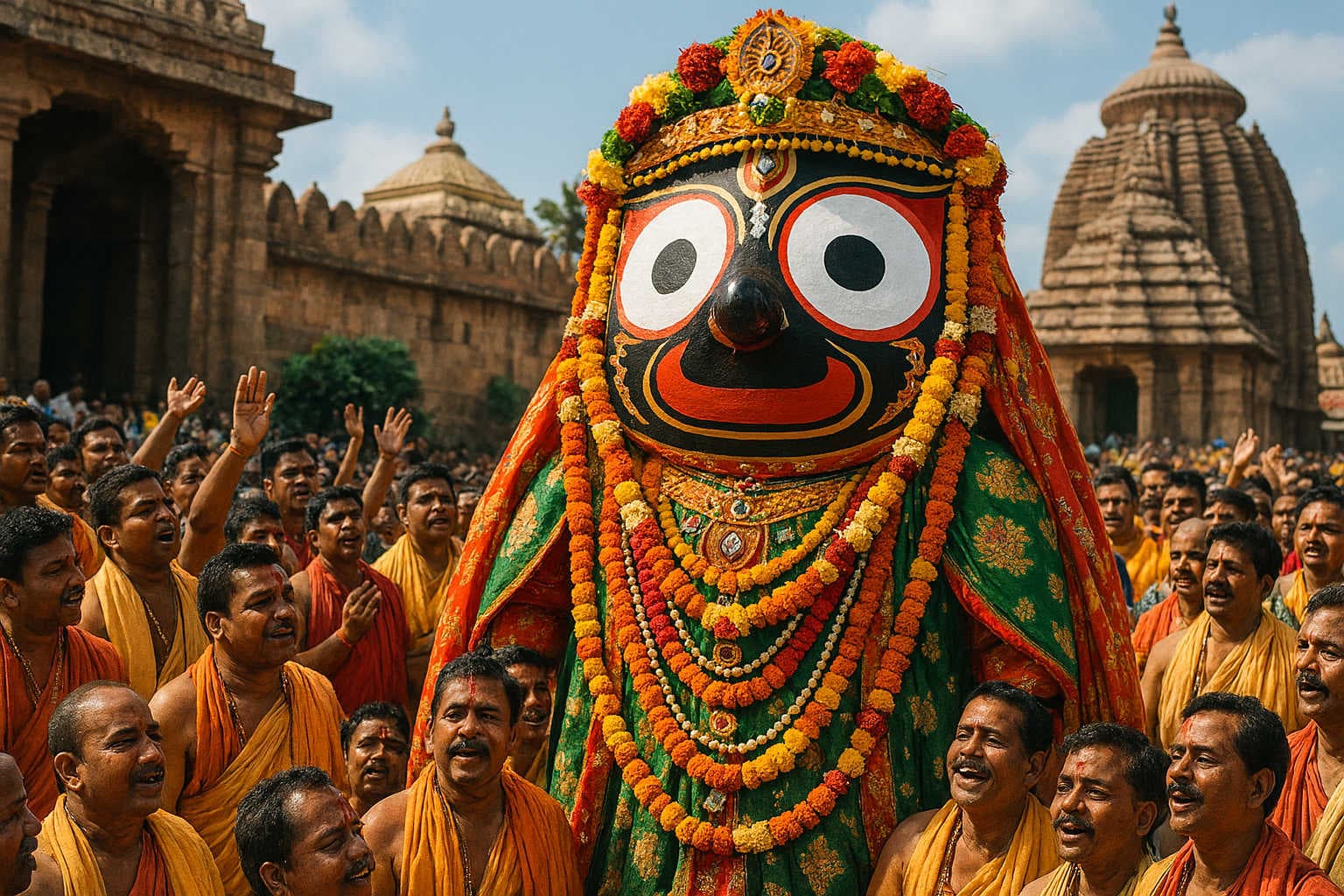
Lord Jagannath, the presiding deity of Puri in Odisha, is one of the most revered figures in Hinduism. The idol is instantly recognizable for its unique appearance, particularly its large round eyes and the absence of hands and legs, which has intrigued devotees and scholars for centuries. The story behind this distinctive form is as fascinating as it is spiritual, weaving together devotion, artistry, and divine symbolism.
The Legend of Lord Jagannath’s Idol
According to tradition, the King of Puri, or sometimes a wealthy devotee, wished to have a deity idol for the temple that would embody the divine presence of Lord Krishna. The king entrusted the creation of the idol to a skilled artisan named Vishwakarma, the celestial architect known for crafting divine objects and idols.
Vishwakarma worked meticulously on the idol, using sacred wood and following intricate guidelines. As the legend goes, he poured immense devotion and skill into creating a perfect representation of the Lord. Yet, just as he was about to finish the idol, he was summoned to another divine task. Fearing that the idol might lose its sanctity if left incomplete, he abandoned the work midway, leaving the hands and legs unfinished. When the idol was consecrated in the temple, it was complete in its divine essence, but without human-like hands and legs.
Symbolic Interpretations
-
Omnipresence and Omnipotence
The absence of hands symbolizes that Lord Jagannath is beyond physical limitations. He does not need hands to bless, protect, or guide his devotees. His omnipresence transcends material form, teaching that divine power does not rely on human anatomy. -
Universal Accessibility
Without hands, the deity is approachable to all devotees, symbolizing equality. It conveys that the Lord’s blessings are not restricted by rituals or physical proximity, and anyone, irrespective of status, can connect spiritually. -
Spiritual Focus
The simple, abstract form shifts focus from physical attributes to spiritual essence. Devotees are reminded to see beyond the material, understanding that true devotion lies in the heart rather than the visual perfection of the idol. -
Mystery and Devotion
The unfinished nature invites curiosity, reflection, and personal engagement. Devotees meditate on the divine mysteries, contemplating the presence of God in forms beyond ordinary human understanding.
Cultural and Ritual Significance
Lord Jagannath’s form has inspired unique rituals and festivals, making Puri a major pilgrimage site. Some of the cultural highlights include:
-
Ratha Yatra (Chariot Festival): The annual chariot festival celebrates Jagannath’s journey to his aunt’s temple. The absence of hands is believed to symbolize his readiness to accept the devotees’ love and pull him closer, as thousands gather to pull the massive chariots.
-
Wooden Idol Tradition: The idol is crafted from Neem wood, and every twelve years it is replaced in a sacred ritual called Nabakalebara, ensuring that the divine energy continues in a new wooden form. The process reflects the cyclical nature of life and the eternal presence of God.
-
Eye Symbolism: The large round eyes of Jagannath are always open, signifying eternal vigilance and compassion. It is said the deity sees all beings equally and protects them continuously, even without the use of physical hands.
Philosophical Perspective
In Hindu philosophy, forms of deities often carry symbolic meanings. Lord Jagannath’s incomplete form represents the idea that divinity cannot be fully captured by human understanding. While physical features may be missing, his spiritual completeness is absolute.
The absence of hands and legs also aligns with the concept that God acts through the universe and through devotees, rather than through physical manipulation. Worshippers are encouraged to offer service, devotion, and action, which become instruments of the divine will.
Lessons from Lord Jagannath’s Form
-
Faith Beyond Form: Devotion is about inner connection, not the perfection of external idols.
-
Equality and Inclusion: Divine grace is accessible to all, transcending societal boundaries.
-
Acceptance of Mystery: The unfinished form teaches humility and the acceptance of life’s mysteries.
-
Action Through Devotion: Without hands, the Lord’s work continues through the hearts and actions of devotees.
Conclusion
The story of why Lord Jagannath has no hands is more than a legend—it is a profound spiritual lesson. It reminds devotees that divine power transcends physical form, that blessings are universal, and that true devotion lies in understanding the essence rather than the outer appearance.
Whether through rituals, festivals like Ratha Yatra, or personal meditation, Lord Jagannath continues to inspire faith, humility, and love, demonstrating that God’s work and protection are ever-present, even without hands.