Birth of Goddess Lakshmi from Ocean
In the vast pantheon of Hindu mythology, Goddess Lakshmi occupies a special place as the embodiment of wealth, prosperity, and fortune. Her birth is intertwined with one of the most celebrated cosmic events—the Samudra Manthan, or the churning of the ocean of milk. This tale not only reflects divine drama but also conveys deep symbolic meaning about balance, effort, and reward.
The Cosmic Churning – Samudra Manthan
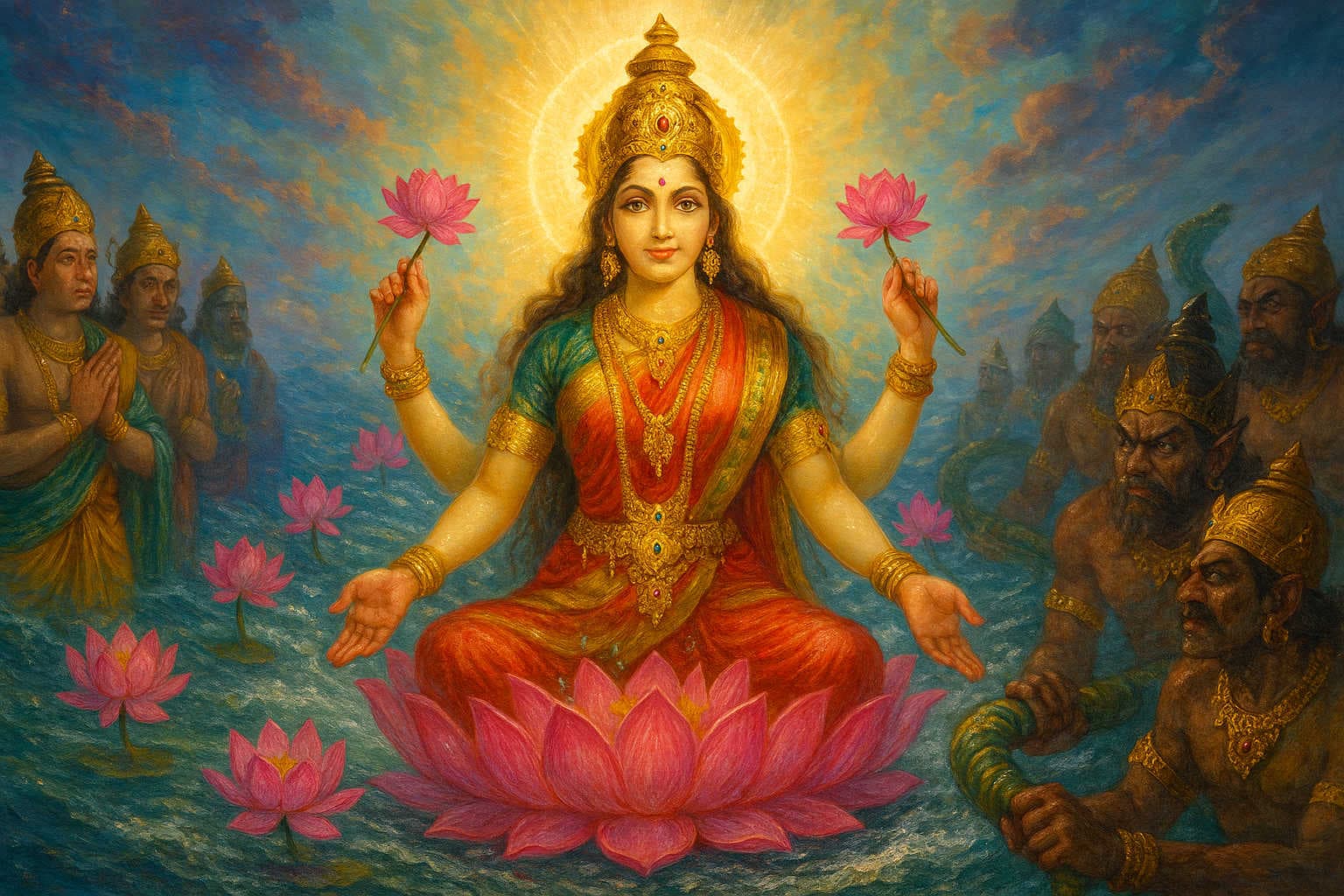
The story begins with the Devas (gods) and Asuras (demons) who were in constant conflict over supremacy in the universe. To obtain the Amrit (nectar of immortality), they needed to churn the Ksheer Sagar (Ocean of Milk). Mount Mandara was used as the churning rod, and Vasuki, the serpent king, became the churning rope.
This monumental task symbolized cooperation despite differences, as both Devas and Asuras had to work together to achieve a higher goal. However, the ocean was vast and turbulent, and the process gave rise to several divine objects and beings before the Amrit emerged.
The Emergence of Goddess Lakshmi
As the ocean was churned, the first to emerge was Goddess Lakshmi, radiant and divine, seated on a lotus flower. Her beauty, grace, and charm captivated all the celestial beings. The Devas and Asuras alike were mesmerized by her presence.
Lakshmi, the goddess of prosperity, wealth, and good fortune, chose Lord Vishnu as her eternal consort. Her selection symbolizes the union of energy (Lakshmi) with cosmic order and preservation (Vishnu), establishing harmony and balance in the universe.
Symbolism of Lakshmi’s Birth
The birth of Lakshmi carries deep philosophical and spiritual symbolism:
-
Emergence from Turbulence – Just as Lakshmi arose from the churning of the ocean, wealth and prosperity come after effort, struggle, and perseverance.
-
Lotus as Purity – The lotus on which Lakshmi sits represents purity and spiritual awakening amidst the material world.
-
Divine Union – Her marriage to Vishnu signifies the importance of balance between energy and consciousness, essential for universal stability.
-
Fertility and Abundance – Lakshmi embodies not only material wealth but also spiritual wealth, harmony, and well-being.
Other Celestial Gifts from the Ocean
Before the emergence of the Amrit, several divine objects and beings arose during the churning:
-
Airavata, the celestial elephant.
-
Kaustubha, the precious gem.
-
Parijata, the divine flowering tree.
-
Chandra, the moon.
-
Uchhaishravas, the seven-headed horse.
These gifts, along with Lakshmi, symbolize prosperity, beauty, and divine blessings that arise from effort and collaboration.
Worship and Significance of Goddess Lakshmi
Goddess Lakshmi is revered across India and is worshipped in various festivals, with Diwali being the most prominent. On Diwali, devotees light lamps and offer prayers to invite her blessings of wealth, prosperity, and happiness into their homes.
The story of her emergence reminds devotees that wealth and success require both devotion and action. The ocean symbolizes the subconscious mind, effort represents churning of karma, and Lakshmi’s arrival represents the reward for spiritual and material diligence.
Lakshmi in Hindu Philosophy
Goddess Lakshmi is also associated with the Ashta Lakshmi, the eight forms of prosperity, including:
-
Adi Lakshmi – primal energy.
-
Dhana Lakshmi – wealth and riches.
-
Dhanya Lakshmi – agricultural abundance.
-
Gaja Lakshmi – strength and power.
-
Santana Lakshmi – progeny and family welfare.
-
Veera Lakshmi – courage and valor.
-
Vijaya Lakshmi – success and victory.
-
Vidya Lakshmi – knowledge and wisdom.
This further illustrates that true prosperity encompasses not only material wealth but also courage, wisdom, and spiritual richness.
Lessons from the Story
-
Effort Precedes Reward – Prosperity does not emerge effortlessly; it is the result of dedication and perseverance.
-
Harmony in Duality – Cooperation between opposing forces can lead to extraordinary outcomes.
-
Purity in Wealth – True prosperity is ethical, balanced, and serves a higher purpose.
-
Divine Blessings – Devotion, integrity, and spiritual alignment invite abundance and well-being.
Cultural Impact
Temples dedicated to Goddess Lakshmi across India, such as Lakshmi Narayan Temples, often depict her emergence from the ocean, symbolizing her divine origin and cosmic importance. During Navratri and Diwali, her images and idols are worshipped with devotion, and rituals include lighting lamps, offering sweets, and chanting mantras like “Om Shreem Mahalakshmiyei Namah”.
Her story continues to inspire devotees to pursue diligence, maintain ethical conduct, and seek divine grace for success in both spiritual and worldly pursuits.
Conclusion
The story of Goddess Lakshmi’s birth from the Ocean of Milk is a timeless reminder that prosperity, wealth, and divine blessings emerge from effort, balance, and devotion. She exemplifies grace, purity, and abundance, teaching us that true success integrates material, spiritual, and ethical dimensions.
As we honor Lakshmi through worship and festivals, we celebrate not just wealth but also devotion, perseverance, and the eternal union of divine energy with cosmic order.