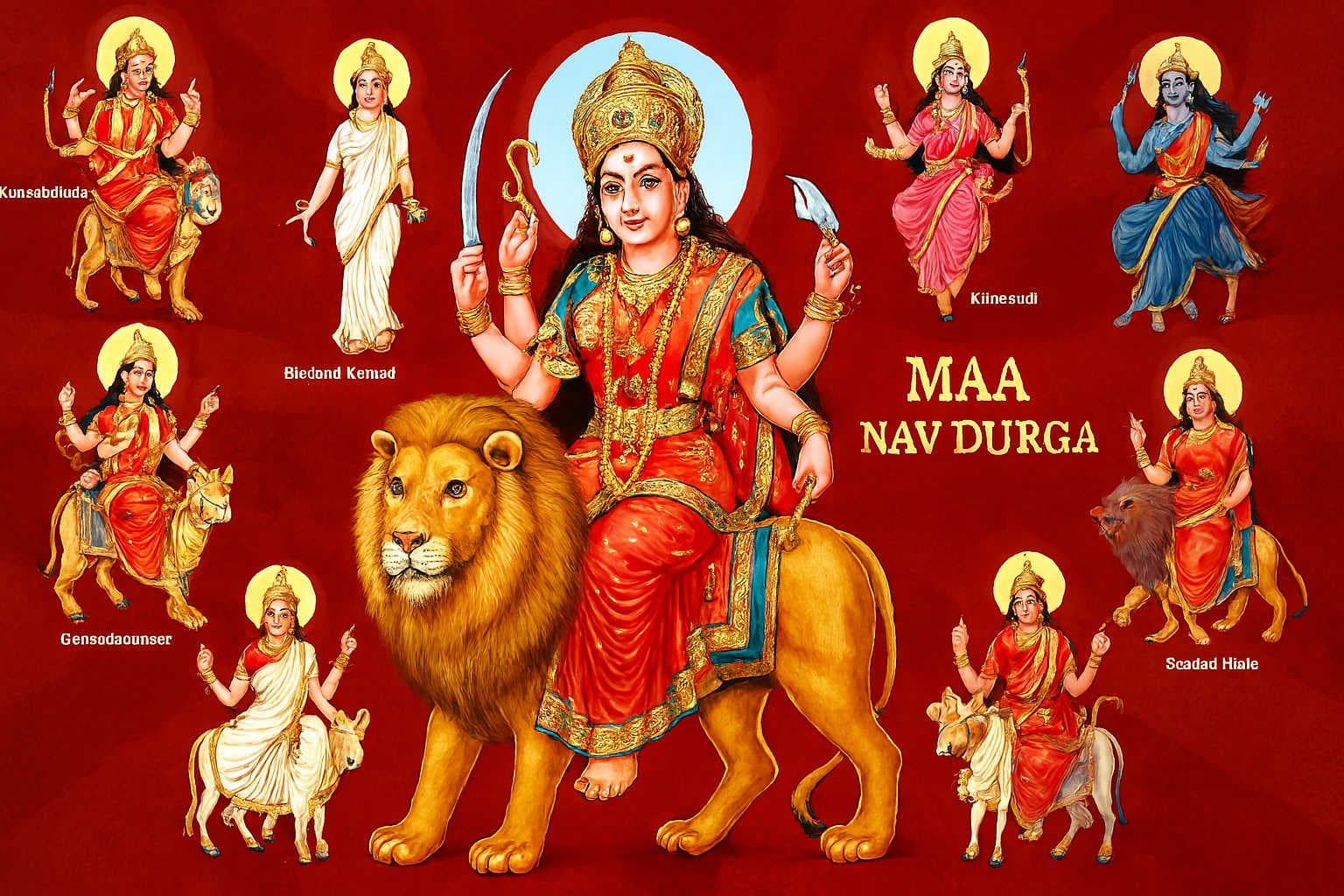
The Nine Forms of Devi – Navdurga Tales
Navdurga, the nine forms of Goddess Durga, represent the divine feminine energy in its nine different manifestations. Each form has a unique significance, story, and spiritual symbolism. These forms are worshipped during Navratri, the nine-night festival celebrated with devotion across India. Let us explore the fascinating tales behind each of these nine forms.
1. Shailaputri – Daughter of the Mountain
The first form of Devi is Shailaputri, meaning Daughter of the Mountain. She is the incarnation of Sati, the consort of Lord Shiva, who took birth as the daughter of King Himavat after sacrificing herself in her previous life.
Depicted riding a bull and holding a trident and lotus, she signifies strength and devotion. Shailaputri is worshipped on the first day of Navratri to establish purity and determination in the devotee’s heart.
2. Brahmacharini – The Ascetic Goddess
On the second day, devotees worship Brahmacharini, the form of Goddess Durga who performed severe penance to obtain Lord Shiva as her consort. She symbolizes austerity, penance, and discipline.
Clad in white, she holds a japa mala (rosary) and a kamandal (water pot), reminding devotees of the power of meditation and perseverance. Her story teaches that true devotion requires patience and self-control.
3. Chandraghanta – The Warrior Goddess
The third form is Chandraghanta, recognized by the crescent moon on her forehead. She rides a tiger and holds weapons in her ten hands, symbolizing courage and valor.
Chandraghanta’s story is linked to her marriage with Shiva when she adorned a crescent moon on her forehead as a sign of marital bliss. Worshipping her removes fears and instills confidence and bravery.
4. Kushmanda – The Creator of the Universe
The fourth form, Kushmanda, is believed to have created the universe with her divine smile. She is depicted with eight arms holding various weapons and a rosary, riding a lion.
Her name means “the one who created the cosmic egg,” symbolizing the origin of life and light. Devotees seek her blessings for health, wealth, and positivity.
5. Skandamata – The Mother of Skanda
On the fifth day, Goddess Skandamata, the mother of Lord Kartikeya (Skanda), is worshipped. She is portrayed carrying her child in her lap while riding a lion.
She represents the nurturing aspect of motherhood, offering peace and harmony to her devotees. Worshipping her is believed to grant wisdom and salvation.
6. Katyayani – The Fierce Protector
The sixth form is Katyayani, born to the sage Katyayana to destroy the demon Mahishasura. She is a fierce warrior goddess, symbolizing strength and courage.
Katyayani rides a lion and holds a sword, lotus, and weapons in her hands. Her tale teaches that righteousness will always triumph over evil.
7. Kalaratri – The Dark Night Goddess
The seventh day honors Kalaratri, the fiercest form of Durga, also known as the goddess of destruction of darkness. With a dark complexion, disheveled hair, and a fearless posture, she rides a donkey.
She represents the power that destroys ignorance and negativity, paving the way for light and knowledge. Despite her terrifying form, she blesses devotees with protection and fearlessness.
8. Mahagauri – The Goddess of Purity
The eighth form, Mahagauri, symbolizes beauty, purity, and peace. She is portrayed as fair and serene, riding a bull and holding a trident and damaru (drum).
Mahagauri removes sins and purifies the soul. Her worship brings calmness, prosperity, and spiritual enlightenment.
9. Siddhidatri – The Bestower of Siddhis
On the final day, devotees worship Siddhidatri, the goddess who grants siddhis (supernatural powers) and spiritual knowledge. Seated on a lotus, she holds a discus, conch, mace, and lotus.
She completes the manifestation of Shakti and blesses her devotees with wisdom, liberation, and ultimate fulfillment.
Spiritual Significance of Navdurga
The nine forms of Devi together signify the journey of the soul from earthly existence to ultimate liberation:
-
Shailaputri to Skandamata: Represents the growth of strength, discipline, and love.
-
Katyayani to Kalaratri: Symbolizes courage and the destruction of negativity.
-
Mahagauri to Siddhidatri: Marks purification and attainment of spiritual powers.
Navratri is not just a festival of rituals; it is a spiritual transformation through the worship of these nine divine aspects.
Lessons from Navdurga
-
Inner Strength: Each form teaches us to face challenges with courage.
-
Purity and Devotion: True devotion is rooted in humility and discipline.
-
Victory of Good over Evil: No matter how strong negativity seems, divine energy always prevails.
Conclusion
The Navdurga tales remind us of the immense power of the divine feminine and the universal truth that dharma (righteousness) always triumphs. Worshipping the nine forms of Devi during Navratri purifies the mind, strengthens the soul, and leads to spiritual awakening.