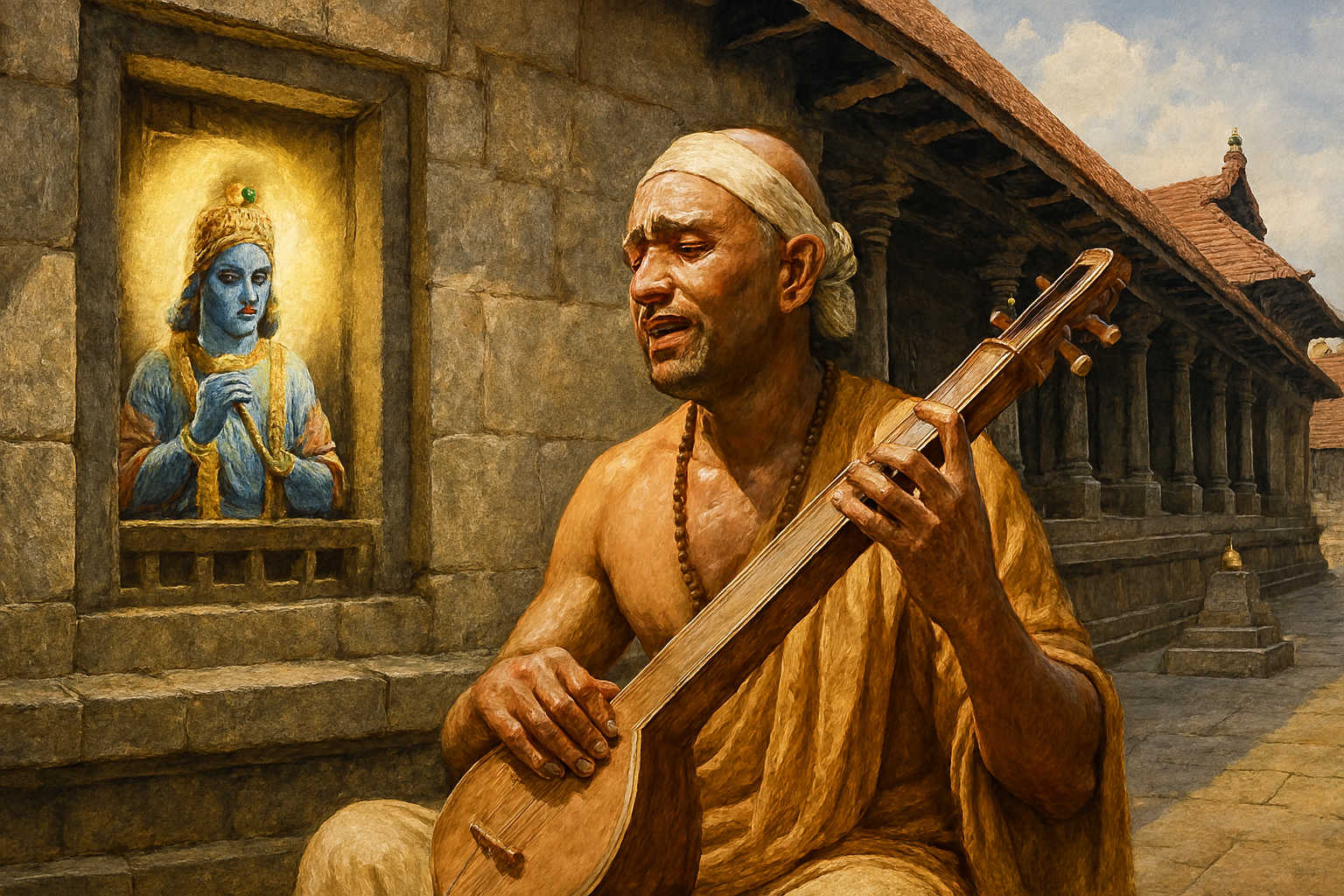
Bhakta Kanakadasa – Krishna’s Devotee
The Bhakti movement in India gave birth to many saints and devotees whose lives were dedicated to God and the upliftment of humanity. Among these illustrious devotees stands Bhakta Kanakadasa, a poet-saint, philosopher, and an ardent devotee of Lord Krishna. His life is a testimony to the power of faith, humility, and devotion that transcends caste, status, and societal barriers.
Who Was Kanakadasa?
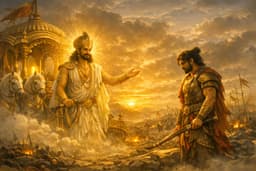
Kanakadasa was born in the 16th century in present-day Karnataka, India, in a community considered to be of a lower social status. Despite the limitations imposed by society, Kanakadasa rose to prominence through his spiritual wisdom, musical compositions, and unwavering devotion to Lord Krishna. His original name was Thimmappa Nayaka, and he was a warrior by birth. However, a profound spiritual experience changed the course of his life, turning him into a saint and a poet.
Kanakadasa became a prominent figure of the Haridasa movement, which spread the message of devotion (Bhakti) to Lord Vishnu and his incarnations through simple Kannada compositions that common people could understand and sing.
The Spiritual Awakening
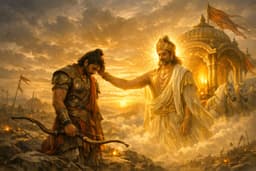
As a young man, Thimmappa Nayaka was a brave warrior serving under a local chieftain. One day, during a battle, he was severely injured and came close to death. This near-death experience shook him and made him question the purpose of life. Realizing the futility of worldly power and possessions, he renounced material life and dedicated himself to the service of God.
He adopted the name Kanakadasa, meaning “servant of gold,” symbolizing the pure golden heart devoted to God. His devotion to Lord Krishna became the center of his existence, and he composed countless kirtanas (devotional songs) in Kannada, praising the Lord and spreading spiritual wisdom.
Kanakadasa and Udupi Krishna Temple
One of the most famous incidents from Kanakadasa’s life occurred at the Udupi Krishna Temple. At that time, caste-based discrimination was deeply entrenched in society, and people from certain communities were not allowed inside temples.
Kanakadasa, despite being a great saint and poet, was denied entry into the temple because of his birth in a so-called lower caste. He was heartbroken but did not protest. Instead, he sat humbly outside the temple, near the back wall, singing heartfelt bhajans to his beloved Krishna. His devotion was so pure and intense that it moved Lord Krishna Himself.
According to legend, the idol of Udupi Sri Krishna, which originally faced east toward the temple entrance, miraculously turned west, creating a small window in the wall to grant darshan to Kanakadasa. This window is now known as the Kanakana Kindi (Kanaka’s window) and remains open to this day, reminding devotees that true devotion has no barriers.
Teachings of Kanakadasa
Kanakadasa’s compositions, written in simple Kannada, reflect deep philosophical truths and moral values. Some of the key teachings from his life and works are:
-
Equality Before God – He strongly opposed caste discrimination and taught that devotion is the only qualification for divine grace.
-
Humility and Surrender – True devotion requires complete surrender and a humble heart.
-
Moral Integrity – Kanakadasa’s songs emphasize honesty, righteousness, and compassion in everyday life.
-
Bhakti Over Rituals – He advocated devotion and pure love for God over empty rituals and social status.
His songs are still sung in Karnataka and other parts of South India, and they remain a source of spiritual inspiration for countless devotees.
Famous Compositions
Kanakadasa wrote many devotional songs, known as Kirtanas and Ugabhogas, in the Kannada language. Some of his well-known works include:
-
“Krishna Nee Begane Baro” – A beautiful plea to Lord Krishna to come quickly and bless the devotee.
-
“Baro Krishnaiah”
-
“Baagilanu Teredu”
These compositions blend melody with deep spiritual meaning, making them timeless treasures of devotional literature.
Legacy and Cultural Impact
Kanakadasa is celebrated not only as a saint but also as a social reformer who challenged the rigid caste system through his life and teachings. His emphasis on equality and devotion has influenced generations of saints and poets.
The Kanakana Kindi at Udupi stands as a symbol of divine acceptance of all devotees, regardless of birth or status. Every year, thousands of pilgrims visit this sacred window to seek blessings, remembering the saint whose faith moved the Lord.
In Karnataka, Kanakadasa’s birth anniversary is observed as Kanaka Jayanti, honoring his contribution to spirituality, literature, and social harmony.
Lessons from Kanakadasa’s Life
-
Faith Moves Mountains – True devotion can break all barriers, even those imposed by society.
-
God Sees the Heart, Not Status – Birth and caste hold no value in the eyes of the divine.
-
Devotion and Music as Paths to Liberation – Kanakadasa’s songs remain powerful vehicles for expressing love for God.
Modern Relevance
Kanakadasa’s message of equality, humility, and devotion is as relevant today as it was centuries ago. In a world divided by social and economic differences, his life teaches us to see beyond external labels and focus on the inner purity of the soul.
Conclusion
Bhakta Kanakadasa’s life is an eternal reminder that God belongs to those who love Him with a pure heart, not to those who boast of birth or wealth. His story, enshrined in the sacred Kanakana Kindi, continues to inspire millions to embrace faith, humility, and selfless devotion.