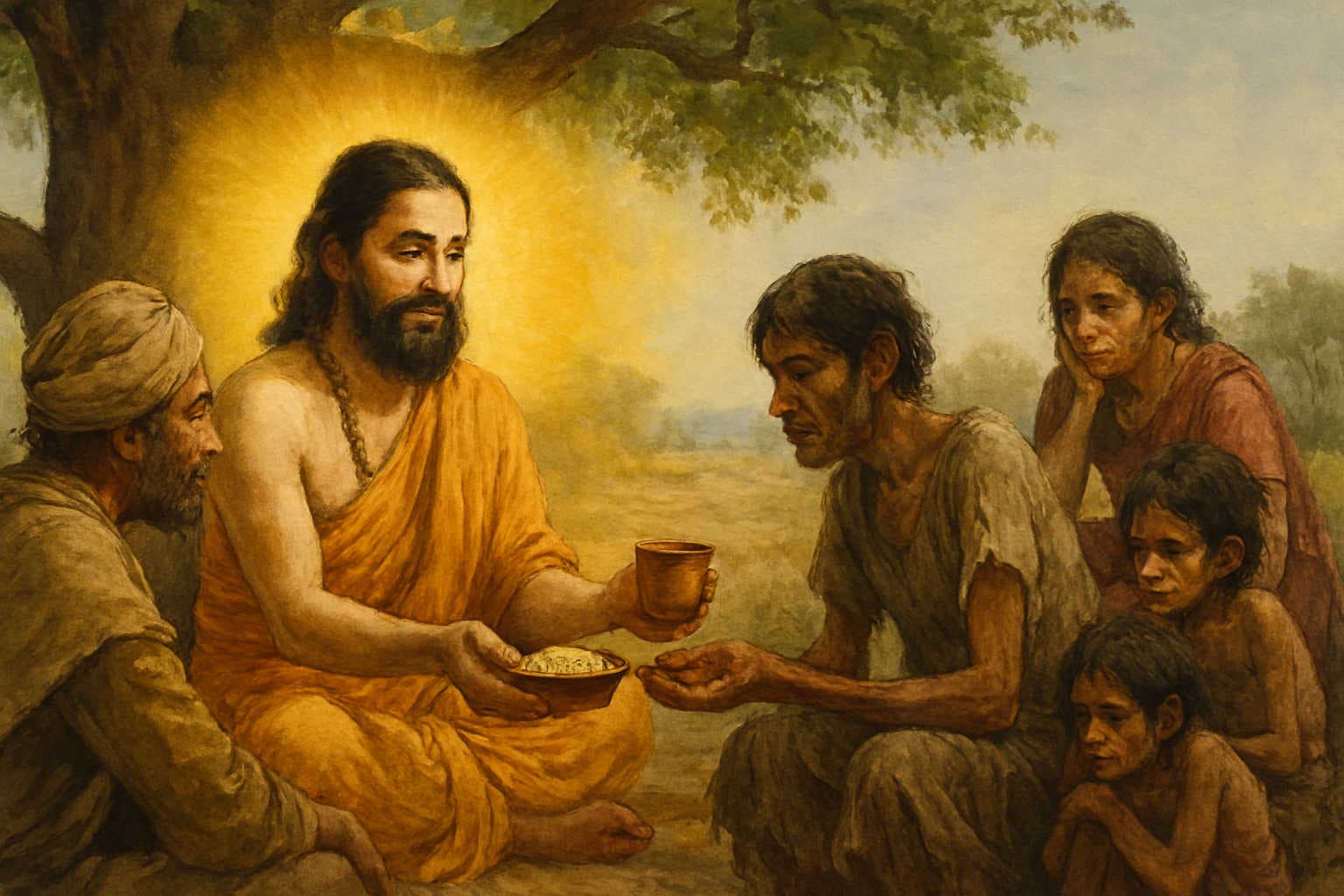
Story of King Rantideva – Selfless Service
In the vast ocean of Hindu mythology, there are numerous tales of kings and sages who upheld the highest virtues. Among these noble souls stands King Rantideva, remembered not for his wealth or power, but for his unparalleled spirit of selflessness and compassion. His story, narrated in the Bhagavata Purana, teaches us that the greatest offering is not riches, but a heart full of love and devotion.
Who Was King Rantideva?
Rantideva belonged to the Chandravanshi dynasty and ruled with righteousness and compassion. Though he was a king, he led a life of simplicity and humility, always caring for his subjects and serving those in need. His fame was not for conquests or grand palaces, but for his unwavering hospitality and charitable nature. He considered service to others as service to God.
Rantideva believed that the purpose of life is to alleviate the suffering of others, and he lived by this principle every single day.
The Test of Hardship
One day, destiny decided to test the depth of Rantideva’s compassion. The king, who had always lived generously, gradually lost all his wealth due to famine and unfavorable circumstances. With no riches left, he and his family were reduced to extreme poverty. Yet, even in this state, Rantideva never complained or cursed his fate. He accepted suffering as a divine arrangement and kept his faith unshaken.
For forty-eight days, Rantideva and his family endured hunger and thirst, surviving only on air and meditation. Finally, on the forty-ninth day, some people brought him a small portion of food and a little water. For someone who had not eaten for so long, this meal was nothing short of life-saving. Yet, Rantideva’s story was about to reveal its true glory.
The Acts of Selflessness
As Rantideva prepared to eat, a hungry Brahmin arrived at his hut, seeking food. Without a second thought, the king offered him a portion of his meal. The Brahmin ate and left, and Rantideva sat down again to eat the remaining food.
Before he could take a bite, another needy person appeared, asking for food. Once again, Rantideva gave away a portion of what remained. Then came a Chandala (an outcaste) with his dogs, requesting food for himself and his animals. Rantideva, without hesitation, gave away the last morsel of food meant for him and his family.
By now, only the water remained. Just as he was about to drink, a thirsty man arrived, pleading for water. Rantideva looked at the man’s parched lips and burning eyes. He smiled gently and handed over the last drop of water, saying:
“I do not desire from the Supreme Lord the highest position or liberation from suffering. My only wish is to remain among all living beings and share their pain, removing their sorrow.”
Such was the depth of his selflessness. Even in the face of death, he placed the needs of others above his own.
The Divine Revelation
As soon as Rantideva gave away the last drop of water, the men who had come disguised as beggars transformed into Lord Vishnu and his attendants. The gods had orchestrated this test to see if the king’s compassion was genuine or conditional.
Overwhelmed with devotion, Rantideva bowed before them. Vishnu blessed him, saying that his name would live on for eternity as an example of pure devotion and selfless service. The famine ended, and Rantideva regained his kingdom, but he remained humble, continuing to serve others until the end of his life.
Lessons from Rantideva’s Life
The story of Rantideva is not just an ancient tale; it is a timeless guide for living a meaningful life. Here are the core lessons it teaches:
-
Selflessness is the Highest Virtue – True service comes from giving without expectation, even when we ourselves have little.
-
Contentment in Adversity – Rantideva never cursed his fate; instead, he turned his suffering into an opportunity for service.
-
Service as Worship – For Rantideva, helping others was not charity; it was devotion.
-
Empathy for All Beings – His compassion extended not just to humans but even to animals, showing universal love.
Cultural Significance
The story of Rantideva is widely celebrated in Bhakti literature, emphasizing that devotion is not about grand rituals or wealth but about love and selflessness. His name is often invoked as an example of true surrender and humility.
Modern Relevance
In today’s world, where materialism and self-interest dominate, the story of Rantideva inspires us to put humanity first. It reminds us that real wealth lies not in possessions, but in the ability to share, care, and uplift others, even in our own hardships.
Conclusion
King Rantideva’s life is a shining beacon of compassion, faith, and unconditional love. His story teaches us that the greatest offering to God is a heart that beats for others. When we serve selflessly, we reflect the divine within us.