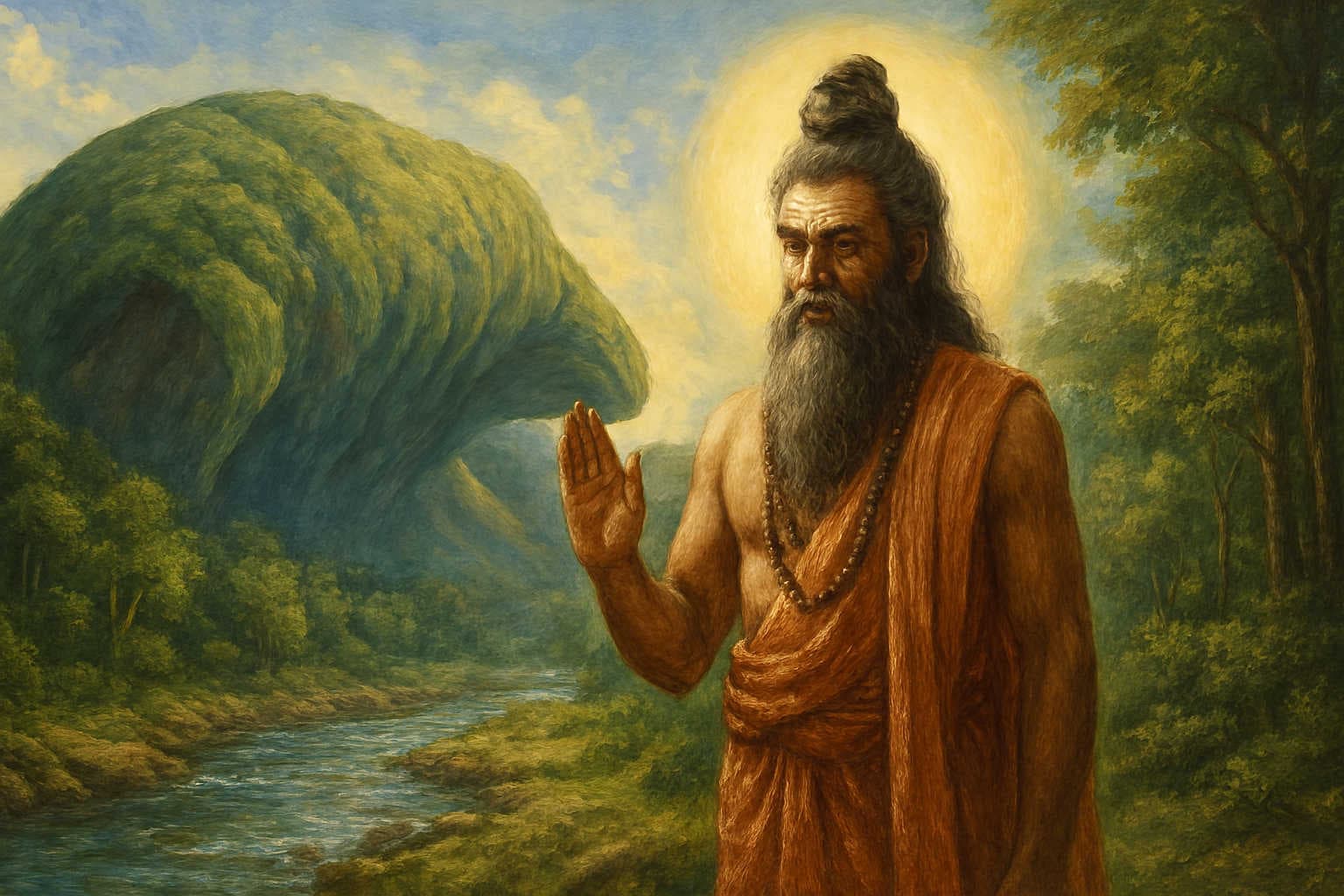
Sage Agastya and the Vindhya Mountains – The Story of Humility and Balance
Hindu mythology is rich with stories that explain not just cosmic phenomena but also moral lessons for life. One such fascinating tale is that of Sage Agastya and the Vindhya Mountains. This story is not only symbolic but also holds deep spiritual meaning, blending geography, humility, and wisdom into a timeless narrative.
The Vindhya Mountains – A Natural Wonder
The Vindhya mountain range is an important geographical feature in India, separating the northern plains from the southern plateau. In ancient times, these mountains were considered mighty and magnificent, towering high and dominating the landscape. According to Hindu mythology, the Vindhya range was not just a physical entity but had a personality and pride of its own.
The Cause of Arrogance
The story begins with the Vindhya mountains developing a sense of ego and rivalry. It is said that Vindhya felt jealous of the mighty Himalayas, which were revered as the abode of Lord Shiva and the most celebrated mountains in Hindu scriptures. Vindhya wanted to become taller than the Himalayas and gain equal respect from sages and gods.
Driven by pride, the Vindhya mountains began to grow higher and higher, challenging the Himalayas in stature. As the mountains kept rising, they blocked sunlight and made life difficult for living beings on earth. The growing arrogance of Vindhya threatened the balance of nature and the harmony of creation.
The Concern of Sages and Gods
As Vindhya continued to rise, the sages and celestial beings grew concerned. They feared that if Vindhya kept growing, it would obstruct the sun and disturb the entire cycle of seasons. This could bring disaster to life on earth.
To resolve this crisis, the gods and sages decided to approach Sage Agastya, one of the seven great sages (Saptarishis) known for his wisdom, humility, and power. They knew that only Agastya could humble the Vindhya mountains without a conflict.
Who Was Sage Agastya?
Sage Agastya was a revered sage in Hindu tradition, known for his immense knowledge, spiritual strength, and ability to balance forces of nature. He played a key role in spreading Vedic knowledge to the southern part of India and is often credited with introducing Tamil culture to Vedic wisdom. His name is associated with many legends, including the drinking of the ocean during the churning of the sea and subduing powerful beings with his wisdom.
Agastya’s Clever Approach
Agastya understood that direct confrontation with Vindhya would not work, as arrogance cannot be destroyed by force but only through humility and wisdom. He devised a simple yet powerful plan.
One day, Agastya decided to travel from north India to the south. On his way, he reached the Vindhya mountains. The mountains, proud of their height, greeted the sage with respect because Agastya was a highly revered figure. Agastya spoke to Vindhya politely and said:
"O mighty Vindhya, I am on a journey to the southern lands. Your towering height makes it difficult for me to cross. Please bow down and make a passage for me so I can proceed without trouble."
Vindhya, eager to show respect to the great sage, lowered its height and bowed before Agastya. The sage then crossed over the mountain and continued his journey.
The Final Request
Before leaving, Agastya made a clever request:
"Vindhya, please remain in this lowered position until I return from my southern journey."
Vindhya, bound by its word and respect for the sage, agreed. Agastya, however, never returned to the north. He settled in the south, spreading knowledge and performing penance. As a result, the Vindhya mountains remained in their lowered position forever, restoring balance to nature.
Significance of the Story
This beautiful tale carries multiple layers of meaning:
-
Lesson in Humility: Pride and arrogance, no matter how powerful, can be subdued by wisdom and humility.
-
Balance in Nature: The story explains why the Vindhya mountains are not as tall as the Himalayas.
-
Symbolism of Agastya’s Role: Sage Agastya represents the guiding wisdom that maintains harmony in creation.
-
Cultural Integration: Agastya’s journey to the south symbolizes the spread of Vedic knowledge to southern India.
Spiritual Interpretation
On a deeper level, the Vindhya mountains represent the ego that obstructs the light of knowledge (symbolized by the sun). Agastya, the wise sage, represents spiritual wisdom that humbles the ego and restores balance in life.
Legacy of Sage Agastya
Even today, Sage Agastya is revered as the father of Tamil literature and a great rishi of immense power. Numerous temples and traditions in South India honor his contribution. The story of Agastya and Vindhya stands as an eternal reminder that true greatness lies in service, humility, and balance, not in mere size or pride.
Conclusion
The story of Sage Agastya and the Vindhya mountains is more than a myth—it is a timeless lesson for humanity. It teaches us that arrogance can cloud judgment, but wisdom can restore harmony without violence. Agastya’s cleverness and humility show us the path of peaceful resolution and the importance of balance in both nature and life.