The Vamana Avatar – Humbling of King Bali
The Vamana Avatar is one of the most fascinating incarnations of Lord Vishnu, symbolizing humility, wisdom, and the triumph of Dharma over arrogance. Appearing as a dwarf Brahmin, Vamana subdued the mighty demon king Mahabali (King Bali) not through war or violence, but through intelligence and divine grace. This story, rooted in the Vishnu Purana, Bhagavata Purana, and other scriptures, conveys timeless lessons on pride, generosity, and the ultimate surrender to the divine.
Who Was King Bali?
King Bali, the grandson of Prahlada (the ardent devotee of Vishnu), was an Asura king known for his courage, generosity, and devotion. Unlike most demons, Bali was righteous and deeply committed to his duties. Through immense penance and valor, he conquered all three worlds – Earth, Heaven, and the Netherworld – and dethroned Indra, the king of the Devas.
Though benevolent, Bali’s growing power alarmed the Devas. Fearing that his dominance would disrupt the balance of the universe, they approached Lord Vishnu for help. Vishnu, who always protects Dharma, decided to curb Bali’s pride in a way that would preserve his honor and teach an eternal lesson in humility.
The Boon of Generosity
Bali was renowned for his generosity. He never turned away anyone seeking alms, especially during a grand Ashwamedha Yajna he performed to assert his supremacy. Taking advantage of this, Vishnu devised a unique plan.
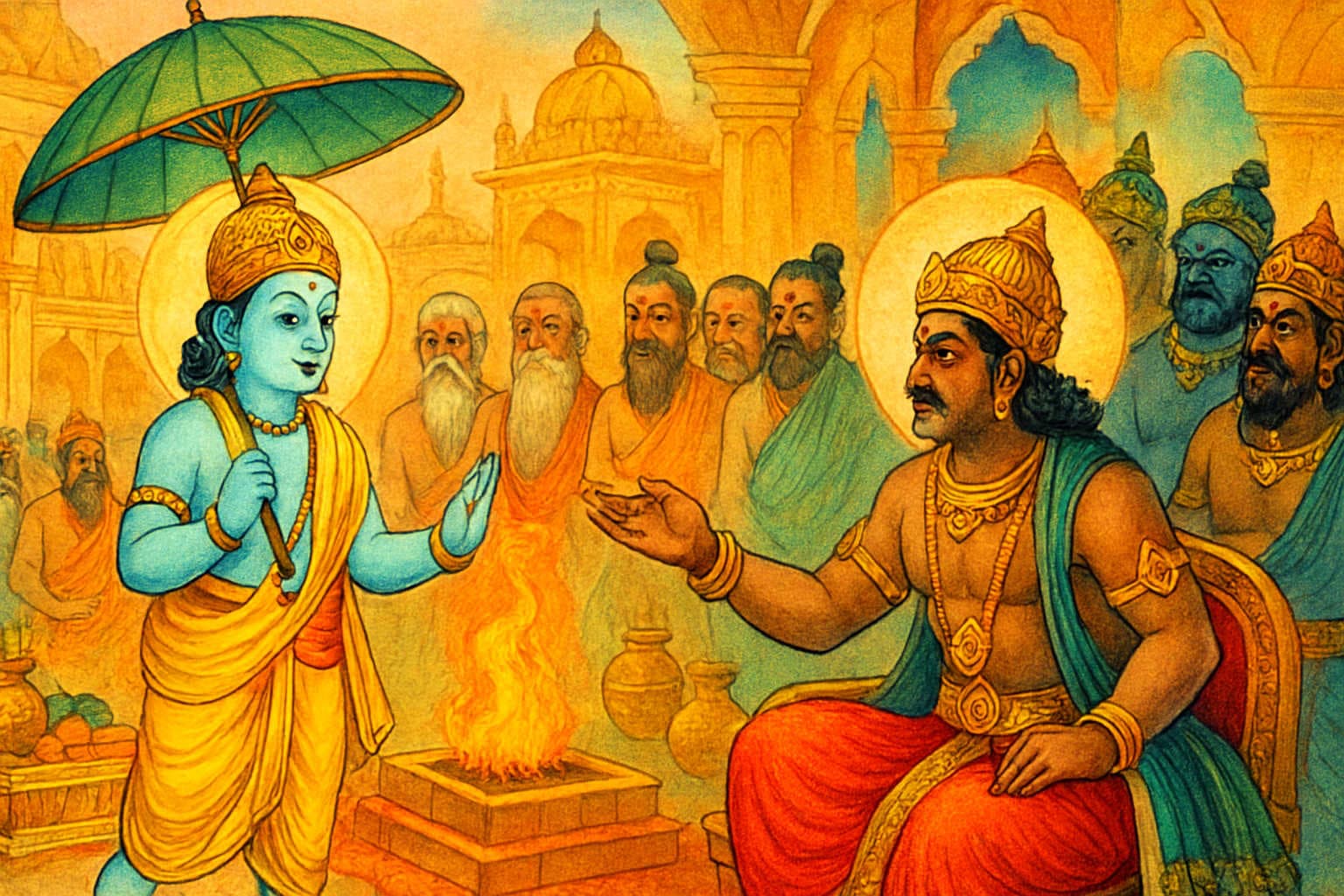
Instead of waging war, Vishnu incarnated as Vamana, a short-statured Brahmin boy, wearing simple robes and carrying an umbrella. This fifth avatar of Vishnu approached King Bali during the yajna.
The Arrival of Vamana
As Bali was offering gifts to Brahmins, Vamana entered the sacrificial hall radiating divine brilliance despite his dwarf form. Everyone was drawn to his presence. With folded hands and humility, Vamana asked:
"O great king, I seek only a small gift – three paces of land measured by my feet."
Hearing such a modest request, Bali laughed. For a king who ruled the three worlds, granting three steps of land seemed insignificant. Despite warnings from his Guru Shukracharya, who sensed divine play, Bali kept his word and agreed.
The Transformation – Cosmic Vamana
The moment Bali granted the boon, a miraculous transformation occurred. Vamana began to grow in size, expanding into a gigantic cosmic form. In his first stride, he covered the entire Earth. With his second, he spanned the heavens. There was no space left for the third step.
Humbled and awestruck, Bali realized Vamana was none other than Lord Vishnu. Keeping his promise, Bali bowed and offered his own head for the third step. Vishnu placed his foot gently on Bali’s head, pushing him to Sutala (a lower realm), but not as punishment. Instead, Vishnu blessed him to become the king of that realm and granted him immortality and honor.
The True Spirit of Devotion
Though Bali lost the heavens, he won something greater – the Lord’s eternal grace. Vishnu, pleased by Bali’s devotion and integrity, promised to guard his kingdom personally. The Onam festival celebrated in Kerala honors Bali’s annual return to visit his people, marking his everlasting bond of love and devotion.
Symbolism of the Vamana Avatar
The Vamana Avatar is rich in symbolism and spiritual insight:
-
Humility Over Arrogance – Vamana, a dwarf, represents humility. His small form hid infinite power, teaching that true strength lies in simplicity.
-
The Futility of Possession – Even the greatest kings cannot claim ownership of the world. Everything belongs to the Divine.
-
The Power of Promise – Bali’s willingness to keep his word, even at the cost of his throne, showcases ultimate integrity.
-
Divine Justice Without Violence – Unlike other avatars that fought wars, Vamana restored Dharma through wisdom.
Lessons from the Story
-
Pride comes before a fall – Even noble deeds, if clouded by ego, lead to downfall.
-
True surrender wins divine grace – Bali’s humility transformed defeat into victory.
-
God’s ways are subtle yet supreme – The Lord achieves balance through the most unexpected means.
Vamana in Dashavatara
Vamana is the fifth avatar of Vishnu in the Dashavatara sequence, following Narasimha and preceding Parashurama. While earlier avatars dealt with physical threats, Vamana addressed a moral one – ego born of power.
Modern Relevance
In today’s world of ambition and dominance, the story of Vamana reminds us that humility and righteousness matter more than worldly conquests. True greatness lies in recognizing our limitations and surrendering to the ultimate truth.
Festivals and Worship
The story of Vamana and Bali is celebrated during Onam in Kerala, symbolizing equality, prosperity, and devotion. Temples dedicated to Vamana, such as Thrikkakara Vamana Moorthy Temple, hold special significance.
Key Takeaways
-
Humility triumphs over pride.
-
Generosity is virtuous only when free of ego.
-
Surrendering to the Divine brings eternal glory.
The tale of Vamana and King Bali remains one of the most inspiring legends in Hindu tradition, illustrating that God’s wisdom works in mysterious, yet profoundly just, ways.