Parikshit’s Birth and the Curse
The Mahabharata, after the devastating Kurukshetra war, leaves behind a trail of sorrow, broken relationships, and lessons for generations. While the Pandavas emerged victorious, their victory came at an unimaginable cost—the near extinction of the Kuru dynasty. In the midst of this destruction, one life was destined to carry the legacy forward—Parikshit, the grandson of Arjuna. His birth and eventual curse form a significant chapter in the epic’s concluding tale.
The Aftermath of the Kurukshetra War
The war of Kurukshetra was fought to restore dharma, but it wiped out almost the entire Kuru clan. The Pandavas lost all their sons—Abhimanyu, the valiant warrior and son of Arjuna, died heroically on the battlefield. His wife, Uttara, the princess of Matsya kingdom, was pregnant at the time. With Abhimanyu gone, her unborn child became the sole hope for the continuation of the Kuru lineage.
Ashwatthama’s Attack and Uttara’s Fear
After the war ended, Ashwatthama, son of Guru Dronacharya, enraged by his father’s death, vowed to destroy the Pandava line. One night, he entered the Pandavas’ camp and mercilessly killed the sons of Draupadi while they slept, mistaking them for the Pandavas. In his desperation for revenge, he then released the powerful Brahmastra—a celestial weapon—targeted at Uttara’s womb to kill the unborn child.
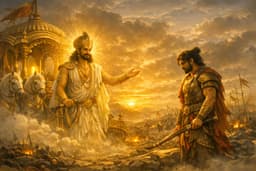
This moment was one of sheer terror. Uttara ran to Lord Krishna, crying for help. Her plea is recorded as one of the most emotional scenes in the Mahabharata.
Krishna Protects the Unborn Child
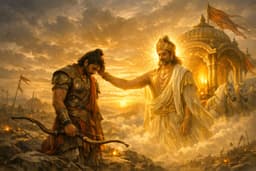
Moved by her anguish, Krishna promised to protect the child. Using his divine powers, Krishna shielded the womb of Uttara, absorbing the immense energy of the Brahmastra. The unborn child survived this lethal attack—a miracle that symbolized hope in a world ravaged by war.
The Birth of Parikshit
In due time, Uttara gave birth to a son. The child was named Parikshit, meaning “the one who has been tested.” His name reflected the extraordinary trials he faced even before birth. The Pandavas, devastated by their losses, found solace in this child. He became the beacon of continuity for the Kuru dynasty.
Why Was Parikshit Special?
Parikshit was not an ordinary child. Having been saved by Krishna’s divine intervention, he was blessed with strength, wisdom, and righteousness. As he grew, his qualities shone through—he was courageous, just, and deeply spiritual. Under the guidance of the Pandavas and sages, Parikshit became an exemplary ruler.
Pandavas’ Departure and Parikshit’s Coronation
After ruling Hastinapur for several years, the Pandavas decided to renounce worldly life and ascend to the Himalayas to seek liberation. Before leaving, they crowned Parikshit as the king of Hastinapur. This marked a new chapter for the kingdom—a time of peace and prosperity, but destiny had other plans.
The Hunting Incident – The Beginning of the Curse
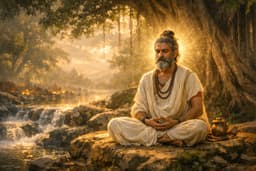
One day, King Parikshit went hunting in the forest. Exhausted and thirsty, he entered the hermitage of a sage named Shamika, who was in deep meditation. The king requested water, but the sage remained silent, absorbed in his penance. Feeling insulted and angry, Parikshit placed a dead snake around the sage’s neck as an act of mockery and left.
When the sage’s son, Shringi, learned about this disrespectful act, his rage knew no bounds. He cursed Parikshit: “On the seventh day from now, you will die from the bite of Takshaka, the king of serpents.”
Parikshit’s Repentance and Preparation
When Parikshit learned of the curse, he deeply regretted his impulsive action. Instead of clinging to his throne or seeking ways to escape fate, he chose to prepare for death in a spiritual way. He handed over the kingdom to his son, Janamejaya, and went to the banks of the Ganga to spend his last days in devotion.
It was during these seven days that Sage Shukadeva, son of Vyasa, narrated the sacred Bhagavata Purana to Parikshit. This discourse, filled with stories of Lord Vishnu and ultimate truths, granted him liberation from the cycle of birth and death.
The Fulfillment of the Curse
On the seventh day, despite all precautions, Takshaka came in disguise and entered the palace. He bit Parikshit, and the curse was fulfilled. The noble king left his mortal body with a peaceful heart, having immersed himself in the divine wisdom of the scriptures.
The Legacy of Parikshit
Though his life ended tragically, Parikshit is remembered as a righteous ruler who accepted the will of destiny with grace. His story gave rise to Janamejaya’s famous Sarpa Satra (Snake Sacrifice) and forms a vital connection between the Mahabharata and the Bhagavata Purana.
Lessons from Parikshit’s Life
-
Anger Brings Destruction – A moment of anger can change the course of life. Parikshit’s impulsive act invited doom.
-
Power of Repentance – True repentance and devotion can purify even the gravest mistakes.
-
The Inevitability of Destiny – No matter how powerful we are, we cannot escape the law of karma.
-
Faith in the Divine – Parikshit’s calm acceptance shows the strength of faith and surrender.
Why This Story Still Matters
Parikshit’s story teaches humility, the importance of controlling emotions, and the value of spiritual wisdom in facing life’s uncertainties. It reminds us that life is temporary, but righteous living and devotion can lead to eternal peace.