Ashwatthama and the Night Massacre
The Mahabharata is not only a saga of courage and dharma but also a story of intense human emotions—love, hatred, loyalty, and vengeance. Among its darkest episodes is the night massacre led by Ashwatthama, the son of Guru Dronacharya. This act of fury and revenge marked the tragic end of the Kurukshetra war, leaving behind deep scars on both sides.
Who Was Ashwatthama?
Ashwatthama was the only son of Dronacharya, the teacher of both Pandavas and Kauravas. Born with a gem on his forehead, he was blessed with immunity from hunger, thirst, and fatigue. A mighty warrior, he fought on the side of the Kauravas during the Kurukshetra war. He was deeply devoted to Duryodhana and had immense pride in his lineage and warrior skills.
But as the war unfolded, Ashwatthama faced multiple heartbreaks—his father’s death, the downfall of the Kauravas, and ultimately, the near-extinction of his friends and allies.
The End of the Kurukshetra War – The Trigger
By the 18th day, the war had ended. Duryodhana lay mortally wounded after his mace duel with Bhima. As Ashwatthama rushed to see him, the reality of defeat sank in. The Kaurava dynasty was shattered. Enraged and humiliated, Duryodhana urged Ashwatthama to take revenge on the Pandavas at any cost.
That moment of grief and rage planted the seed of one of the most gruesome acts in the Mahabharata.
The Vow of Revenge
Standing by Duryodhana’s side, Ashwatthama swore to annihilate the Pandavas and bring them the same pain he felt. His heart burned with vengeance. Accompanied by Kritavarma and Kripacharya, Ashwatthama left for the Pandava camp under the cover of darkness.
What followed was an act that defied the rules of warfare and shocked even the gods.
The Night Massacre Begins
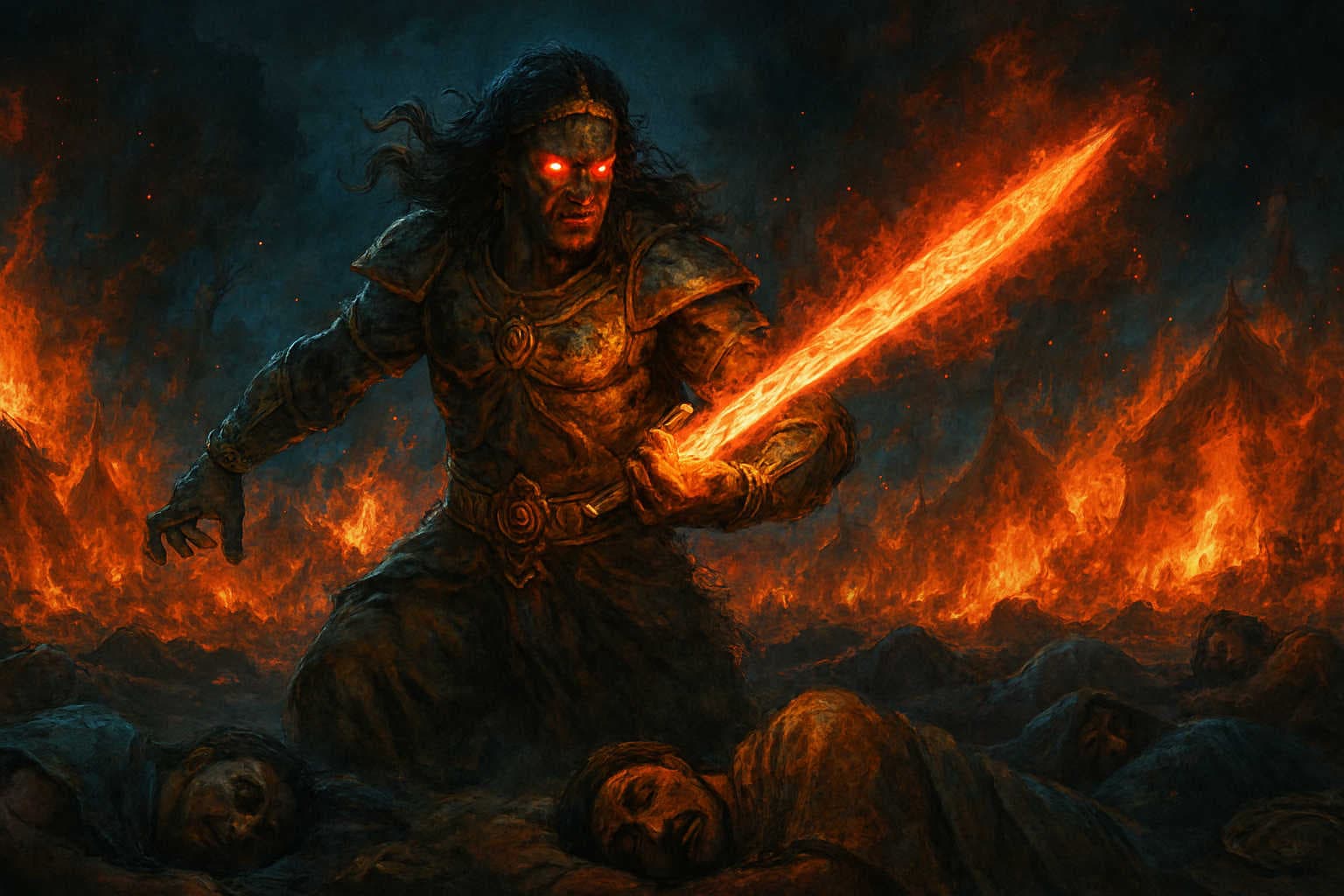
The war was over, and the Pandavas’ army rested peacefully, unaware of the impending horror. It was a moonless night, perfect for a silent assault. Ashwatthama invoked his rakshasa nature and unleashed a brutal attack on the sleeping warriors.
The rules of dharma forbid killing an unarmed or sleeping enemy, but vengeance blinded him. With fury in his heart, Ashwatthama slaughtered soldiers mercilessly, setting tents on fire and creating chaos in the silent night.
The Slaughter of the Pandava Sons
The most heart-wrenching act was the killing of the Upapandavas—the five sons of Draupadi, who were sleeping in their tents. Mistaking them for the Pandavas, Ashwatthama killed them in cold blood. Their cries pierced the night, but nothing could stop the madness of revenge.
The Kaurava ally Kritavarma set fire to the camp, and the entire Pandava army, which had fought bravely for 18 days, was wiped out in a single night. Ashwatthama thought he had fulfilled his vow. But destiny had other plans.
Ashwatthama’s Escape and Revelation
With blood on his hands, Ashwatthama rushed to inform Duryodhana about his revenge. But when he revealed the truth—that he had killed the Pandavas’ sons instead of the Pandavas themselves—Duryodhana was devastated. Soon after, Duryodhana breathed his last, leaving Ashwatthama alone in his guilt and fury.
Draupadi’s Anguish and Arjuna’s Wrath
When the news reached the Pandavas, Draupadi was inconsolable. Her wails shook the heavens. She demanded justice—not death for Ashwatthama, but his humiliation and punishment for this adharma.
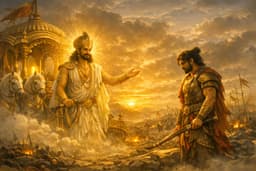
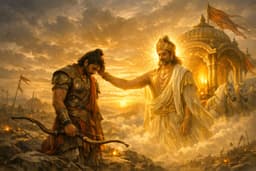
Arjuna, seething with rage, vowed to bring Ashwatthama back alive. Mounting his chariot with Krishna as his charioteer, Arjuna pursued Ashwatthama, who sought refuge in a hermitage.
Ashwatthama Uses the Brahmastra
Cornered and desperate, Ashwatthama invoked the Brahmastra, a divine weapon of unimaginable power. Arjuna countered with his own Brahmastra, and the clash threatened to destroy the world. Sages Narada and Vyasa intervened, commanding them to withdraw the weapons.
Arjuna obeyed, but Ashwatthama, lacking the knowledge to retract his weapon, redirected it towards Uttara’s womb, where Abhimanyu’s unborn child (Parikshit) was growing—the future heir of the Pandavas. Krishna protected the child, ensuring the lineage survived.
The Curse of Krishna
For his unforgivable crime, Krishna cursed Ashwatthama to wander the earth for thousands of years, suffering from wounds, isolation, and the weight of his sins. His gem was removed from his forehead, and he was condemned to a life of eternal misery.
Lessons from the Night Massacre
-
Revenge Leads to Destruction: Ashwatthama’s desire for vengeance destroyed countless innocent lives and doomed his own existence.
-
Breaking Dharma Brings Consequences: Killing the sleeping warriors and the sons of Pandavas was against the code of war, leading to his eternal curse.
-
Emotions Can Blind the Wisest: Even a warrior of great knowledge can fall when consumed by anger.
Modern Relevance
Ashwatthama’s story reminds us:
-
Anger and hatred only lead to regret.
-
One impulsive act can ruin a lifetime of honor.
-
True strength lies in forgiveness, not revenge.
Conclusion
The night massacre by Ashwatthama is a haunting chapter in the Mahabharata, symbolizing the depths of human rage and the price of abandoning dharma. It serves as a timeless reminder that vengeance never brings peace—only endless suffering.