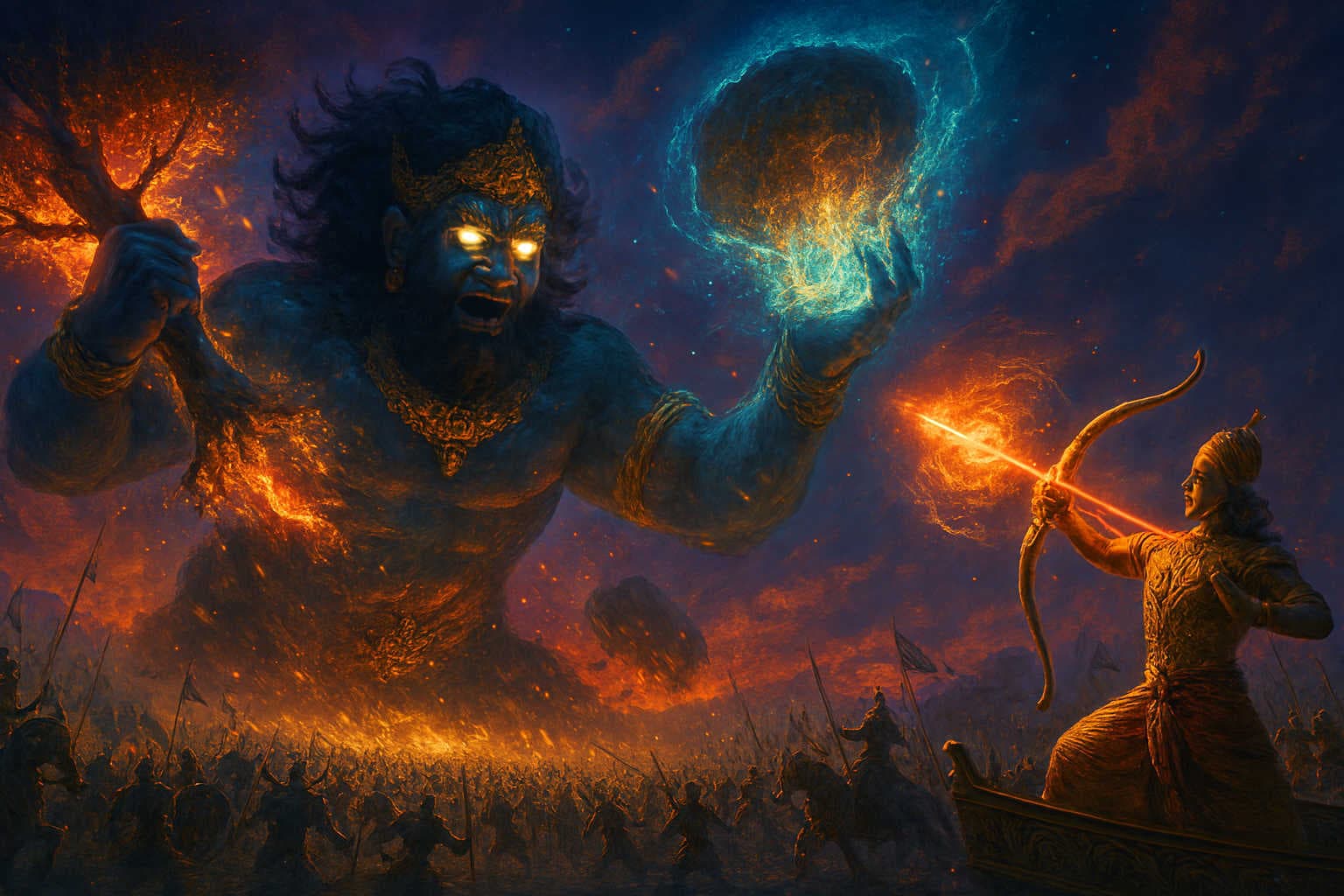
Ghatotkacha’s Sacrifice
The Mahabharata is not only a tale of righteousness and adharma but also of extraordinary sacrifices made for the greater good. Among these heroic acts, the sacrifice of Ghatotkacha, the mighty son of Bhima and the rakshasi Hidimba, stands out as a turning point in the Kurukshetra war. His death was not in vain—it changed the course of the battle and saved the life of Arjuna.
Who Was Ghatotkacha?
Ghatotkacha was the son of Bhima, the second of the Pandavas, and Hidimba, a rakshasi whom Bhima married during their exile. Unlike humans, Ghatotkacha inherited mystical powers and immense strength from his rakshasa lineage. Towering in height, fierce in battle, and blessed with magical abilities, he was a warrior who struck terror in the hearts of the Kaurava army.
Ghatotkacha played a vital role throughout the war, but his greatest contribution came on the night of the 14th day.
The 14th Day of Kurukshetra War – A Night Battle
After Arjuna vowed to kill Jayadratha before sunset on the 14th day (in revenge for Abhimanyu’s death), the battle had already reached an intense phase. When Arjuna fulfilled his vow and killed Jayadratha, the Kaurava army was enraged. Duryodhana and his allies decided to launch a massive attack during the night, breaking the rules of traditional warfare.
Night battles were rare, but rakshasas like Ghatotkacha excelled in the darkness. For him, night was an advantage—his powers multiplied, and his illusions became unstoppable.
Ghatotkacha Unleashed His Might
Ghatotkacha entered the battlefield like a storm. He grew to a colossal size and began wreaking havoc. Using his mystical powers, he created illusions that confused the enemy. Entire divisions of the Kaurava army were crushed under his assault. Chariots overturned, elephants fled in panic, and soldiers were terrified by his demonic roars.
With his immense strength, he hurled massive boulders, uprooted trees, and caused chaos. The Pandavas regained hope seeing his dominance. Even great warriors like Drona, Karna, and Ashwatthama struggled to contain him.
Duryodhana’s Desperation
Seeing the Kaurava forces being decimated, Duryodhana became desperate. He turned to Karna, who was his greatest hope. Karna, the mighty warrior, had one divine weapon that could change the tide—the Vasavi Shakti, given to him by Lord Indra.
However, there was one condition: Karna could use this weapon only once, and he had saved it for Arjuna. The plan was to kill Arjuna at the right moment. But now, Ghatotkacha’s destruction threatened the survival of the entire Kaurava army.
Karna’s Dilemma
Duryodhana pleaded with Karna to stop Ghatotkacha. Torn between loyalty and strategy, Karna realized that if he did not act, the Kaurava army would be annihilated before dawn. Reluctantly, Karna decided to use the Vasavi Shakti against Ghatotkacha.
The Moment of Sacrifice
As Karna hurled the Vasavi Shakti, Ghatotkacha understood the situation. The weapon was unstoppable, but he decided to make his death count. Expanding his body to an enormous size, he rose high into the sky. When the divine weapon struck him, Ghatotkacha fell like a mountain, crushing thousands of Kaurava soldiers under his massive body.
His last act ensured maximum damage to the enemy even in death. His sacrifice became a strategic victory for the Pandavas because Karna had now lost the Vasavi Shakti, which was his only sure weapon against Arjuna.
The Aftermath and Its Significance
The death of Ghatotkacha had two major consequences:
-
Saved Arjuna’s Life – Karna could no longer kill Arjuna since he had used his ultimate weapon.
-
Inflicted Huge Loss on Kauravas – Ghatotkacha’s gigantic fall crushed thousands of soldiers and broke the Kaurava morale.
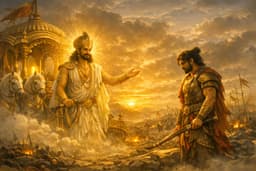
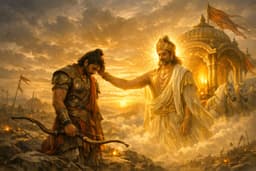
When news of Ghatotkacha’s death reached the Pandavas, Bhima was heartbroken, but Krishna was overjoyed. Arjuna, puzzled by Krishna’s reaction, asked why he was happy about the death of an ally. Krishna explained:
“If Karna had kept Vasavi Shakti for you, Arjuna, your life would have ended. Ghatotkacha’s death saved you and the Pandavas’ cause.”
Symbolism and Lessons from Ghatotkacha’s Sacrifice
-
Selfless Sacrifice for the Greater Good: Ghatotkacha accepted death to save his family and ensure victory.
-
The Importance of Strategy in War: His death was not just a tragedy—it was a tactical advantage.
-
Strength Alone Is Not Enough: Even the mightiest warrior can fall to fate and destiny.
-
Illusions vs. Reality: Despite his magical powers, destiny prevailed, reminding us of the limits of even supernatural strength.
Modern Relevance
Ghatotkacha’s story teaches us:
-
True strength lies in selflessness.
-
Sometimes personal loss can lead to a greater collective victory.
-
In life, sacrifices often shape the future in unseen ways.
Conclusion
The night Ghatotkacha died was a turning point in the Mahabharata. His sacrifice ensured that Arjuna survived to fight another day and ultimately win the war for dharma. Though his life ended on the battlefield, his legacy as a fearless warrior and selfless hero lives on forever.