The Role of Hanuman on Arjuna's Flag
In the grand narrative of the Mahabharata, every element carries profound meaning. One such significant detail is the presence of Hanuman on Arjuna’s flag during the Kurukshetra war. This emblem was not a mere decoration but a symbol of divine assurance, strength, and victory. The story of how Hanuman came to be on Arjuna’s banner reveals deep lessons in humility, devotion, and dharma.
The Context – A Chance Encounter
The story begins when Arjuna, proud of his prowess as a warrior, once engaged in a debate about who was stronger—himself or Hanuman. Arjuna boasted that his arrows could build a bridge over the sea, just as Hanuman and the Vanaras had done for Lord Rama during the Ramayana.
Hanuman smiled and challenged Arjuna:
“If you think your arrows can bear my weight, build your bridge. I shall walk over it.”
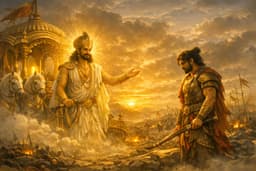
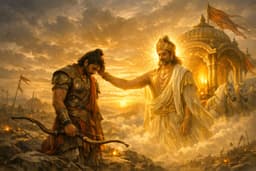
Arjuna, confident, built a bridge of arrows. But as soon as Hanuman stepped on it, the bridge collapsed. Arjuna realized his pride and prayed for forgiveness. At that moment, Lord Krishna appeared and reminded both that they were part of His grand plan. Hanuman blessed Arjuna and made a promise:
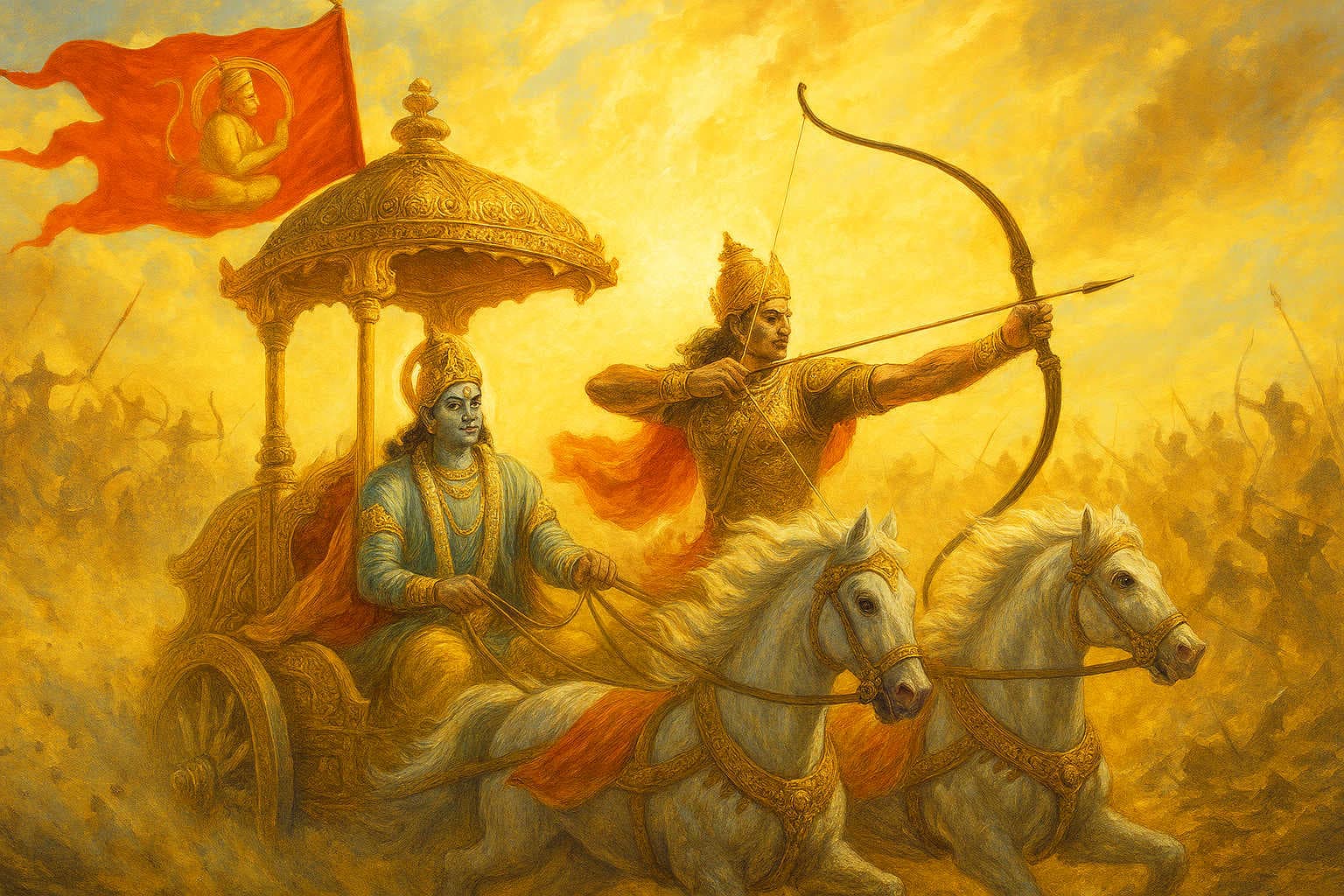
“In the great war of Kurukshetra, I shall sit on your flag and protect your chariot.”
Thus began the divine association of Hanuman with Arjuna’s banner.
Why Hanuman on Arjuna’s Flag?
The presence of Hanuman was not merely symbolic—it had three powerful reasons:
1. Assurance of Victory
Hanuman is the eternal devotee of Lord Rama, an avatar of Lord Vishnu. By sitting on Arjuna’s flag, he represented unshakable faith and righteousness. His presence ensured that dharma would triumph over adharma.
2. A Shield of Sound
Hanuman, in his subtle form, resided on the flag. Whenever the flag fluttered, the sound was like a mighty roar of a lion, which terrified the Kaurava army and boosted the morale of the Pandavas.
3. The Fire of Energy
Hanuman’s energy and divine aura protected Arjuna’s chariot from celestial weapons. In the Mahabharata, it is said that after the war, Krishna advised Arjuna to step down first before Him. As soon as Krishna left, the chariot burst into flames because the energy of all weapons aimed at it had been neutralized only by Krishna and Hanuman’s divine presence.
Symbolism of Hanuman on the Flag
-
Strength and Humility Together – Hanuman represents immense strength combined with deep humility. Arjuna, though powerful, needed to surrender his ego, which Hanuman’s presence reminded him constantly.
-
Unity of Ramayana and Mahabharata – Hanuman links the two great epics. He shows that all divine missions serve the same eternal truth.
-
Victory Through Devotion – It signifies that victory comes not just from skill but from faith in God and righteous action.
The Spiritual Message
The story is not just a historical event but a life lesson:
-
Ego leads to downfall, while humility brings divine support.
-
Seek the blessings of the great—Arjuna’s success was reinforced by Hanuman’s presence.
-
True power is not physical alone but spiritual—Hanuman symbolizes the strength of devotion and dharma.
Hanuman’s Roar in Kurukshetra
There are references in the Mahabharata that during fierce battles, when Arjuna felt tired or distressed, Hanuman would roar from the flag. This roar was so powerful that it:
-
Echoed across the battlefield like thunder.
-
Filled the Pandavas with courage.
-
Demoralized the Kauravas and their allies.
Such was the unseen yet mighty role of Hanuman in the Kurukshetra war.
Why Did Hanuman Choose the Flag and Not Fight?
Hanuman, though mighty, chose not to fight because:
-
He had given a vow during the Ramayana that he would never again engage in war.
-
His role in the Mahabharata was protective, not destructive—he became a silent guardian.
This teaches that one can serve dharma without violence—through strength, assurance, and moral support.
Modern Relevance of Hanuman on Arjuna’s Flag
Today, the story inspires us to:
-
Keep faith in divine support during life’s battles.
-
Combine skill with humility—ego destroys wisdom.
-
Draw strength from spiritual energy, not just external power.
Just like Arjuna needed Hanuman’s energy, we need inner courage and devotion to face challenges.
Conclusion
Hanuman on Arjuna’s flag was not a mere ornament but a symbol of divine strength, humility, and victory of righteousness. It reminds us that behind every great success lies the grace of faith, humility, and the blessings of the divine.
As we remember this story, let us invoke the same qualities in our lives—strength with humility, action with devotion, and confidence with surrender to the Supreme.