The Birth of Pandavas and Kauravas
The Mahabharata, one of the greatest epics of Hindu tradition, is filled with intriguing tales, divine interventions, and powerful moral lessons. Among its many captivating episodes, the story of the birth of the Pandavas and Kauravas stands out as a turning point that shaped the destiny of the epic war of Kurukshetra. Their births were extraordinary—marked by boons, curses, and celestial blessings. Let us dive deep into how these two mighty dynasties came into existence.
The Kingdom of Hastinapura and the Need for Heirs
The throne of Hastinapura, one of the most powerful kingdoms in ancient India, faced a major succession crisis. King Shantanu’s sons, Bhishma and Vichitravirya, played crucial roles in the lineage. Bhishma, bound by his vow of celibacy, could never become king or father heirs. After Vichitravirya’s untimely death without children, the dynasty faced extinction.
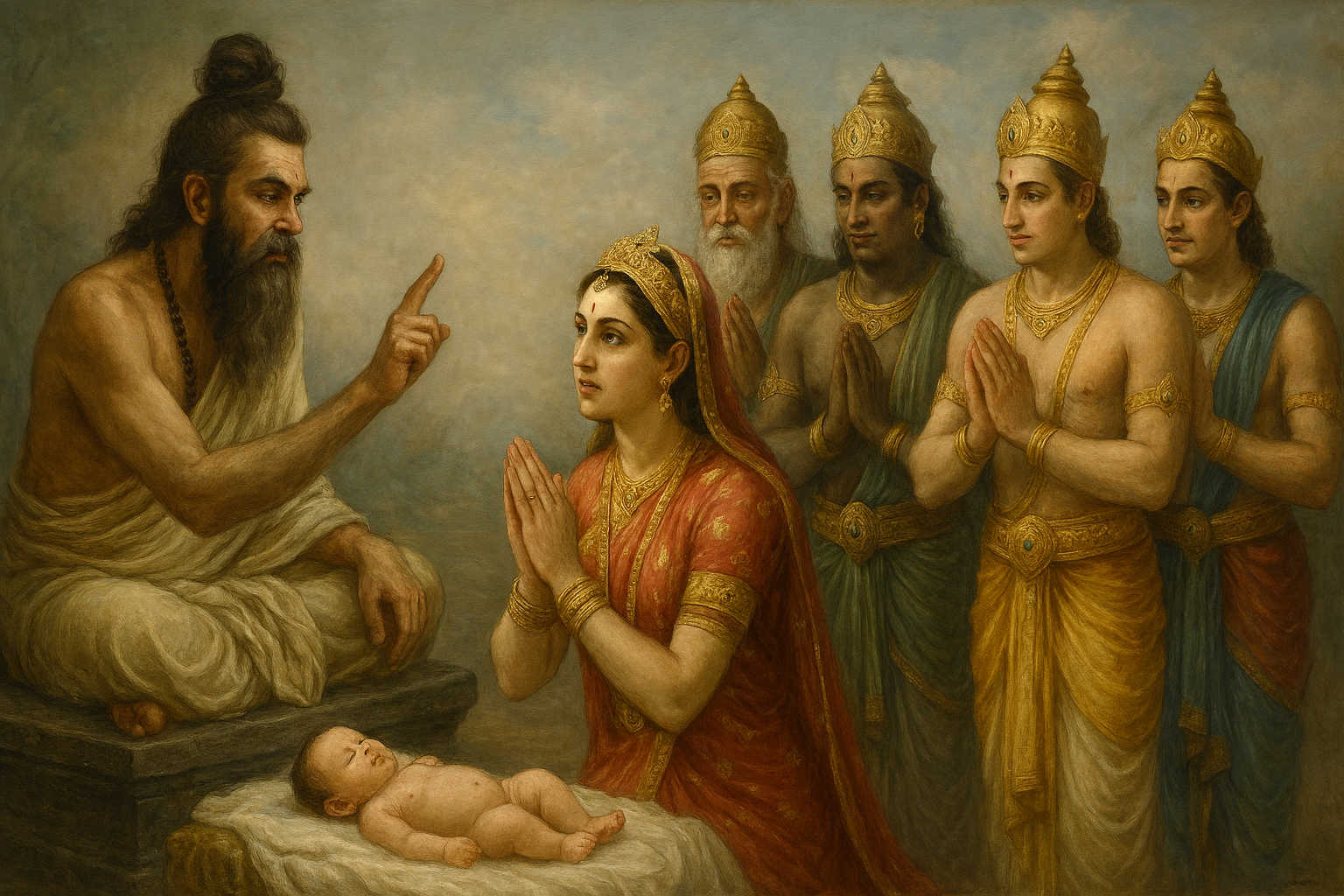
To preserve the lineage, Satyavati, the queen mother, requested her son Vyasa, the great sage and author of the Mahabharata, to practice Niyoga—an ancient custom where a sage or designated person fathered children with the widows of a king to continue the family line. From this arrangement, the seeds for the Pandavas and Kauravas were sown.
The Birth of Dhritarashtra, Pandu, and Vidura
Before the Pandavas and Kauravas were born, the epic introduces three significant figures—Dhritarashtra, Pandu, and Vidura—the sons of Vichitravirya’s widows through Vyasa:
-
Dhritarashtra, the eldest, was born blind, a result of his mother Ambika closing her eyes in fear when Vyasa approached her.
-
Pandu, the second son, was born pale and weak because his mother Ambalika turned pale out of fright.
-
Vidura, the third, was born wise and virtuous to a maid who welcomed Vyasa without hesitation.
Dhritarashtra married Gandhari, while Pandu married Kunti and Madri. These unions set the stage for the birth of the Pandavas and Kauravas.
Gandhari’s Boon and the Birth of the Kauravas
Gandhari, devoted to her husband Dhritarashtra, performed severe austerities and prayed for a hundred sons. Sage Vyasa blessed her with a boon that she would have as many sons as she wished. When Kunti gave birth to her first son, Yudhishthira, Gandhari became envious and struck her womb in frustration.
As a result, Gandhari delivered a hard lump of flesh instead of a child. Distressed, she turned to Vyasa for help. The sage divided the lump into one hundred and one pieces, placed them in pots filled with ghee, and kept them in a secret chamber. After two years of nurturing, from these pots were born one hundred sons and one daughter, the eldest being Duryodhana, followed by Dushasana, and others. Their sister was named Dushala.
It is said that ominous signs accompanied Duryodhana’s birth, predicting the destruction he would bring.
The Divine Birth of the Pandavas
Unlike the Kauravas, the Pandavas were not born through ordinary means. Their father, King Pandu, had been cursed by a sage that he would die if he ever engaged in intimacy with his wives. Grief-stricken, Pandu renounced his throne and retired to the forest with Kunti and Madri.
Before her marriage, Kunti had received a divine mantra from Sage Durvasa as a blessing. The mantra allowed her to invoke any deity and beget a child through their grace. With Pandu’s consent, Kunti used this mantra to give birth to the Pandavas:
-
Yudhishthira – Born by invoking Dharma, the god of righteousness.
-
Bhima – Born by invoking Vayu, the wind god, symbolizing strength.
-
Arjuna – Born by invoking Indra, the king of gods, granting valor and skill in warfare.
Later, Kunti shared the mantra with Madri, who invoked the Ashwini Kumaras, the twin gods, and gave birth to Nakula and Sahadeva. Thus, the five Pandavas were born, each blessed with extraordinary qualities from divine fathers.
Contrasting Birth Stories – A Symbolic Message
The births of the Pandavas and Kauravas are symbolic of two opposing forces: virtue versus vice, righteousness versus ego. While the Pandavas were born of divine blessings and purity of intention, the Kauravas’ birth stemmed from jealousy and impatience, which ultimately led to their downfall.
Life After Birth – Seeds of Rivalry
From their childhood, the seeds of rivalry were evident. Duryodhana’s envy of the Pandavas grew stronger as they excelled in skills and earned the love of the people. This jealousy eventually escalated into the great war of Kurukshetra—a battle that changed the course of history and established the supremacy of dharma.
Spiritual Significance of the Story
The tale of these births teaches us profound lessons:
-
Patience and Humility: Gandhari’s impatience led to unnatural circumstances.
-
Faith and Righteousness: Kunti’s devotion brought divine blessings.
-
Destiny and Free Will: Despite divine origins, both sides faced challenges, proving that destiny is shaped by choices.
Conclusion
The birth of the Pandavas and Kauravas is more than just an origin story—it is the foundation of the Mahabharata’s moral and spiritual essence. It reminds us that while divine grace and blessings play a role, human actions, virtues, and values ultimately determine the course of life.