The Story of Valmiki – From Robber to Sage
The Ramayana, one of the greatest epics of Hinduism, is credited to the sage Valmiki. But behind this revered name lies an incredible story of transformation—a journey from darkness to light, from sin to sanctity. Valmiki’s life teaches us that anyone, no matter how fallen, can rise to greatness through self-realization and devotion.
Valmiki’s Early Life as a Robber
Valmiki was not always a sage. In fact, he was once a notorious highway robber. Born as Ratnakara to a Brahmin family, he was separated from his parents at a young age and raised by hunters. As he grew, Ratnakara adopted the violent ways of the forest and began robbing travelers to provide for his family.
Ratnakara justified his deeds by believing that his family depended on him for survival. But destiny had a greater purpose for him, one that would change the course of his life forever.
The Encounter with Sage Narada
One day, Ratnakara stopped a wise sage traveling through the forest. That sage was none other than Narada, the divine messenger and devotee of Lord Vishnu. Ratnakara threatened Narada for his wealth, but Narada remained calm and asked a simple question that pierced Ratnakara’s heart:
"You rob and kill to feed your family, but will they share your sins?"
Ratnakara, confident, replied, “Yes, they will. They depend on me.” Narada suggested he ask his family directly. Curious, Ratnakara tied Narada to a tree and went home to question his wife and children. To his shock, they refused to share his sins, saying, “We will share your food and your life, but not your sins.”
This revelation shattered Ratnakara. Realizing the gravity of his actions, he returned to Narada and begged for guidance.
The Birth of Valmiki
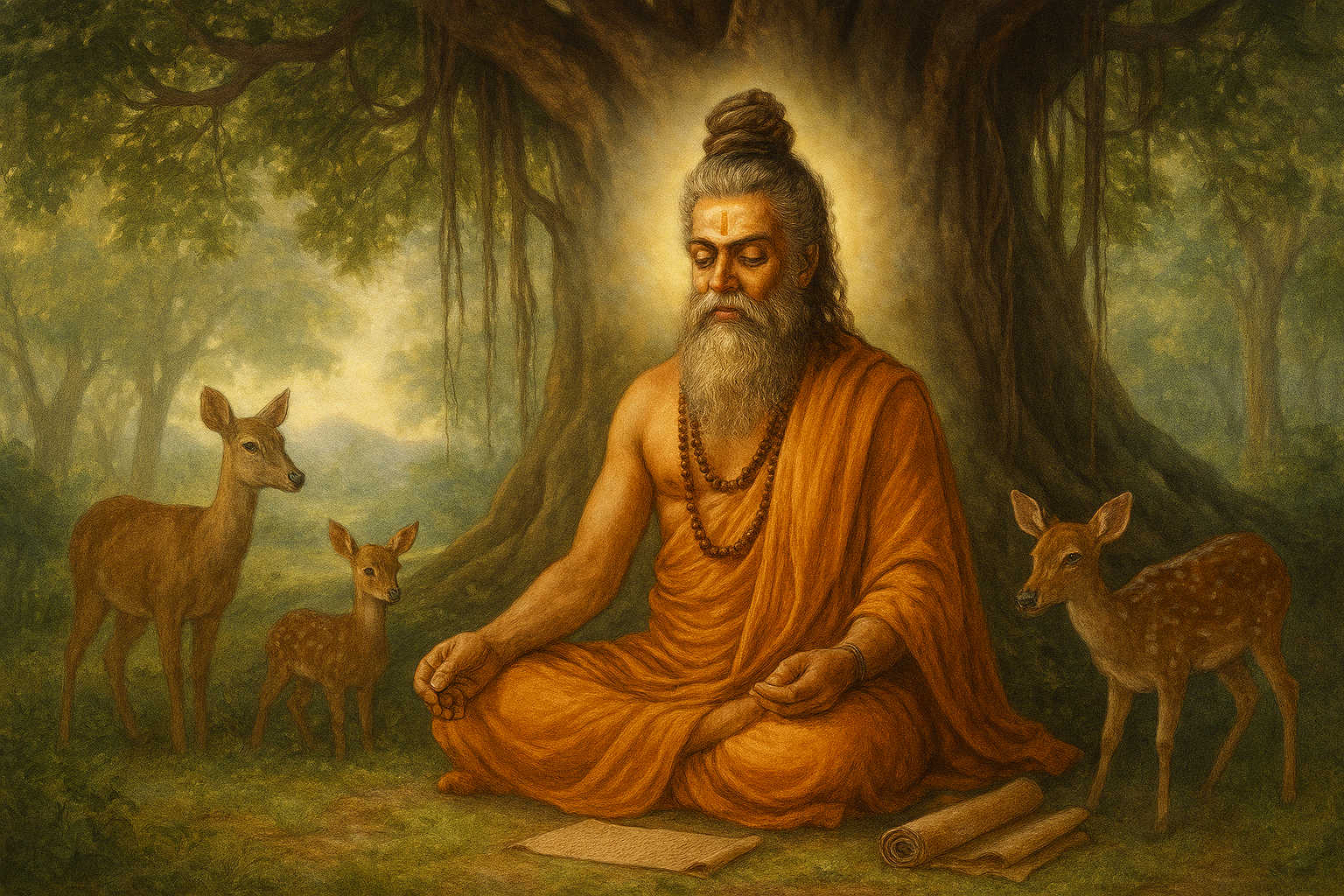
Narada advised Ratnakara to chant the name of Lord Rama to purify his soul. However, Ratnakara, being steeped in sin, could not pronounce “Rama.” So Narada suggested he chant “Mara,” meaning “tree.” Repeating “Mara” continuously, Ratnakara entered deep meditation. Over time, the syllables transformed into “Rama” naturally.
So deep was his meditation that anthills formed around his body as he sat motionless for years. When he emerged, he was a transformed man—no longer the robber Ratnakara, but the enlightened sage Valmiki, meaning “one born from an anthill.”
Valmiki as the Author of the Ramayana
Valmiki devoted his life to spiritual practices and teaching dharma. One day, he witnessed a hunter kill a bird while it sang with its mate. Moved by compassion, Valmiki uttered the first Sanskrit shloka (verse) in grief and anger. This marked the origin of Sanskrit poetry.
Later, Lord Brahma appeared before Valmiki and blessed him to compose the Ramayana, the great epic narrating the life of Lord Rama. Valmiki wrote 24,000 verses describing Rama’s journey, making him the Adi Kavi or the first poet of Sanskrit literature.
Valmiki’s Role in Sita’s Life
Valmiki’s story does not end with the writing of the Ramayana. He played an important role in its later chapters. When Sita was abandoned by Rama due to societal pressure, she sought refuge in Valmiki’s ashram. It was there that Sita gave birth to twins, Lava and Kusha.
Valmiki nurtured and educated them, teaching them archery, dharma, and the verses of the Ramayana. It was Lava and Kusha who later sang the epic in Rama’s court, bringing about a touching reunion.
Teachings from Valmiki’s Life
The life of Valmiki offers timeless lessons:
-
Transformation is always possible: No matter how sinful a person may be, with true repentance and effort, change is achievable.
-
Power of devotion: Chanting the Lord’s name with sincerity can cleanse the darkest of hearts.
-
Compassion and creativity: From a robber to the first poet, Valmiki’s journey shows how spiritual awakening brings creativity and peace.
Legacy of Valmiki
Valmiki is revered as the Adi Kavi, the first poet, and the author of the Ramayana. His teachings emphasize morality, devotion, and righteousness. Temples dedicated to Valmiki exist across India, and his birth anniversary, Valmiki Jayanti, is celebrated with devotion and reverence.
Conclusion
Valmiki’s life is an inspiring example of the human capacity for redemption and spiritual growth. From a feared bandit to a revered sage, his story continues to inspire seekers of truth across generations.
His journey reminds us that the divine spark exists within everyone, waiting to be awakened by the light of knowledge and devotion.