How to Celebrate Hindu Festivals Mindfully
Festivals are an integral part of Hindu culture, bringing together family, friends, and communities in joyous celebrations. Each festival, whether it is Diwali, Holi, Navratri, Raksha Bandhan, or Pongal, carries deep spiritual significance and cultural heritage. However, in today’s fast-paced lifestyle, celebrations often become more about grandeur, consumerism, and social media appearances rather than inner joy and reflection. This is where the concept of mindful celebration becomes important. By practicing mindfulness, we can return to the true essence of festivals—connecting with divinity, nurturing relationships, and living in harmony with nature.
What Does Mindful Celebration Mean?
Mindfulness is the art of being present in the moment with awareness and gratitude. Applied to festivals, it means celebrating consciously, focusing on the spiritual values, emotional connections, and cultural roots rather than getting lost in excess. Mindful celebration emphasizes simplicity, sustainability, and heartfelt devotion.
1. Connecting with the Spiritual Essence
Every Hindu festival has a story, a lesson, and a spiritual foundation. For example, Diwali symbolizes the triumph of light over darkness, Holi teaches unity and forgiveness, and Navratri is about inner strength and devotion. To celebrate mindfully, one should first understand the meaning behind the festival. Reading scriptures, listening to elders narrate stories, or attending satsangs (spiritual discourses) deepens the experience and makes rituals more meaningful.
2. Practicing Simplicity in Rituals
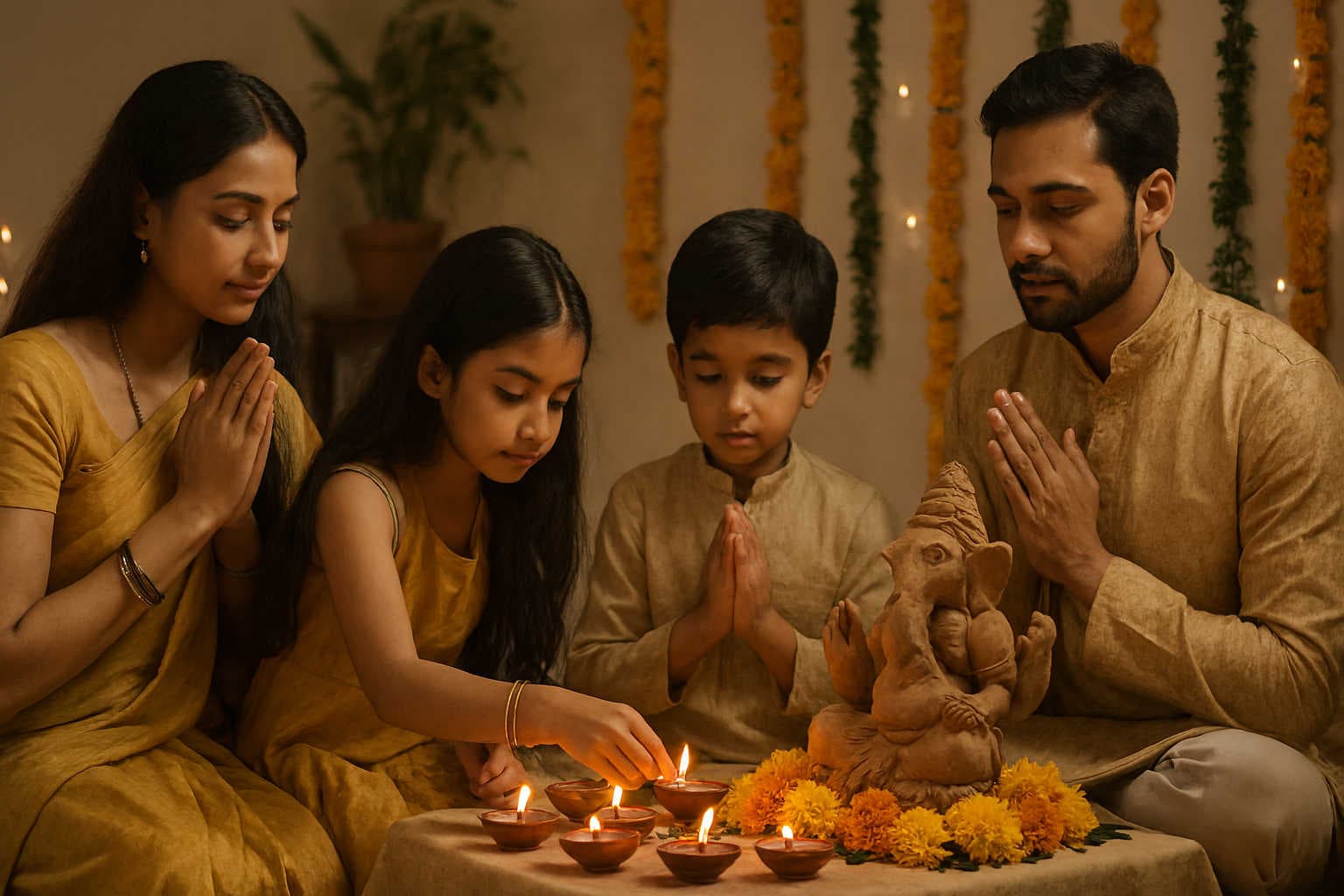
Instead of focusing on elaborate decorations or expensive offerings, mindfulness encourages simplicity. Offering flowers, homemade sweets, and heartfelt prayers is more valuable than lavish displays. A small puja performed with sincerity can be more fulfilling than an elaborate ceremony done mechanically. This shift in mindset helps us connect to the divine on a deeper level.
3. Celebrating with Family and Community
Hindu festivals are not just about individual devotion but about shared joy. Mindfulness teaches us to be fully present with loved ones. During Diwali, lighting diyas together, during Raksha Bandhan, tying the rakhi with gratitude, or during Holi, playing with natural colors in moderation strengthens family bonds and builds lasting memories. Keeping away from distractions like phones during rituals and meals allows us to engage wholeheartedly with others.
4. Eco-Friendly and Sustainable Practices
In the modern age, festivals often generate large amounts of waste—from plastic decorations to chemical colors and non-biodegradable idols. Mindful celebration involves choosing eco-friendly options such as clay idols, natural flowers, reusable decorations, and organic colors. This not only reduces harm to the environment but also aligns with the Hindu philosophy of Ahimsa (non-violence) and living in harmony with nature.
5. Offering Seva (Service) and Charity
Mindful celebration goes beyond personal joy and extends to helping others. Donating food, clothes, or supporting underprivileged families adds true value to festivals. Many traditions already emphasize this—like Anna Daan (food donation) during Navratri or distributing sweets during Diwali. Acts of kindness make festivals spiritually uplifting and fulfilling.
6. Mindful Eating During Festivals
Festivals are also times of delicious feasts. However, mindful eating encourages us to enjoy food with gratitude, moderation, and awareness. Offering food to the deity before eating, avoiding waste, and sharing meals with others are ways to make dining more mindful. Paying attention to traditional sattvic foods during pujas also nourishes the body and mind.
7. Reducing Stress and Comparison
Many people feel stressed during festivals due to social expectations, expenses, or comparisons with others. Mindfulness teaches us to let go of external pressures and celebrate within our means. A small, heartfelt celebration is just as meaningful as a grand one. Detaching from social media comparisons and focusing on personal joy and gratitude helps maintain peace of mind.
8. Embracing Silence and Reflection
Amidst the celebrations, mindfulness also encourages moments of silence and reflection. Spending a few minutes in meditation, chanting mantras, or simply sitting quietly with a diya can center the mind and bring inner peace. This balance of celebration and contemplation deepens spiritual awareness.
Conclusion
Celebrating Hindu festivals mindfully means honoring traditions while embracing simplicity, awareness, and compassion. It shifts the focus from external display to internal joy, from consumerism to gratitude, and from pollution to sustainability. Whether it is lighting a single diya with devotion, preparing homemade sweets with love, or sharing laughter with family, mindful practices enrich our festivals with true meaning. In this way, we not only preserve the cultural heritage but also ensure that future generations learn to celebrate with awareness and respect for both spirituality and nature.