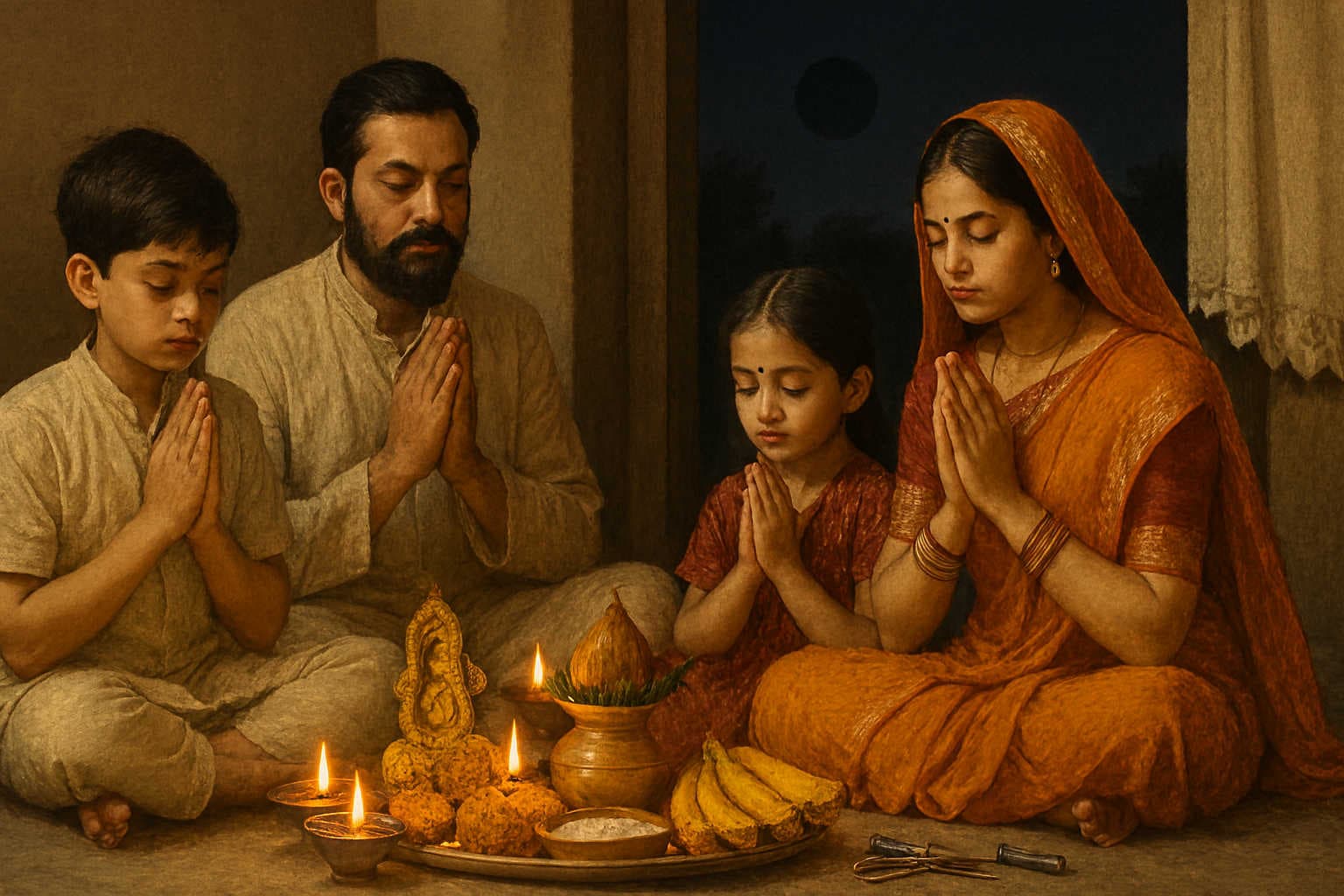
Why We Avoid Cutting Hair and Nails on Amavasya
Hindu culture is filled with age-old customs that are deeply rooted in tradition, spirituality, and symbolism. One such practice is the avoidance of cutting hair and nails on Amavasya—the new moon day. For centuries, people have been told by elders not to engage in grooming activities like trimming nails, shaving, or cutting hair on this day. While modern life often questions such practices, the wisdom behind them is both spiritual and practical.
What is Amavasya?
Amavasya marks the absence of the moon in the sky, symbolizing a night of darkness. It occurs once every lunar month and is considered spiritually significant in Hinduism. Amavasya is often associated with honoring ancestors (Pitru Tarpan), performing remedies for negative planetary influences, and seeking spiritual cleansing.
While full moon days (Purnima) are considered auspicious for beginning new ventures, Amavasya is traditionally a day of restraint, reflection, and rituals to ward off negative energies. This is also why certain activities, including cutting hair and nails, are discouraged.
Spiritual Beliefs Behind the Practice
In Hindu tradition, hair and nails are believed to carry a person’s subtle energies. Cutting them on Amavasya is thought to weaken one’s aura, leaving them vulnerable to negative influences that are said to be stronger on the moonless night. Since Amavasya is often linked with ancestral rituals and appeasing spirits, people avoid acts that could symbolically represent a loss of energy or life force.
Many scriptures describe Amavasya as a time when negative energies are heightened, and performing personal grooming could symbolically invite misfortune. Instead, the day is better spent in prayer, meditation, charity, and connecting with the divine.
Cultural and Traditional Significance
Traditionally, barbers in villages would refrain from offering hair-cutting services on Amavasya, considering it inauspicious. Families, too, encouraged children and elders to avoid trimming nails, cutting hair, or shaving, believing it might reduce one’s longevity or disturb ancestral blessings.
For communities that dedicate Amavasya to performing Shraddha rituals, personal grooming was seen as a distraction from spiritual practices. By avoiding vanity-related activities, the focus remained on devotion, austerity, and remembrance of forefathers.
Scientific and Practical Reasons
While many reasons are spiritual, there are also practical explanations rooted in the lifestyle of earlier times.
- In ancient India, hair and nail cutting required sharp tools and often sunlight for safety. Since Amavasya nights are moonless and darker, avoiding grooming reduced the risk of accidents or injuries.
- Hygiene was also a factor. In earlier days, nails and hair were cut outdoors or near oil lamps. Cutting them on darker days increased the chance of pieces falling into food, water, or sacred spaces, causing impurity.
- From a health perspective, hair and nail growth are influenced by hormonal and biological cycles, which can also be linked to lunar rhythms. Some believe trimming during low-energy lunar phases may weaken the body’s vitality.
Symbolic Meaning of Restraint
The avoidance of cutting hair and nails on Amavasya also reflects a larger cultural theme of discipline. Hinduism often prescribes specific days for austerity and simplicity. By abstaining from grooming, individuals symbolically detach from vanity and external appearance, turning their attention toward inner growth and prayer.
Regional Variations
In some parts of India, this custom is observed strictly, while in others, it is more relaxed. Rural areas tend to uphold the tradition strongly, whereas in cities, it has become less common. Still, many families continue to pass down this advice as part of cultural heritage.
Interestingly, some regions even designate Amavasya as a day for deep household cleaning and spiritual purification. Avoiding personal grooming goes hand in hand with this cleansing process, emphasizing that the day is meant for purification of the soul rather than beautification of the body.
Modern Perspective
Today, with electricity, modern grooming tools, and hygienic facilities, the practical reasons may no longer seem as compelling. Yet, the symbolic and spiritual aspects of the tradition still hold meaning for many. For those who follow Hindu rituals, abstaining from grooming on Amavasya becomes a way of honoring ancestors, preserving discipline, and staying connected with age-old wisdom.
Younger generations often question such practices, but many find value in their psychological benefits. Observing small restrictions like these can cultivate mindfulness and remind individuals of the rhythm of lunar cycles and their impact on human life.
Conclusion
The tradition of avoiding hair and nail cutting on Amavasya beautifully blends spirituality, culture, and practicality. While its roots lie in ancient beliefs about energy, purity, and ancestor worship, it also served real-world purposes of safety and hygiene in earlier times. Even in the modern age, this practice continues to inspire reflection and spiritual discipline. Ultimately, whether one chooses to follow it literally or symbolically, the custom reminds us of the balance between body, mind, and spirit—and the importance of aligning human life with cosmic rhythms.