Ratha Yatra – The Chariot Festival of Lord Jagannath
Among the many colorful festivals of India, few can match the grandeur and devotion of Ratha Yatra, the chariot festival of Lord Jagannath. Celebrated every year in Puri, Odisha, this world-famous festival draws millions of devotees and tourists from around the globe. At its heart, Ratha Yatra is not only a spectacular cultural event but also a deeply spiritual journey, symbolizing divine love, inclusiveness, and the bond between God and His devotees.
The Legend Behind Ratha Yatra
The festival is rooted in the worship of Lord Jagannath, a form of Lord Krishna, along with His siblings Balabhadra and Subhadra. According to tradition, Ratha Yatra commemorates the annual visit of the deities from the Jagannath Temple to the Gundicha Temple, considered the home of their aunt. It is believed that this journey represents Lord Krishna’s return to Vrindavan, recalling His childhood memories and divine play with the gopis.
Another popular legend connects the festival to King Indradyumna, who first built the Jagannath Temple in Puri. Since then, the tradition of taking the deities on a grand chariot procession has continued unbroken for centuries, becoming one of the most important Vaishnavite festivals.
The Grand Chariots
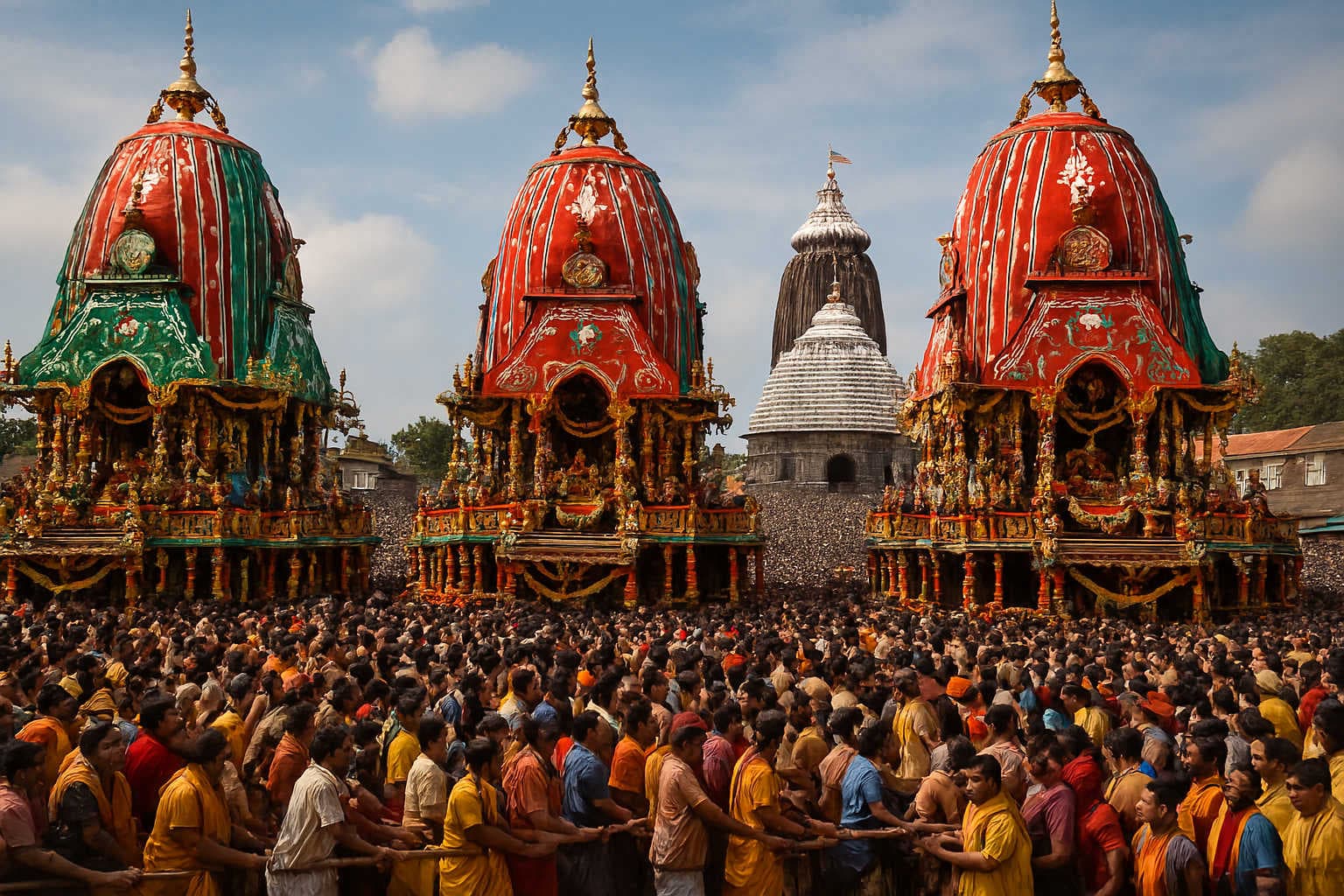
The highlight of Ratha Yatra is the three magnificent chariots, each towering nearly 45 feet high and elaborately decorated with carvings, paintings, and bright canopies. The chariots are newly constructed every year by traditional artisans using wood from specific trees. Each deity has a unique chariot:
- Nandighosha: Lord Jagannath’s chariot, decorated with 16 wheels and covered in red and yellow cloth.
- Taladhwaja: Lord Balabhadra’s chariot, with 14 wheels and green-red coverings.
- Darpadalana (Padmadhwaja): Goddess Subhadra’s chariot, with 12 wheels and covered in red and black cloth.
The making of the chariots itself is considered sacred, and the craftsmen who build them are regarded as carrying forward a divine responsibility.
The Pulling of the Chariots
On the day of Ratha Yatra, the idols of Jagannath, Balabhadra, and Subhadra are ceremonially brought out of the sanctum in a ritual called Pahandi, amidst chanting, drums, and conch sounds. They are then placed on their respective chariots.
As the deities are seated, thousands of devotees gather to pull the massive chariots with thick ropes. This act is considered highly auspicious, as it symbolizes sharing in the divine journey and earning spiritual merit. Unlike other temple rituals where access to the sanctum is limited, the Ratha Yatra opens the doors of divinity to everyone, regardless of caste, creed, or nationality, making it a unique festival of inclusiveness.
Rituals and Celebrations
The festival spans several days. After reaching the Gundicha Temple, the deities remain there for nine days, during which special rituals and offerings are performed. On the tenth day, the return journey, called Bahuda Yatra, takes place, where the deities come back to the Jagannath Temple.
One of the most striking rituals is the Chhera Pahara, where the Gajapati King of Puri personally sweeps the chariot platforms with a golden broom, sprinkling sandalwood water. This symbolizes humility, showing that before the Lord, even kings are servants.
Spiritual Significance of Ratha Yatra
Ratha Yatra carries profound symbolic meaning:
- The chariot represents the human body, and pulling it symbolizes guiding one’s life towards God.
- The journey reflects the soul’s desire to unite with the divine.
- The inclusiveness of the festival emphasizes that God belongs to all, beyond boundaries of class or status.
Ratha Yatra Beyond Puri
While the Puri Ratha Yatra is the most famous, the festival is also celebrated across India and in many parts of the world, especially by ISKCON (International Society for Krishna Consciousness). Cities like Kolkata, Ahmedabad, and Bangalore host grand processions, while international cities such as London, New York, and Sydney organize Ratha Yatras that draw large crowds, spreading the message of devotion and cultural unity.
Modern Relevance
Today, Ratha Yatra is not only a religious festival but also a cultural symbol of Odisha and India. It attracts global visitors, promotes tourism, and stands as a living tradition that connects modern society with ancient heritage. At the same time, it reminds devotees of the timeless values of humility, service, and devotion.
Conclusion
Ratha Yatra is more than a grand chariot procession—it is a spiritual journey that unites millions in devotion. The sight of the towering chariots rolling through the streets of Puri, pulled by throngs of devotees, is both awe-inspiring and deeply moving. At its core, the festival teaches that God is accessible to all and that devotion transcends boundaries. With its blend of legend, ritual, and spectacle, Ratha Yatra continues to be one of the most cherished celebrations in Hinduism, radiating faith and festivity across the world.