Why We Decorate Cows During Govardhan Puja
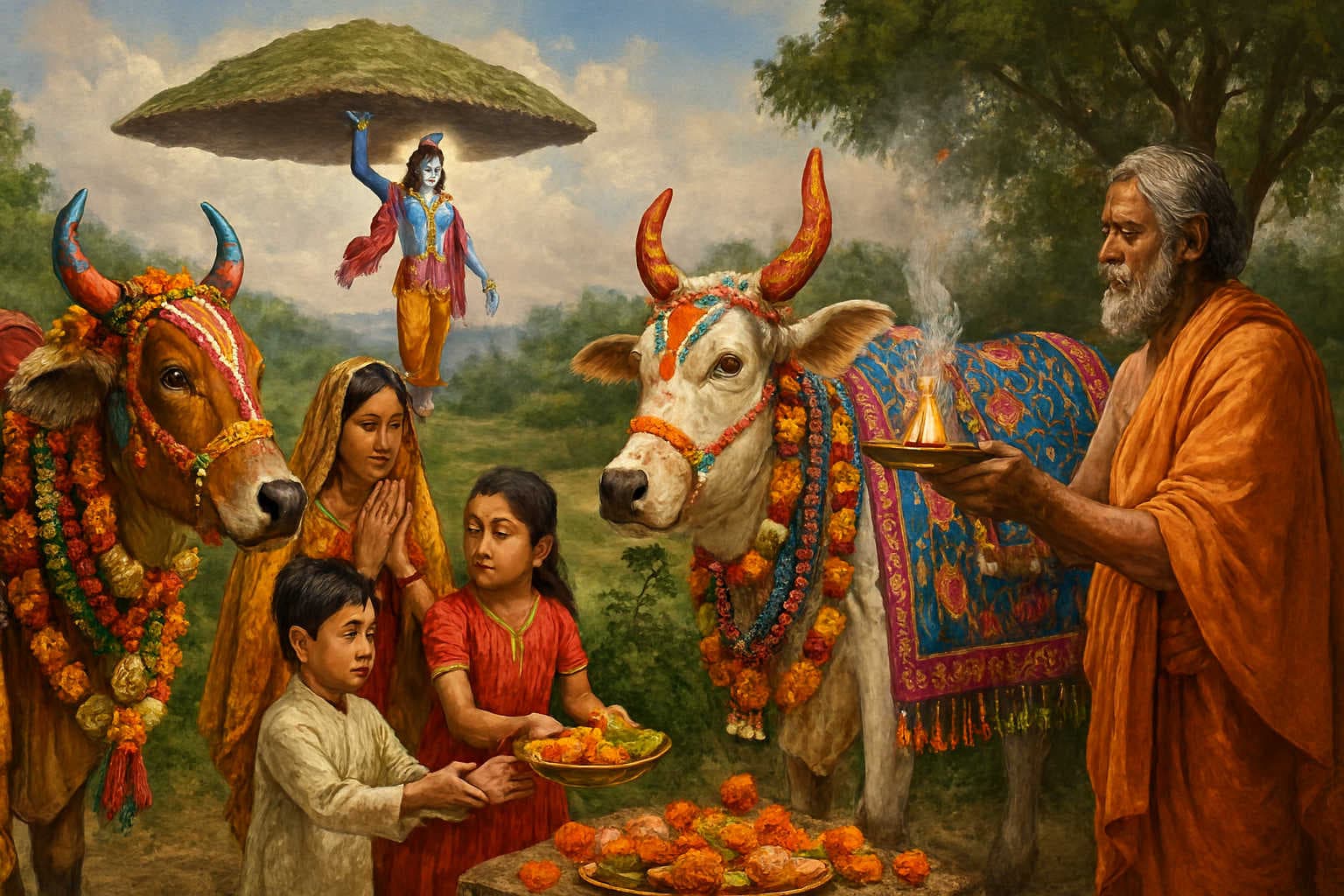
Govardhan Puja, celebrated on the fourth day of Diwali, is a vibrant and meaningful festival dedicated to Lord Krishna and the act of gratitude toward nature. It commemorates the story of Krishna lifting the Govardhan Hill to protect the people of Gokul from torrential rains sent by Lord Indra. A central ritual of this festival is the worship and decoration of cows, an age-old tradition deeply rooted in Hindu culture. But why cows? Why are they adorned with colorful clothes, garlands, and ornaments during Govardhan Puja? The answer lies in the spiritual, cultural, and symbolic importance of cows in Hinduism.
The Sacred Place of Cows in Hinduism
In Hindu philosophy, the cow is revered as Gau Mata (the divine mother). She is considered a symbol of selfless giving, nourishment, and abundance, providing milk and dairy products that sustain families. The Rigveda, one of the oldest Hindu scriptures, describes the cow as sacred and a representation of wealth and prosperity. By decorating and worshipping cows during Govardhan Puja, devotees express gratitude for the nourishment and prosperity they bring into daily life.
The Govardhan Story and the Role of Cows
According to legend, when Lord Indra became angry at the people of Gokul for not worshipping him, he unleashed heavy rains. Krishna advised the villagers to stop the ritual offerings to Indra and instead honor Govardhan Hill, which nourished their cattle and provided fertile land. As Indra’s wrath poured down, Krishna lifted the hill to shelter the people, their homes, and most importantly, their cows. Thus, cows symbolize protection, prosperity, and Krishna’s love for his devotees. Their decoration during Govardhan Puja is a way of acknowledging their central role in this divine event.
Symbolism of Decorating Cows
The act of adorning cows with bright fabrics, garlands, painted horns, and anklets is not just festive—it carries deep symbolism:
- Gratitude: By decorating cows, devotees express thankfulness for their sustenance and role in agrarian life.
- Purity and Divinity: Ornaments and colors signify the divine energy and purity that cows represent in Hindu thought.
- Joy and Celebration: Festivals in Hindu culture embrace beauty and festivity, and decorating cows is a way of honoring them with joy.
- Connection to Krishna: Cows remind devotees of Krishna, the Gopal (protector of cows), who spent his youth among them in Vrindavan.
Cows in Agricultural and Rural Life
In traditional Indian society, cows were central to the agricultural lifestyle. They provided milk, fuel (through cow dung), and even assisted in farming. Govardhan Puja is also known as Annakut, the festival of offering food to God, which reflects agrarian gratitude. Decorating cows highlights their indispensable role in ensuring the community’s survival and prosperity.
The Rituals of Cow Decoration in Govardhan Puja
Across India, cow decoration is practiced with variations:
- In villages, cows are bathed, their horns are polished and painted with bright colors, and their bodies adorned with haldi, kumkum, and flower garlands.
- In temples, cows are worshipped with rituals, offered special food, and sometimes paraded in cultural processions.
- Devotees feed cows with sweets, grains, and grass, considering it a meritorious act.
Spiritual Message Behind the Tradition
Beyond cultural expression, decorating and worshipping cows during Govardhan Puja reflects deeper truths:
- It teaches respect for nature and all life forms.
- It reinforces the idea of sustainability—living in harmony with animals and the environment.
- It reminds devotees that divinity exists not only in temples but also in everyday beings like cows who serve humanity selflessly.
Govardhan Puja Across India
While the core symbolism is the same, regional practices add diversity to the celebration:
- In North India, Govardhan Puja includes making small hillocks of cow dung, symbolizing Govardhan Hill, and decorating cows as part of village rituals.
- In Gujarat and Rajasthan, Annakut celebrations involve feeding cows and preparing massive food offerings for deities.
- In South India, similar reverence is seen during Mattu Pongal, where cows are decorated and worshipped, though on a different festival.
Conclusion
Decorating cows during Govardhan Puja is much more than a colorful custom. It is a living expression of gratitude, devotion, and harmony with nature. By honoring cows, devotees honor Krishna’s divine protection, acknowledge the central role of cattle in life, and reinforce the timeless Hindu values of respect, sustainability, and reverence for all beings.
In every garland placed, every color painted, and every offering made, the tradition of decorating cows reminds us of the sacred relationship between humans, animals, and the divine. Govardhan Puja thus becomes not just a ritual of worship but a holistic celebration of life, nature, and gratitude.