5 Days of Diwali Explained with Meaning
Diwali, the festival of lights, is one of the most celebrated Hindu festivals across the world. While many people know Diwali for lighting diyas, bursting crackers, and performing Lakshmi Puja, the festival is not confined to just one day. In fact, Diwali is traditionally celebrated over five days, each with its own deep cultural and spiritual significance. Together, these days form a beautiful journey of cleansing, devotion, prosperity, gratitude, and bonding.
Day 1: Dhanteras – The Day of Prosperity and New Beginnings
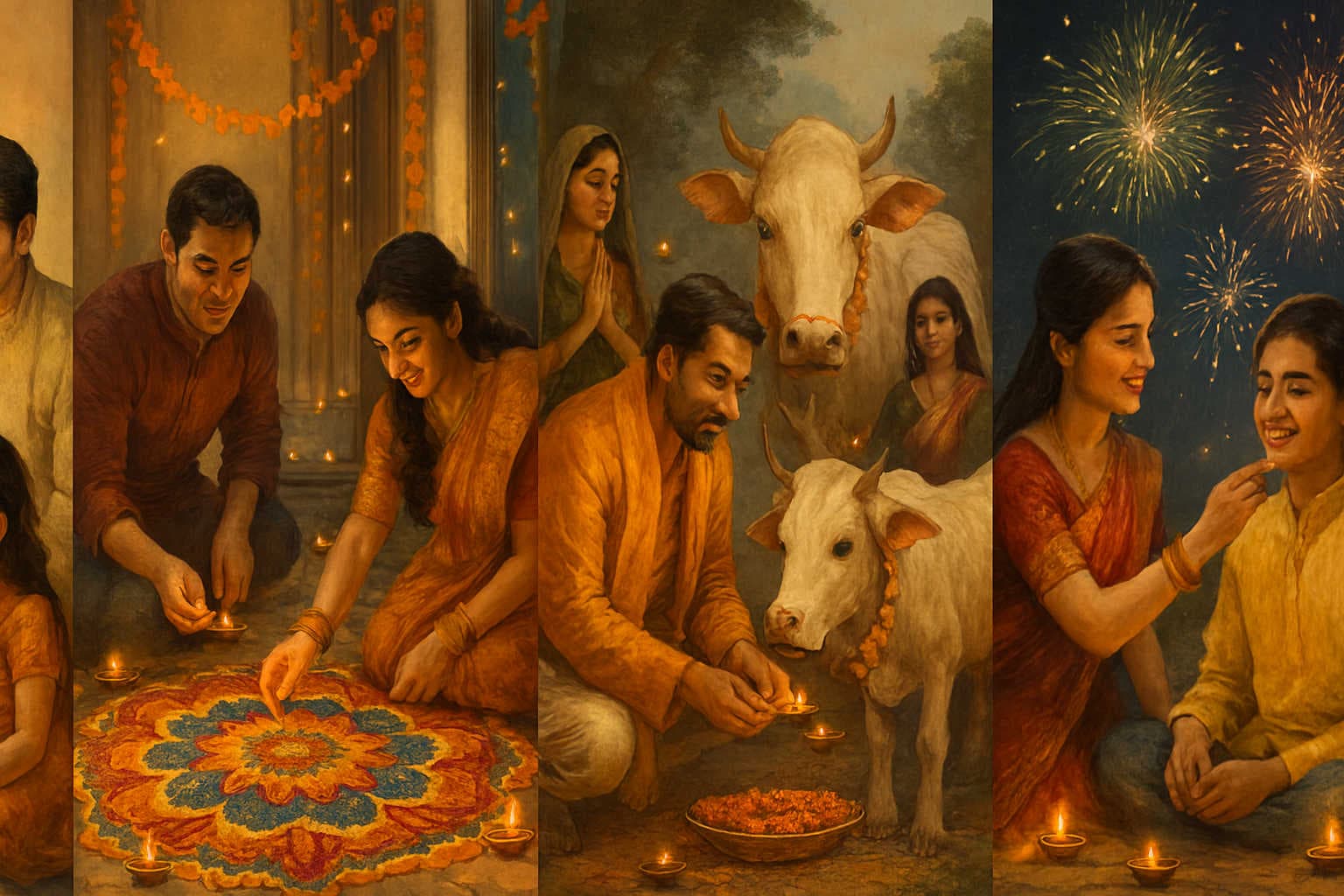
The celebrations begin with Dhanteras, observed on the thirteenth day of the dark fortnight of Kartika month. On this day, devotees worship Lord Dhanvantari, the divine physician, and Goddess Lakshmi, the goddess of wealth. It is considered highly auspicious to buy gold, silver, or new utensils, symbolizing prosperity and new beginnings. Homes are cleaned thoroughly and decorated with lamps and rangolis, preparing a sacred space for blessings. Spiritually, Dhanteras represents the invitation of health, wealth, and fortune into our lives.
Day 2: Narak Chaturdashi (Chhoti Diwali) – Victory of Light over Darkness
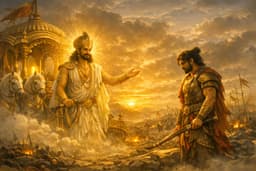
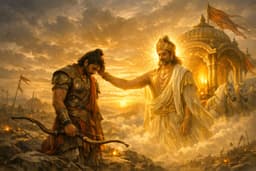
The second day, also known as Chhoti Diwali or Naraka Chaturdashi, is associated with the victory of Lord Krishna over the demon Narakasura. According to legend, Narakasura had terrorized the world until Krishna defeated him, freeing the people. The day symbolizes the destruction of negativity and ignorance. Families light lamps to banish darkness and may perform early morning oil baths, considered a ritual purification. Narak Chaturdashi reminds devotees that the triumph of good over evil is a necessary step toward spiritual enlightenment.
Day 3: Diwali (Lakshmi Puja) – The Main Festival of Lights
The third day is the grand Diwali night, celebrated with the worship of Goddess Lakshmi. According to mythology, this day marks the return of Lord Rama to Ayodhya after his victory over Ravana, when the city was illuminated with lamps. Families perform Lakshmi Puja, invoking prosperity, peace, and spiritual abundance. Diyas are lit in every corner of the house, symbolizing the dispelling of ignorance and the welcoming of divine light. Firecrackers, sweets, and family gatherings add joy to the celebration. This is the essence of Diwali—honoring light, knowledge, and prosperity.
Day 4: Govardhan Puja (Annakut) – Gratitude to Nature and Protection
The fourth day, Govardhan Puja or Annakut, is celebrated in honor of Lord Krishna lifting the Govardhan Hill to protect the villagers of Gokul from torrential rains caused by Lord Indra’s wrath. Devotees prepare large varieties of food and offer them to the deity as an expression of gratitude to nature and divine protection. In some regions, this day also marks the beginning of the new year according to the Hindu Vikram Samvat calendar. Symbolically, it teaches humility, protection, and the importance of harmony with nature.
Day 5: Bhai Dooj – The Celebration of Sibling Bond
The fifth and final day of Diwali is Bhai Dooj, dedicated to the bond between brothers and sisters. Sisters pray for the well-being, success, and long life of their brothers, while brothers give gifts and promise protection in return. The ritual strengthens family ties and highlights the sacred duty of love and responsibility among siblings. In cultural terms, Bhai Dooj balances the festival’s focus on wealth and prosperity with values of love, loyalty, and kinship.
The Spiritual Journey of the Five Days
Each of the five days of Diwali reflects a step in human and spiritual evolution:
- Dhanteras brings the energy of new beginnings and prosperity.
- Narak Chaturdashi emphasizes cleansing, defeating negativity, and welcoming purity.
- Diwali highlights the highest divine truth—the victory of light over darkness.
- Govardhan Puja reminds us to respect nature and divine protection.
- Bhai Dooj reinforces the value of relationships and unconditional love.
Conclusion
The five days of Diwali together form a holistic festival that encompasses material, spiritual, and emotional well-being. From health and wealth to cleansing and devotion, from honoring nature to cherishing family, Diwali is more than just lights and sweets—it is a journey of renewal and gratitude.
When families light diyas, perform pujas, and celebrate across these five days, they are not only continuing centuries-old traditions but also embodying the timeless wisdom of Hindu philosophy. Diwali, in its five-day glory, is truly the festival of life itself—where light, love, and prosperity unite all.