Why We Tie Raksha Sutra During Pujas
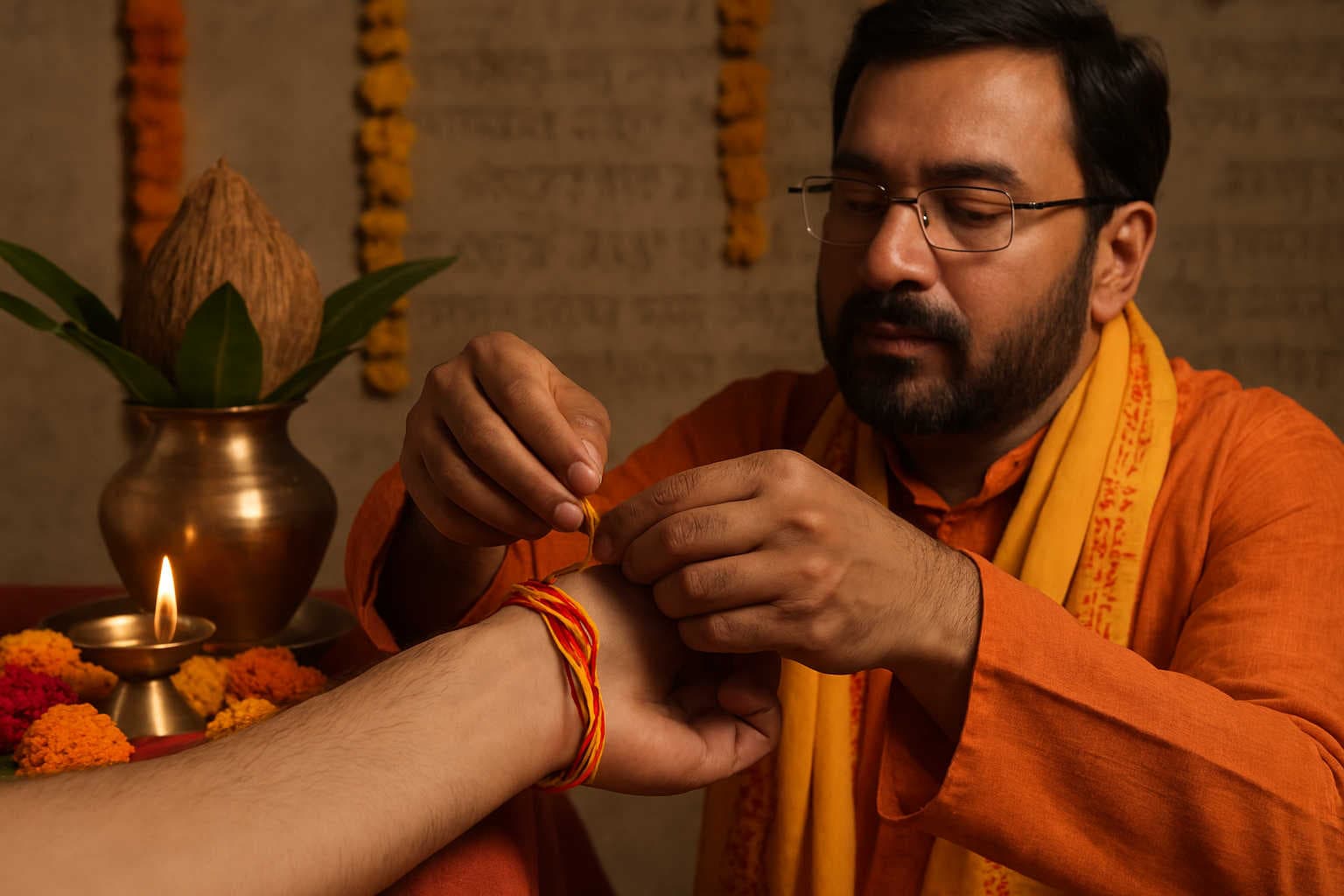
In Hinduism, rituals are filled with symbolism. Every step, from lighting a diya to offering flowers, carries deep spiritual meaning. One such important practice is tying the Raksha Sutra, also called Kalava or Mauli, during pujas and rituals. This sacred thread is usually tied around the wrist by a priest while chanting mantras, symbolizing protection, blessings, and commitment to righteousness.
Many devotees wear it without fully knowing its spiritual depth. Let us explore the origin, significance, symbolism, and reasons why Raksha Sutra is tied during pujas.
1. What is Raksha Sutra?
The word Raksha means protection, and Sutra means thread. Hence, Raksha Sutra is literally the “thread of protection.” It is generally a red, yellow, or red-yellow cotton thread tied on the wrist of devotees during rituals.
In different regions, it is also known as Kalava or Mauli.
- Kalava refers to the colored thread tied during pujas.
- Mauli comes from Sanskrit “Mouli,” meaning “top of the head,” but in rituals, it denotes a sacred thread tied on the wrist.
2. Symbolism of Raksha Sutra
The Raksha Sutra is not just a piece of thread. It symbolizes:
- Protection from negative energies, evil eyes, and misfortune.
- Bond with the Divine, showing surrender to God’s will.
- Reminder of Dharma, encouraging the wearer to follow the path of truth, discipline, and righteousness.
- Energy Balance, as per Ayurveda, the wrist is an important energy point, and the thread helps balance subtle energies.
3. Scriptural References
The practice of tying Raksha Sutra is rooted in Vedic tradition. In the Rigveda and Atharvaveda, threads are mentioned as symbols of strength and protection.
In Puranic stories, Raksha Sutra is tied during yajnas (sacrificial rituals) to invoke divine blessings.
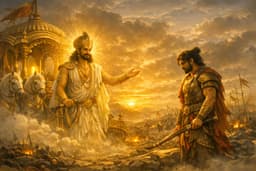
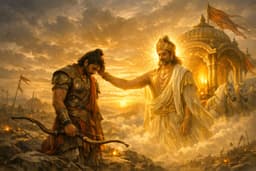
A popular belief connects the Raksha Sutra to Raksha Bandhan, where Draupadi tied a piece of cloth (considered symbolic of Raksha Sutra) to Krishna’s wrist, and he promised her eternal protection.
4. When is Raksha Sutra Tied?
The Raksha Sutra is commonly tied during:
- Daily pujas at home or temples.
- Festivals like Raksha Bandhan, Navratri, Diwali, and Ganesh Chaturthi.
- Yajnas and havans performed for prosperity, peace, or healing.
- Important life events, such as weddings, naming ceremonies, or Griha Pravesh.
5. Why is it Tied on the Wrist?
The wrist is believed to be a seat of energy points (naadis). By tying the Raksha Sutra here:
- It creates a protective shield of divine vibrations.
- The right wrist is tied for men, while the left wrist is tied for women, symbolizing balance in energies.
- It acts as a reminder of the vows taken during puja.
6. Spiritual and Psychological Benefits
- Faith and Focus – Wearing the Raksha Sutra creates mindfulness about one’s spiritual duties.
- Protection – It is believed to guard against negative energies and obstacles.
- Unity and Belonging – Families wearing the Raksha Sutra feel spiritually connected.
- Healing Energy – As per Ayurveda, the wrist point influences vital organs, and the thread helps maintain balance.
7. Regional Variations
- In North India, it is called Kalava and is red-yellow in color.
- In Maharashtra, a saffron-colored thread called Mauli is used, especially in Vithoba worship.
- In South India, threads are sometimes black or white, tied for protection and health.
8. Difference Between Raksha Sutra and Rakhi
While both symbolize protection, Rakhi (tied during Raksha Bandhan) emphasizes the bond between siblings, whereas Raksha Sutra is a more general sacred thread tied during rituals for divine blessings.
9. How Long Should One Wear Raksha Sutra?
Traditionally, devotees wear it until it naturally wears off or breaks on its own. This is seen as a sign that its protective role is complete. Some people remove it respectfully after a certain number of days or after the completion of a vrat (fast).
10. Conclusion
The Raksha Sutra is not just a ritualistic ornament but a sacred bond of protection, faith, and devotion. It connects the devotee with divine energy, wards off negativity, and serves as a reminder of spiritual duties.
The next time you participate in a puja and have a Raksha Sutra tied on your wrist, remember—it is not just a thread but a shield of blessings, carrying centuries of tradition, faith, and divine grace.