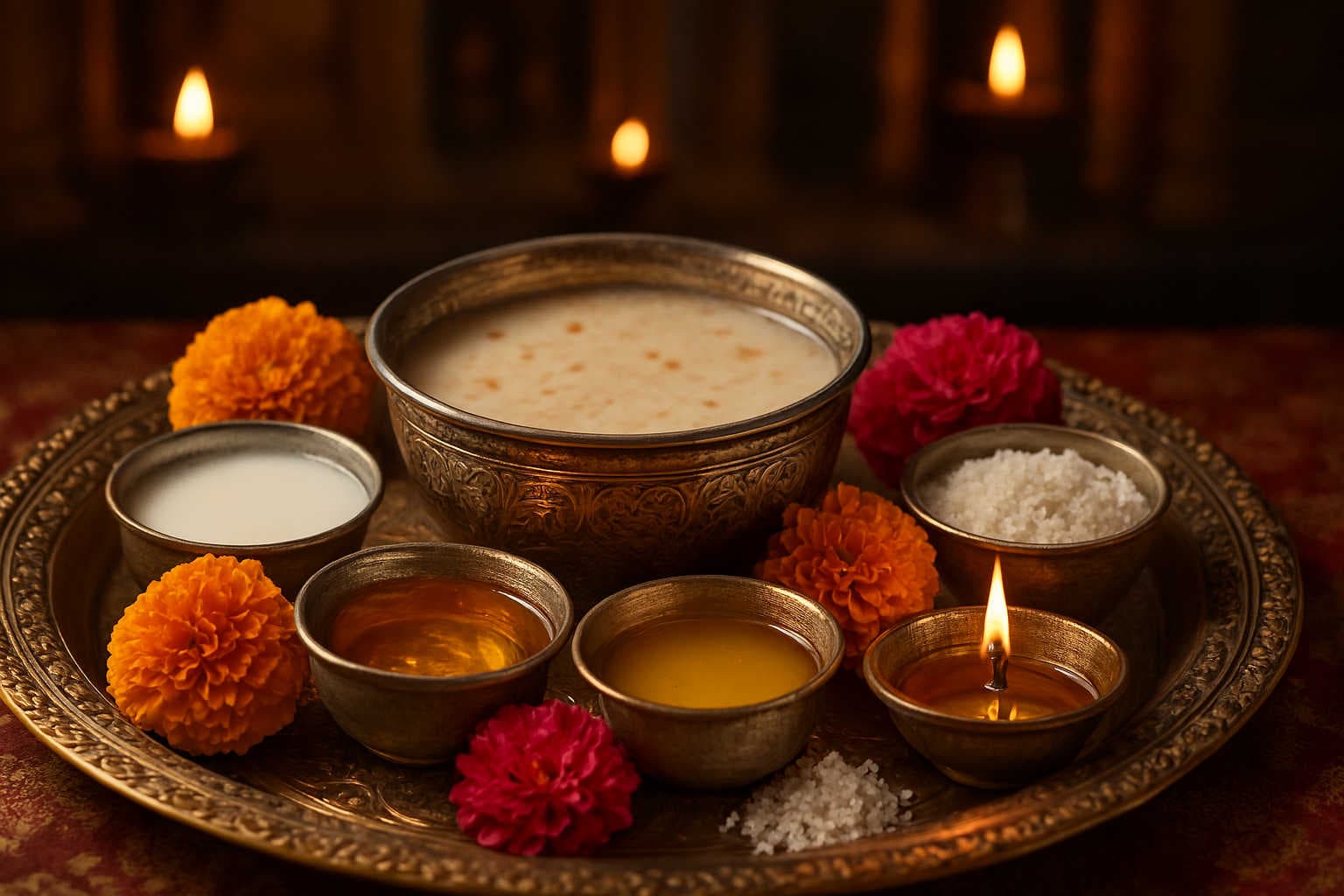
How to Prepare Panchamrit for Puja
In Hindu rituals, offerings made to deities hold a sacred place. Among them, Panchamrit—a mixture of five divine ingredients—is considered one of the purest and most auspicious offerings during puja. The word Panchamrit literally translates to “five nectars” (pancha = five, amrit = nectar of immortality). It is used to bathe deities (abhishek), as a prasad for devotees, and as a symbol of purity and devotion.
Let us explore the significance of Panchamrit, its ingredients, and the correct way to prepare it at home for puja.
1. The Significance of Panchamrit
Panchamrit is more than just a ritual offering—it carries spiritual, symbolic, and health-related importance. In Hindu belief:
- It purifies the atmosphere and the devotee’s mind.
- It is considered the nectar of life, symbolizing divine blessings.
- When offered to deities, it represents surrender, devotion, and gratitude.
- It balances energies in the body, as the ingredients align with Ayurvedic principles.
Panchamrit is also used in major rituals like Abhishek (ritual bathing of idols) in temples, during festivals like Janmashtami, Shivratri, Navratri, and in household pujas.
2. The Five Ingredients of Panchamrit and Their Symbolism
Panchamrit is traditionally made using five sacred ingredients, each carrying a deeper meaning:
- Milk – Symbolizes purity and spiritual nourishment.
- Curd (Yogurt) – Represents strength, fertility, and prosperity.
- Honey – Symbolizes sweetness, unity, and harmony.
- Ghee (Clarified Butter) – Represents strength, positivity, and victory over darkness.
- Sugar or Mishri – Symbolizes happiness, bliss, and divine grace.
Together, these ingredients represent the five elements of life (earth, water, fire, air, space) and the union of physical and spiritual energies.
3. Step-by-Step Preparation of Panchamrit
Preparing Panchamrit is simple but requires purity and devotion. Here’s how you can prepare it at home:
Ingredients Needed:
- 1 cup fresh milk
- 1 tablespoon curd (yogurt)
- 1 tablespoon honey
- 1 tablespoon ghee
- 1 tablespoon sugar (or powdered mishri)
Method:
1. Begin by cleansing yourself and the puja space. Wash your hands thoroughly before starting.
2. Take a clean silver, copper, or glass bowl for preparing Panchamrit (avoid plastic).
3. First, pour the milk into the bowl—it is considered the base of Panchamrit.
4. Add curd gently, followed by honey.
5. Next, add ghee and finally sugar.
6. Stir the mixture slowly in a clockwise direction while chanting mantras or silently offering prayers.
Panchamrit is now ready for offering to the deity. After the puja, it is distributed as prasad among devotees.
4. Variations of Panchamrit in Different Regions
Though the core recipe remains the same, slight variations exist across India:
- In South India, some families add tulsi leaves for sanctity.
- In temples, saffron strands or cardamom may be added for fragrance.
- In certain traditions, Panchamrit is made thinner for abhishek and thicker for prasad.
5. Scientific and Ayurvedic Benefits of Panchamrit
Beyond its spiritual significance, Panchamrit also offers health benefits:
- Milk and curd aid in digestion and provide calcium.
- Honey boosts immunity and energy.
- Ghee strengthens the body and calms the mind.
- Sugar provides instant energy and sweetness.
According to Ayurveda, consuming Panchamrit balances the three doshas (Vata, Pitta, Kapha) and nourishes the body holistically.
6. When is Panchamrit Used?
- Daily temple rituals for bathing deities.
- Festivals like Janmashtami (Krishna Abhishek), Maha Shivratri (Shiva Abhishek), and Navratri.
- Household pujas such as Satyanarayan puja, Griha Pravesh, and marriage rituals.
- Special offerings during fasts and auspicious beginnings.
7. Tips for Preparing Panchamrit with Devotion
- Always use fresh ingredients.
- Maintain cleanliness and purity while preparing.
- Use a dedicated puja vessel.
- Prepare Panchamrit just before the puja to retain freshness.
- Chant mantras like Om Namah Shivaya or Om Namo Bhagavate Vasudevaya while stirring.
Conclusion
Panchamrit is not just a sacred mixture but a divine nectar that embodies purity, devotion, and blessings. Preparing it with care and reverence transforms a simple offering into a spiritual connection with the divine. Whether used for abhishek or as prasad, Panchamrit carries the essence of surrender and sanctity, making it an essential part of Hindu rituals.
By understanding its symbolism and preparing it with devotion, devotees can experience the deeper meaning of this sacred nectar in every puja.