Why We Apply Haldi-Kumkum During Festivals
Festivals in India are rich with rituals, colors, and symbols that carry deep spiritual and cultural meaning. Among these, the practice of applying haldi (turmeric) and kumkum (vermilion) on the forehead during festive occasions and rituals holds a special place. This simple yet profound tradition is not just about color or decoration—it is an offering of blessings, protection, and auspiciousness.
1. What Are Haldi and Kumkum?
Haldi, or turmeric, is a yellow spice widely used in Indian kitchens and Ayurvedic medicine. It is known for its healing, purifying, and protective properties. Kumkum, usually made from turmeric and slaked lime or saffron, is a bright red powder symbolizing energy, prosperity, and divine feminine power. Together, haldi and kumkum represent purity and auspiciousness.
2. Spiritual Significance of Applying Haldi-Kumkum
In Hindu tradition, the forehead—especially the space between the eyebrows—is believed to be the location of the ajna chakra (third eye), the seat of wisdom and spiritual vision. Applying haldi or kumkum to this spot is said to activate spiritual energy, calm the mind, and invoke divine blessings.
- Haldi (Turmeric): Represents health, vitality, and protection against negative forces.
- Kumkum (Vermilion): Represents energy, marital bliss, and Shakti, the divine feminine energy.
Thus, applying haldi-kumkum during festivals symbolizes both physical protection and spiritual upliftment.
3. Role in Festivals and Puja Rituals
During festivals, pujas, and family gatherings, haldi and kumkum are applied on idols of deities, married women, and sometimes even guests. This is done as a mark of respect, blessing, and invitation of divine grace. For example:
- In Ganesh Chaturthi, haldi-kumkum is offered to Lord Ganesha during the puja.
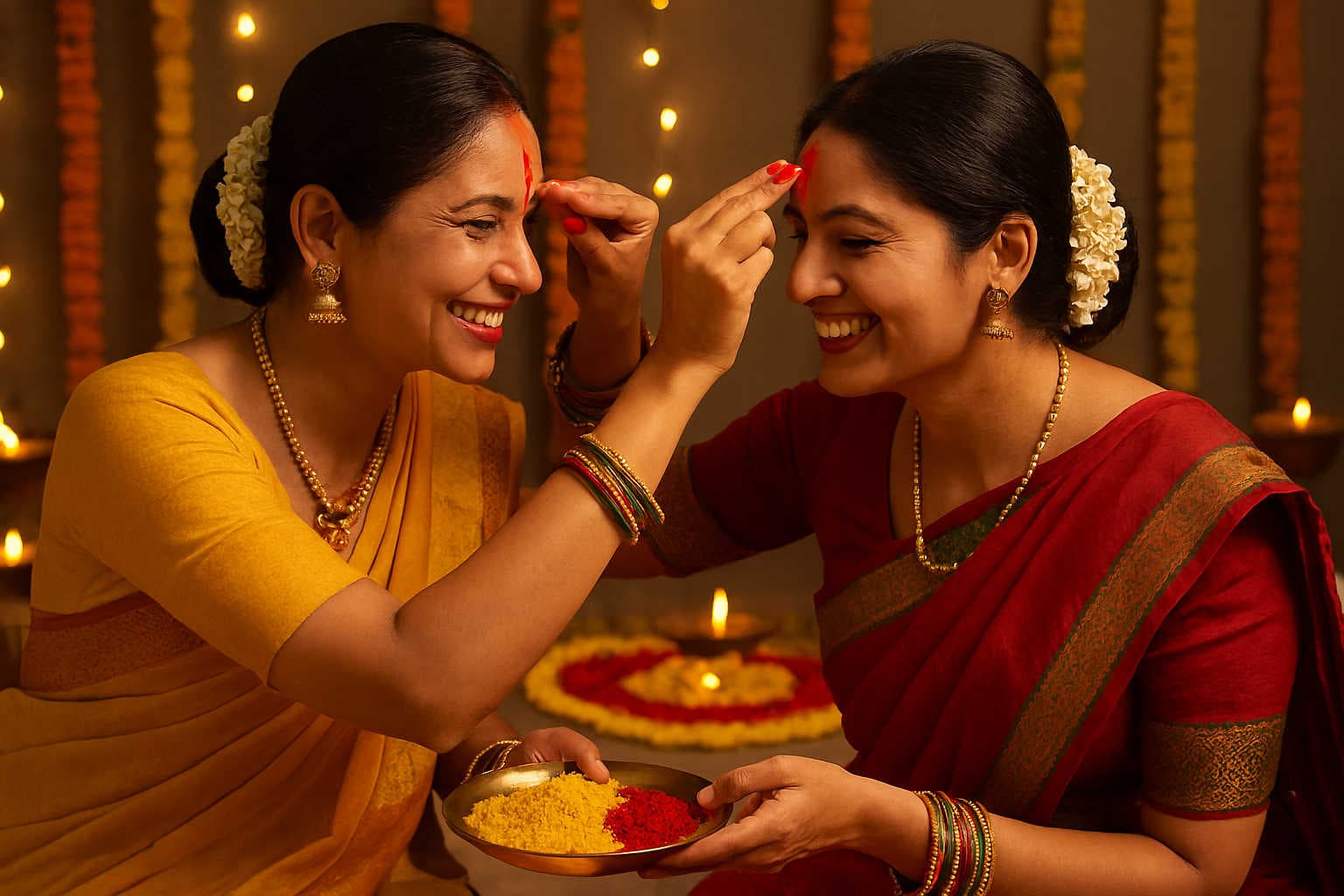
- In Navratri, women exchange haldi-kumkum as a gesture of invoking Goddess Durga’s blessings.
- In weddings, the bride and groom are adorned with haldi and kumkum to protect them from negative energies.
4. Haldi-Kumkum Tradition Among Women
A unique custom known as “Haldi-Kumkum ceremony” is observed especially in Maharashtra and South India. Married women are invited to gatherings where haldi and kumkum are applied on each other’s foreheads. Along with this, small gifts like betel leaves, bangles, or sweets are exchanged. This ceremony signifies sisterhood, prosperity, and the sharing of divine blessings. It is also believed to strengthen the bond between families and community.
5. Symbol of Marital Bliss and Shakti
Kumkum holds special significance for married women, who apply it on their maang (parting of the hair) as sindoor. It represents longevity of the husband, marital happiness, and the presence of Shakti in a woman’s life. Haldi, on the other hand, is associated with purity and fertility. During festivals, applying both powders together is seen as invoking the dual blessings of prosperity and well-being.
6. Ayurvedic and Scientific Perspective
Beyond cultural symbolism, haldi and kumkum also have practical benefits:
- Haldi has antibacterial and antiseptic properties, keeping the skin healthy.
- Applying turmeric on the forehead helps reduce stress and anxiety, balancing the body’s energies.
- The pressure point between the eyebrows is linked to the pituitary gland, and applying haldi/kumkum may aid in maintaining hormonal balance.
7. Colors and Cosmic Energy
In Hinduism, colors are deeply symbolic. Yellow (haldi) represents the energy of the sun, light, and life-giving power. Red (kumkum) represents fire, strength, and divine feminine energy. Together, they form a union of harmony, representing the balance of life forces. By applying them during festivals, devotees align themselves with cosmic energies.
8. Extending Hospitality and Blessings
When guests are welcomed with a tilak of haldi or kumkum, it is more than a mark of respect—it is a blessing. The host offers protection, goodwill, and positive energy, turning the gathering into a spiritually charged space. This ritual reinforces the Indian value of “Atithi Devo Bhava” (Guest is God).
9. Modern Relevance of Haldi-Kumkum
Even in today’s modern world, where traditions are evolving, the practice of applying haldi-kumkum has retained its charm. Whether in temples, homes, or cultural programs, this ritual continues to symbolize harmony, auspiciousness, and spiritual awareness. For many women, haldi-kumkum gatherings are also an occasion to connect socially and celebrate shared cultural heritage.
Conclusion
The application of haldi-kumkum during festivals is a timeless practice rooted in spirituality, health, and community values. While haldi symbolizes purity, protection, and healing, kumkum stands for energy, prosperity, and divine grace. Together, they create a powerful ritual that connects individuals with the goddess, invokes blessings, and strengthens social bonds.
In essence, haldi-kumkum is much more than a ritualistic powder—it is a sacred gesture of devotion, auspiciousness, and unity that continues to enrich Hindu festivals across generations.