Types of Navratri – Sharad, Chaitra, and More
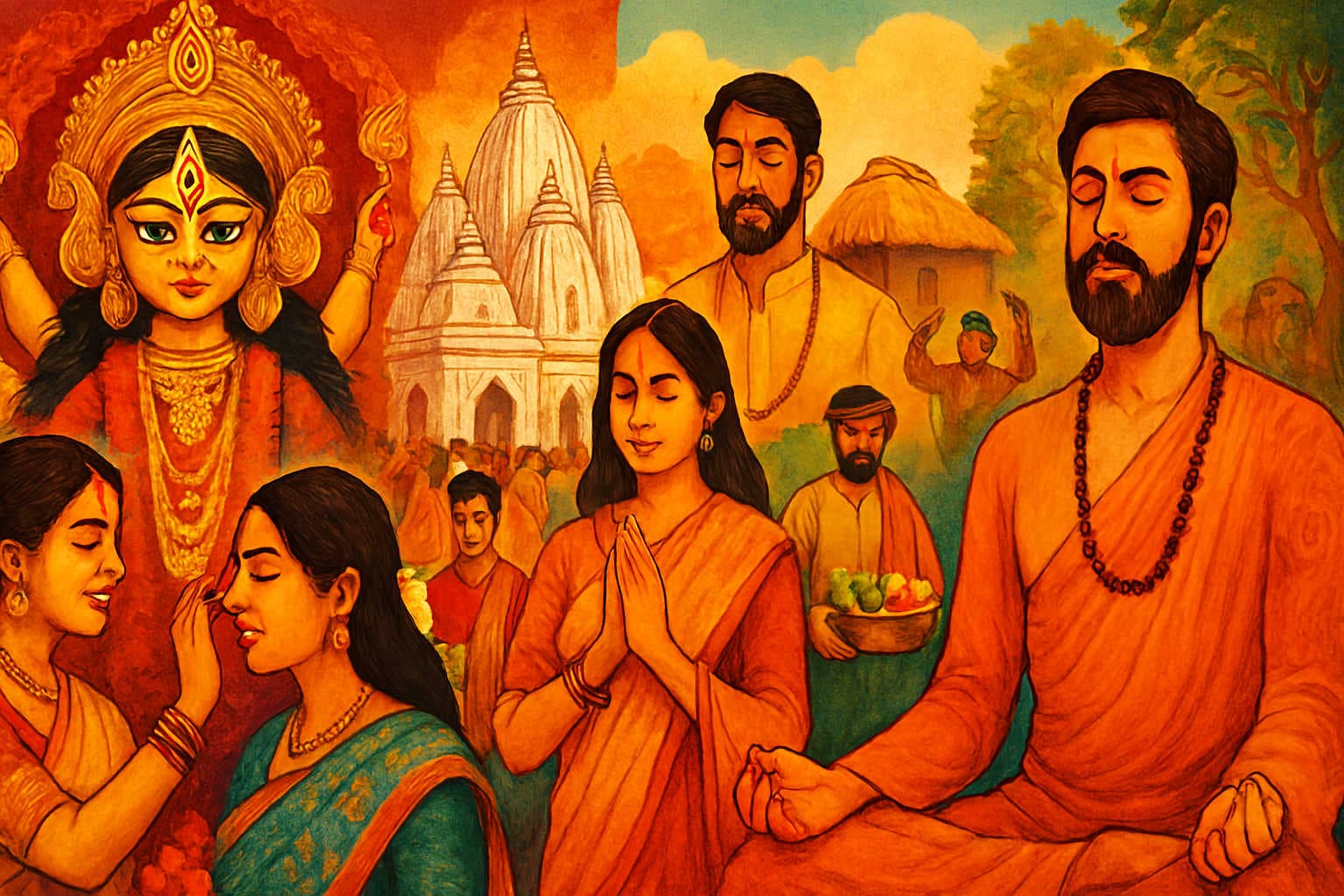
Navratri is one of the most celebrated Hindu festivals, dedicated to the worship of Goddess Durga and her nine forms. While most people are familiar with the grand Sharad Navratri that takes place in September–October, the truth is that Navratri is observed four times a year, each holding its own significance. These are: Sharad Navratri, Chaitra Navratri, Magha Navratri, and Ashadha Navratri. Together, they reflect the cyclical rhythm of nature, seasons, and spiritual practices in Hindu tradition.
Let us explore the types of Navratri, their timing, rituals, and importance across India.
1. Sharad Navratri – The Most Celebrated Navratri
Sharad Navratri, usually falling in September–October (Ashwin month of the Hindu calendar), is the most widely celebrated Navratri. It culminates in Vijayadashami (Dussehra), marking Goddess Durga’s victory over Mahishasura. In northern and western India, it is celebrated with fasting, daily pujas, and vibrant Garba and Dandiya dances in Gujarat. In West Bengal, it is observed as Durga Puja, where magnificent idols of the goddess are worshipped and immersed in water at the end of the festival. Sharad Navratri is considered the most spiritually powerful of all, as it occurs when nature transitions from monsoon to autumn—a time believed to enhance inner transformation.
2. Chaitra Navratri – The Spring Navratri
Chaitra Navratri falls in March–April, marking the beginning of the Hindu New Year in several regions of India. It is celebrated with equal devotion, though often with simpler rituals compared to Sharad Navratri. This Navratri ends with Ram Navami, the birth anniversary of Lord Rama, making it a dual celebration of both Durga and Vishnu’s incarnation. In northern India, devotees observe fasting, chant mantras, and perform Kalash Sthapana (sacred pot installation) to invoke Goddess Shakti. Farmers also view Chaitra Navratri as an auspicious time to begin new agricultural cycles.
3. Magha Navratri – The Winter Navratri
Magha Navratri takes place in January–February during the Shukla Paksha (waxing phase of the moon) of the Magha month. This Navratri is not as widely celebrated publicly but is observed privately by devotees, saints, and yogis. It is often connected with Gupta Navratri, meaning it is more esoteric and spiritual in nature. Rituals include meditation, mantra chanting, homas (fire offerings), and inner purification practices. It is believed that worshipping the goddess during this time enhances spiritual strength, self-discipline, and inner awakening.
4. Ashadha Navratri – The Rainy Season Navratri
Ashadha Navratri is observed in June–July, during the monsoon season, and like Magha Navratri, it is considered a Gupta Navratri. This means it is more focused on inner spiritual practices rather than grand public festivities. Devotees use this time for penance, meditation, tantra sadhana, and connecting with divine feminine energies in solitude. Yogis believe Ashadha Navratri is especially potent for awakening kundalini energy and progressing on the path of self-realization.
5. Sharad & Chaitra vs. Magha & Ashadha
While Sharad Navratri and Chaitra Navratri are celebrated publicly with community participation, Garba, Dandiya, and Durga Puja, the Magha and Ashadha Navratris are more inward-focused. They are observed mostly by dedicated seekers and spiritual practitioners. This duality highlights the balance between external celebration and internal sadhana in Hindu traditions.
6. Regional Variations in Celebrations
- In North India, Chaitra and Sharad Navratri involve fasting and Ram Navami/Dussehra celebrations.
- In West Bengal and Assam, Sharad Navratri is observed as Durga Puja with elaborate pandals, cultural events, and processions.
- In Gujarat and Maharashtra, Garba and Dandiya nights are symbolic of the goddess’s cosmic dance.
- In South India, families celebrate Navratri by setting up Bommai Golu (doll displays), symbolizing spiritual progression.
- In Himalayan regions, Navratri is linked with seasonal changes and agricultural cycles.
7. Spiritual Significance of Four Navratris
Each Navratri represents a unique aspect of the goddess and the cycle of creation:
- Chaitra – Birth, beginnings, creation
- Sharad – Preservation, power, victory of good
- Magha – Introspection, meditation, purification
- Ashadha – Transformation, spiritual awakening
Thus, celebrating all four Navratris reflects the entire journey of life, from birth to inner realization.
Conclusion
Navratri is not just one festival but a recurring reminder of divine energy manifesting throughout the year. While Sharad Navratri remains the grandest, Chaitra, Magha, and Ashadha Navratris hold equal spiritual depth. Together, they highlight the rhythm of seasons, the duality of external celebrations and inner sadhana, and the eternal presence of Goddess Shakti in the universe. Whether celebrated with Garba and Durga Puja or with meditation and prayer, each Navratri offers devotees a chance to reconnect with the goddess, renew their energies, and embrace spiritual transformation.