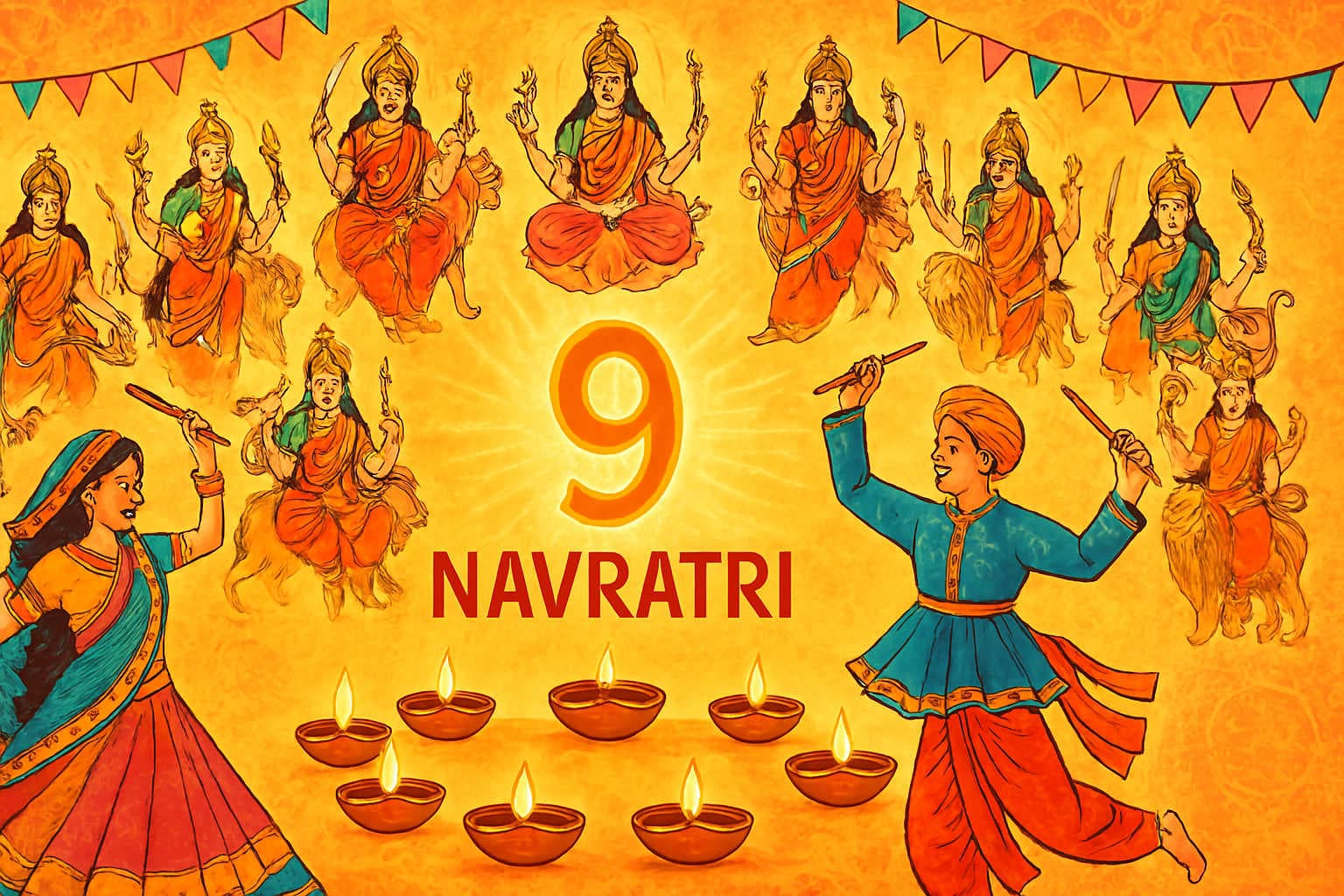
Meaning of the Number Nine in Navratri
Navratri is one of the most important Hindu festivals, celebrated with devotion, dance, fasting, and worship of Goddess Durga. The very name “Navratri” translates to “nine nights”, and throughout these days, devotees honor the nine forms of Goddess Durga. But why nine? Why not seven or ten? The number nine carries deep spiritual, symbolic, and cultural significance in Hinduism, making Navratri a festival of both divine worship and profound meaning.
1. The Nine Nights of Shakti
Navratri lasts for nine nights and ten days, during which each day is dedicated to a different manifestation of Goddess Durga. These nine forms, known as Navdurga, represent the journey from the beginning of creation to spiritual liberation. Each form embodies a unique power: from Shailaputri’s grounding energy to Siddhidatri’s blessings of fulfillment. Thus, nine is not just a number—it is a path of transformation through divine feminine energy.
2. Nine as a Symbol of Completeness in Hindu Numerology
In Hindu numerology and philosophy, the number nine is considered sacred and complete. It is the last single digit, symbolizing the end of a cycle and the beginning of renewal. When multiplied, the digits of nine always reduce back to nine (for example, 9 × 3 = 27 → 2+7 = 9). This property makes nine the symbol of infinity, wholeness, and cosmic order. Navratri, therefore, represents a complete cycle of devotion and inner transformation.
3. Connection with Nine Planets (Navagrahas)
Hindu cosmology revolves around the influence of the Navagrahas, the nine planets that govern destiny. The worship of nine goddesses during Navratri is also believed to align devotees with these celestial forces, bringing balance, prosperity, and protection. Just as the planets guide cosmic order, the nine forms of Durga guide spiritual order in one’s life.
4. Nine Forms of Goddess Durga (Navdurga)
Each day of Navratri honors a different goddess, creating a nine-step journey of spiritual growth:
-
Shailaputri – Strength and grounding energy.
-
Brahmacharini – Devotion and self-discipline.
-
Chandraghanta – Courage and serenity.
-
Kushmanda – Source of creation and energy.
-
Skandamata – Nurturing motherly love.
-
Katyayani – Fierce warrior power.
-
Kalaratri – Destroyer of darkness and fear.
-
Mahagauri – Purity, peace, and forgiveness.
-
Siddhidatri – Spiritual fulfillment and blessings.
Together, these nine forms symbolize the complete spectrum of divine energy, guiding devotees from material existence toward spiritual liberation.
5. Nine Colors of Navratri
Navratri is also celebrated with nine symbolic colors, each associated with one goddess and her qualities. Devotees wear clothes of that color each day, enhancing the spiritual atmosphere. These colors—red, blue, yellow, green, white, orange, pink, purple, and grey—remind devotees of the diversity and richness of divine energies.
6. Nine Nights as the Battle Against Negativity
The festival commemorates the goddess’s victory over the buffalo demon Mahishasura after nine nights of battle. This symbolizes the ongoing battle between good and evil, both in the world and within the human mind. The number nine, therefore, represents the struggle and eventual triumph of righteousness after perseverance and devotion.
7. Connection to Human Life – Navdwar (Nine Gates of the Body)
In Hindu philosophy, the human body is described as having Navdwar, or nine gates (two eyes, two ears, two nostrils, mouth, anus, and genital). Navratri reminds devotees that spiritual discipline involves controlling these nine doors of perception and directing them toward divine consciousness. Thus, nine represents mastery over the senses and spiritual awakening.
8. Cultural Expressions of Nine in Navratri
Across India, Navratri celebrations reflect the importance of nine:
-
In Gujarat, Garba and Dandiya dances are performed in circular formations that often symbolize nine circles of energy.
-
In West Bengal, Durga Puja is celebrated with grandeur, where the nine forms of the goddess are worshiped through rituals and cultural performances.
-
In South India, families display dolls (Bommai Golu), arranging them in steps that represent spiritual evolution.
In all these forms, the symbolism of nine unites communities in devotion and joy.
9. Spiritual Journey of Navratri
The nine nights of Navratri also symbolize the inner journey of the soul:
-
The first three nights represent overcoming physical and material desires.
-
The next three nights focus on emotional and mental purification.
-
The last three nights are dedicated to spiritual wisdom and divine realization.
This progression reflects the transformative power of nine, where each night leads devotees closer to self-realization.
Conclusion
The number nine in Navratri is not random; it is deeply rooted in Hindu philosophy, numerology, and cosmology. It represents completeness, cosmic order, and the nine-fold journey of life. Through the worship of the nine forms of Durga, the nine planets, the nine gates of the body, and the nine colors of devotion, Navratri becomes a celebration of spiritual wholeness.
As devotees sing, dance, and worship during these nine nights, they are not only honoring the goddess but also aligning themselves with the eternal cycle of creation, preservation, and liberation. The sacred number nine reminds us that divinity exists in completeness—and Navratri is the perfect festival to experience it.