Story of Bhakta Sudama and Lord Krishna – Deep Meaning
Among the countless tales of Lord Krishna’s divine compassion, the story of Bhakta Sudama (also known as Kuchela) holds a very special place. Unlike stories of battles, miracles, or grandeur, this is a tale of friendship, humility, and unconditional love. It reminds us that true wealth is not in material possessions but in devotion, faith, and the purity of heart.
1. Who Was Sudama?
Sudama was a poor Brahmin and a childhood friend of Lord Krishna. Both studied together at the ashram of Guru Sandipani. While Krishna later became the king of Dwarka, Sudama lived in dire poverty with his wife and children. Despite his struggles, Sudama remained devoted to God and content with his simple life.
His wife, however, one day urged him to visit Krishna, not just for help but because friends should share joys and sorrows. With hesitation and deep humility, Sudama agreed.
2. Sudama’s Journey to Krishna
Sudama had nothing to offer to a king. His wife borrowed some beaten rice (poha), Krishna’s childhood favorite, and tied it in a small cloth pouch for him to present. Carrying this humble gift, Sudama walked barefoot to Dwarka, thinking more about meeting his friend than asking for help.
This journey reflects how true devotion does not seek favors but only the joy of divine company.
3. Krishna’s Grand Welcome
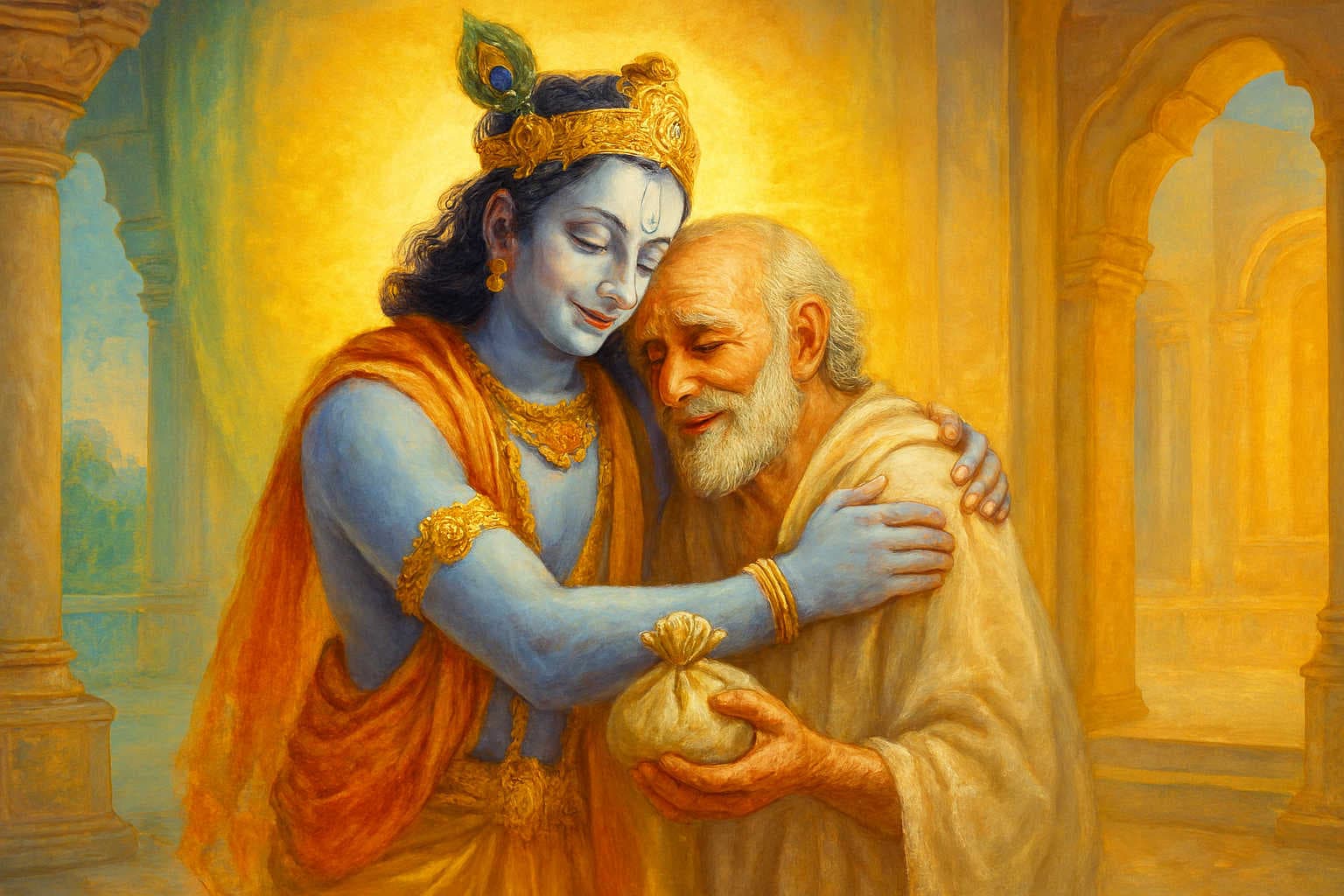
When Sudama arrived at Krishna’s palace, the guards were astonished that the king himself rushed forward to embrace a poor Brahmin. Krishna washed Sudama’s feet with his own hands, seated him with honor, and spoke lovingly about their childhood memories.
For Krishna, friendship was beyond social status. He saw not the ragged clothes of Sudama, but the pure heart and love of his friend.
4. The Offering of Beaten Rice
Sudama hesitated to give his humble gift, embarrassed that it was not worthy of a king. But Krishna, with great joy, snatched the pouch and ate the beaten rice with delight, saying it was the sweetest offering.
This moment reflects a profound truth: God values devotion, not the grandeur of offerings. A sincere heart pleases the divine more than gold or jewels.
5. Sudama’s Return and Transformation
Sudama never asked for wealth. He was overwhelmed just by Krishna’s affection. However, when he returned home, he found his hut transformed into a palace, and his family blessed with prosperity.
The message here is clear: When you surrender with love and devotion, divine grace flows unasked. Krishna gave Sudama not just wealth, but dignity and comfort for his family.
6. Deep Meaning of the Story
The story of Bhakta Sudama and Krishna is rich with spiritual lessons:
-
True Friendship: Real bonds are beyond wealth, status, or material possessions. Krishna showed that love and respect for a friend are eternal.
-
Humility and Devotion: Sudama’s simple gift symbolized sincerity. Even the smallest offering becomes divine if given with pure intent.
-
Divine Compassion: God understands unspoken needs. Sudama did not ask for help, yet Krishna blessed him abundantly.
-
Contentment and Gratitude: Sudama’s acceptance of his poverty shows that true happiness comes from contentment, not wealth.
-
Bhakti Over Rituals: This tale emphasizes that devotion (bhakti) outweighs rituals, luxury, or external show of faith.
7. Sudama’s Story in Daily Life
Even today, devotees remember Sudama while offering the simplest food to God. The story inspires people to value relationships over riches, faith over fear, and humility over pride.
Businessmen, farmers, and householders often narrate this story to children, teaching them that wealth without devotion is empty, but devotion can attract all blessings.
8. Symbolism in the Sudama Story
-
Beaten Rice – Symbol of simplicity and purity.
-
Krishna Washing Sudama’s Feet – Symbol of God’s humility and love for devotees.
-
Sudama’s Transformation – Symbol of inner wealth leading to outer prosperity.
Conclusion
The story of Bhakta Sudama and Lord Krishna is not just about a poor man meeting his rich friend—it is about the eternal bond between the human soul and the divine. It teaches us that God sees the love in our hearts, not the luxury of our offerings.
In a world where relationships often depend on wealth and power, this story is a reminder of the timeless values of friendship, humility, and devotion.
As long as the name of Krishna is remembered, Sudama’s love and simplicity will continue to inspire devotees to walk the path of faith and surrender.