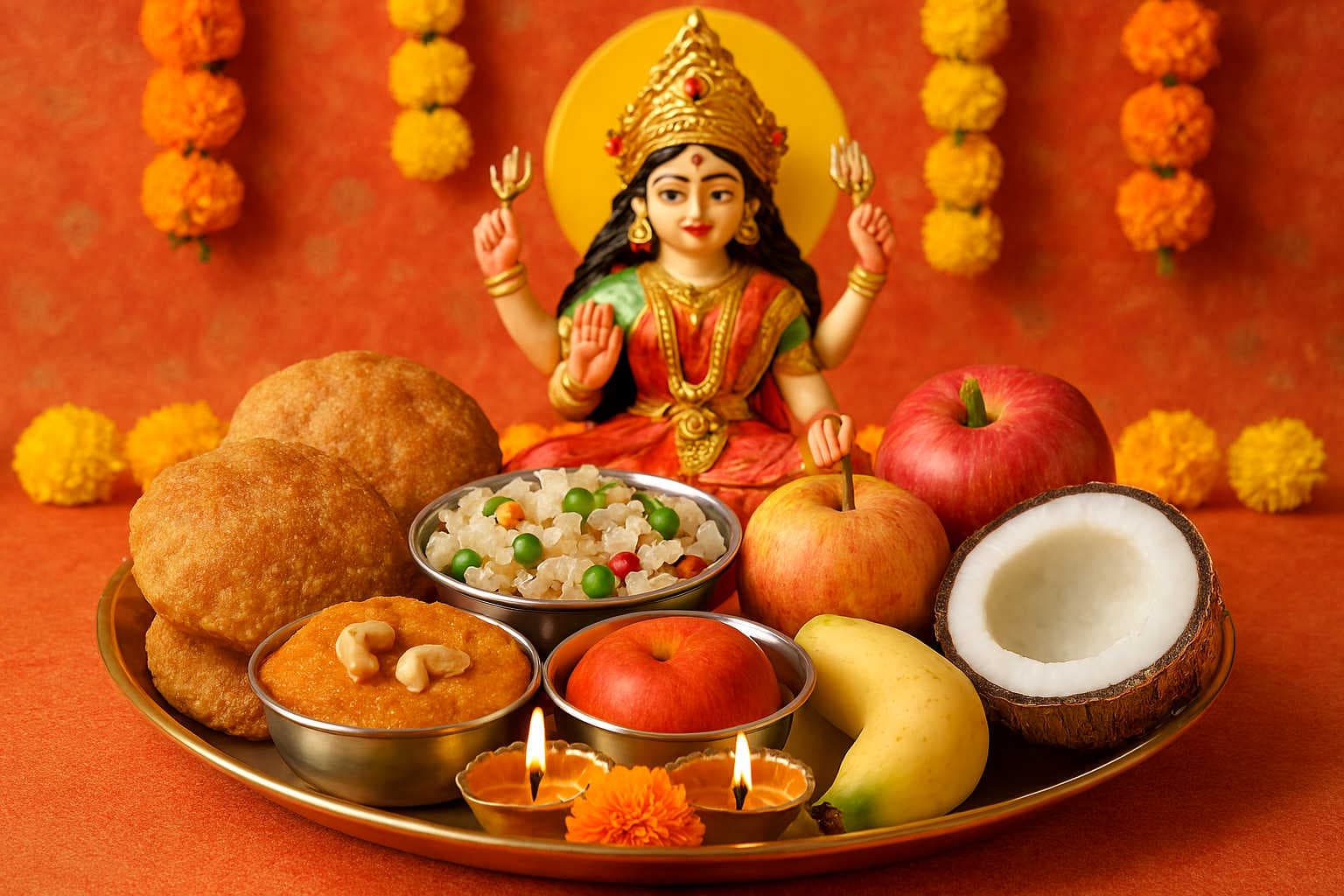
Rituals and Recipes for Navratri Prasad
Navratri, one of the most significant Hindu festivals, is celebrated with devotion and grandeur for nine days in honor of Goddess Durga and her various manifestations. Each day of Navratri carries its own importance, with devotees offering prayers, performing rituals, and observing fasts to seek blessings for prosperity, protection, and spiritual strength. Among these rituals, preparing and offering Navratri prasad (sacred food) holds special significance.
The tradition of prasad is not merely about food—it represents purity, devotion, and gratitude towards the divine. The offerings are prepared with satvik ingredients, free from onion, garlic, and grains, symbolizing simplicity and spiritual discipline.
1. Rituals of Offering Navratri Prasad
Morning Rituals
-
Devotees begin the day with a bath and wear clean, often traditional, attire.
-
The altar is decorated with flowers, diyas, and an idol or picture of Goddess Durga.
-
Kalash sthapana (installation of the sacred pot) is done on the first day, signifying the start of the festival.
Daily Offering of Prasad
-
Each day, special foods are prepared as prasad for the goddess.
-
Devotees offer fruits, dry fruits, and satvik dishes before consuming them as bhog.
-
The food is first placed before the deity with incense sticks, flowers, and prayers before being distributed as naivedya (offering).
Kanya Pujan (Ashtami/Navami Ritual)
-
On the eighth or ninth day of Navratri, the Kanya Pujan ritual is performed.
-
Young girls, representing the nine forms of Goddess Durga, are invited home and offered prasad such as poori, chana, and halwa.
-
Their feet are washed, and they are honored with gifts and blessings, signifying the goddess’s grace.
2. Symbolism of Navratri Prasad
Prasad in Hindu rituals is not ordinary food—it becomes sanctified after being offered to the deity. During Navratri, prasad symbolizes:
-
Purity of Heart: Satvik food reflects self-control and discipline.
-
Divine Blessings: Sharing prasad signifies spreading the goddess’s grace among family and community.
-
Unity and Gratitude: Eating prasad together reinforces cultural unity and spiritual togetherness.
3. Popular Navratri Prasad Recipes
a) Sabudana Khichdi
A light, wholesome dish made with soaked sabudana (tapioca pearls), peanuts, potatoes, and mild spices. It is filling yet easy to digest, making it perfect for fasting.
Recipe Tip: Use rock salt (sendha namak) instead of regular salt, as it is allowed during vrat (fasting).
b) Kuttu (Buckwheat) Puri
Prepared from buckwheat flour, these puris are deep-fried and served with potato curry. Buckwheat is considered a vrat-friendly grain.
Recipe Tip: Add boiled potatoes to the dough for softness and flavor.
c) Singhara Halwa
A delicious dessert made with water chestnut flour, ghee, and sugar. Often served as bhog to Goddess Durga.
Recipe Tip: Garnish with chopped dry fruits for richness.
d) Aloo Jeera (Potato with Cumin)
A simple yet flavorful dish of boiled potatoes sautéed with cumin seeds, green chilies, and rock salt. This is a staple prasad item.
e) Sabudana Kheer
A creamy, sweet dish made by simmering sabudana in milk, flavored with cardamom and garnished with almonds and raisins. Offered as bhog during evening rituals.
f) Coconut Ladoo
Sweet balls made with grated coconut, condensed milk, or jaggery. Considered highly auspicious and often distributed as prasad.
g) Traditional Halwa-Chana-Poori (Ashtami Special)
Perhaps the most iconic Navratri prasad combination:
-
Sooji Halwa: Semolina halwa made with ghee and sugar.
-
Kala Chana: Boiled black chickpeas tempered with mild spices.
-
Poori: Deep-fried bread, often made with wheat or kuttu flour.
This trio is especially prepared for Kanya Pujan and holds immense religious value.
4. Guidelines for Preparing Navratri Prasad
-
Use only satvik ingredients—no onion, garlic, rice, or wheat.
-
Cook in a clean environment with fresh ingredients.
-
Always prepare food with devotion, as the energy of intention is considered equally important.
-
First offer to the goddess before serving family or guests.
5. Regional Variations of Navratri Prasad
-
North India: Halwa-poori-chana dominates.
-
Maharashtra: Sabudana khichdi and upvas thalipeeth are popular.
-
South India: Sundal (a dish of boiled legumes with coconut) is offered.
-
West Bengal: During Durga Puja, bhog includes khichuri, labra (mixed vegetables), and sweets.
Conclusion
Navratri prasad is more than just festive food—it is a symbol of faith, purity, and devotion. Each dish prepared with love and satvik ingredients becomes a medium to connect with the divine. The rituals associated with prasad, from daily offerings to the grand Ashtami feast, reflect the spiritual essence of Navratri.
By observing these traditions and preparing prasad with devotion, devotees not only honor Goddess Durga but also strengthen family bonds and preserve cultural heritage. This Navratri, whether it is a simple fruit offering or the elaborate halwa-puri-chana feast, let every bite of prasad remind us of the divine grace showered by Maa Durga.