Importance of Red in Hindu Weddings and Festivals
In Hindu culture, colors hold deep symbolic meaning, and among them, red is regarded as the most auspicious. Whether it is a wedding, festival, or ritual, the color red is almost always present, representing life, purity, energy, and divine feminine power (Shakti). This vibrant hue is woven into the very fabric of Indian traditions, making it more than just a color—it is a sacred expression of spirituality and celebration.
1. Red in Hindu Philosophy and Spirituality
In Hinduism, red is considered the color of Shakti, the cosmic feminine energy that sustains the universe. It symbolizes creation, fertility, passion, and strength. Goddess Durga, the embodiment of power, is often depicted wearing red attire. Similarly, red also represents purity and auspiciousness, which is why it plays a crucial role in sacred ceremonies.
The chakra system in yogic philosophy also associates red with the Muladhara (root) chakra, located at the base of the spine. This chakra represents stability, security, and grounding—qualities essential in both marriage and festive celebrations.
2. Importance of Red in Hindu Weddings
a. The Bride’s Attire
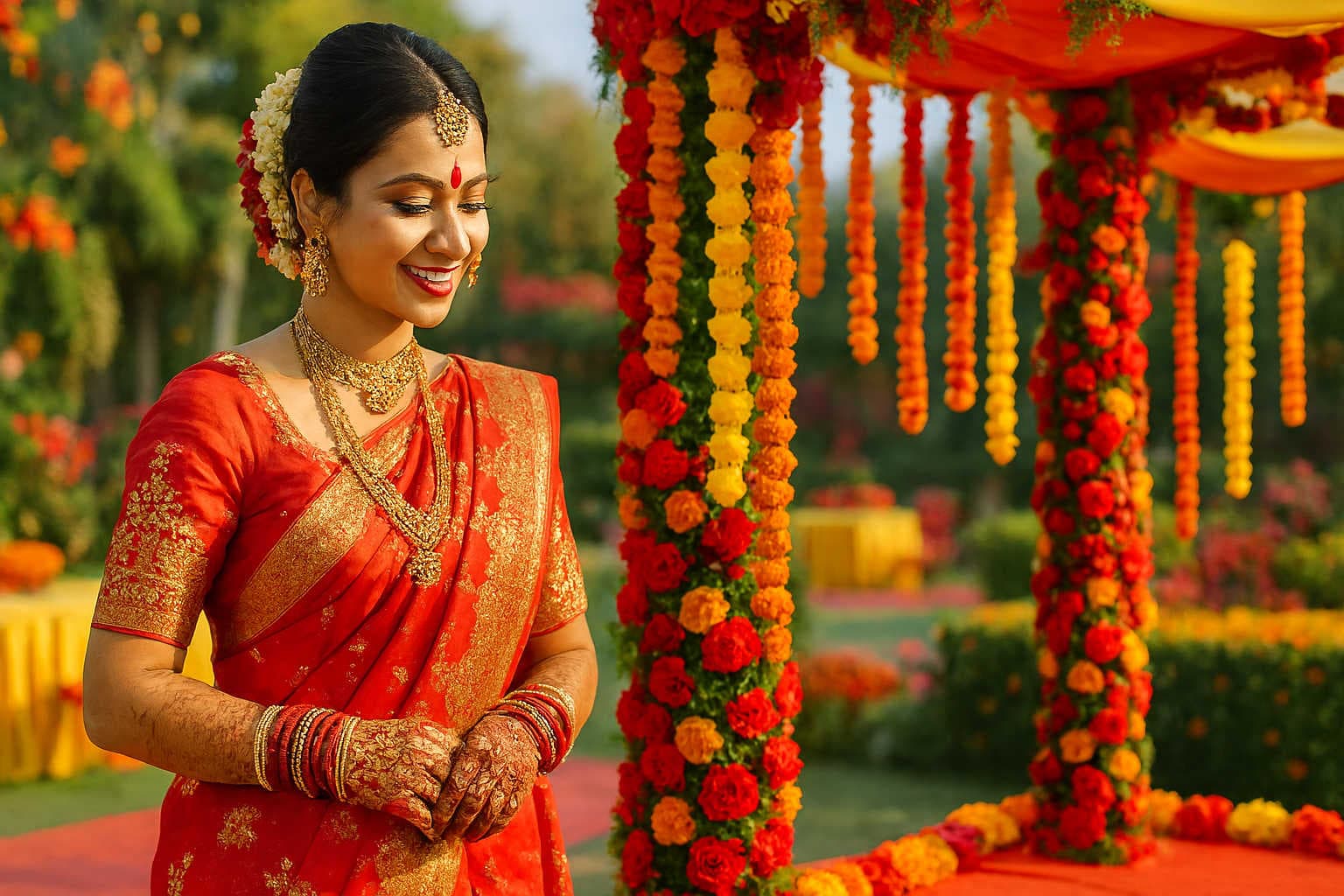
Traditionally, Hindu brides wear red sarees or lehengas, adorned with gold embroidery. The red attire is not just decorative but deeply symbolic. It represents the bride’s transition into a new phase of life filled with love, passion, and prosperity.
b. Sindoor and Mangalsutra
The sindoor (vermillion) applied by the groom on the bride’s forehead is red, signifying her status as a married woman. The mangalsutra (sacred necklace) is also tied with auspicious red or yellow threads, sealing the bond of marriage.
c. Red in Rituals
From wedding invitations to the decoration of the mandap (sacred canopy), red is everywhere. The bride’s bangles, bindis, and even the flowers used in wedding rituals are often red, symbolizing love and fertility.
3. Red in Hindu Festivals
a. Durga Puja & Navratri
During Navratri, red is one of the primary colors worn to honor Goddess Durga. Devotees wear red to seek strength, courage, and blessings from the goddess.
b. Karva Chauth
Married women observing Karva Chauth dress in red attire, as it signifies marital bliss and long life for their husbands.
c. Diwali
During Diwali, homes are decorated with red rangolis, diyas, and flowers, as the color is believed to attract prosperity and positive energy.
d. Holi
Though Holi is a festival of many colors, red gulal (powder) is particularly significant, representing love and festivity.
4. Cultural Practices Associated with Red
-
Bindi: Traditionally, a red bindi on the forehead symbolizes marital status and also represents the third eye, or inner wisdom.
-
Kumkum & Tilak: Red kumkum is applied on the forehead during religious rituals to invoke divine blessings.
-
Red Threads (Kalava): A red sacred thread tied on the wrist during pujas symbolizes protection and divine energy.
5. Symbolism in Daily Life
Beyond weddings and festivals, red is used in everyday spiritual practices:
-
Offering red flowers like hibiscus to deities during puja.
-
Using red-colored cloths to cover idols.
-
Painting red swastikas on doors and walls to invite prosperity.
In each of these acts, red becomes a reminder of auspiciousness and spiritual protection.
6. Psychological and Social Dimensions of Red
Psychologically, red is known to evoke feelings of warmth, energy, and enthusiasm. In Indian society, this aligns perfectly with its cultural symbolism of joy, vitality, and prosperity. At weddings, the sight of red immediately signals festivity, making it inseparable from Indian cultural identity.
Conclusion
The color red in Hindu weddings and festivals is not merely decorative but profoundly spiritual. It symbolizes life, purity, passion, and auspicious beginnings, while also invoking the blessings of Shakti, the divine feminine power. From a bride’s attire to festival decorations, red continues to serve as a timeless symbol of prosperity, love, and devotion.
Thus, every time red graces a Hindu wedding or festival, it reminds us of the eternal cycle of life, love, and divine blessings that it represents.