Symbolism Behind Lord Ganesha’s Elephant Head
Among the many deities of Hinduism, Lord Ganesha is one of the most beloved and widely worshipped. Known as the remover of obstacles (Vighnaharta) and the god of wisdom and beginnings, Ganesha’s unique elephant head has always intrigued devotees. While mythology provides several explanations of how he acquired it, the symbolism behind his elephant head carries profound spiritual meaning.
1. The Mythological Origins
The story most popularly narrated in the Puranas tells us that Goddess Parvati created Ganesha out of turmeric paste to guard her chamber. When Lord Shiva, her husband, attempted to enter, Ganesha—unaware of Shiva’s identity—stopped him. In anger, Shiva severed Ganesha’s head. Seeing Parvati’s grief, Shiva replaced it with the head of the first creature he encountered—an elephant—and thus Ganesha was revived.
This story reflects themes of sacrifice, rebirth, and transformation, but beyond the tale lies deeper symbolism hidden in Ganesha’s form.
2. The Symbolism of the Elephant Head
a. Wisdom and Intelligence
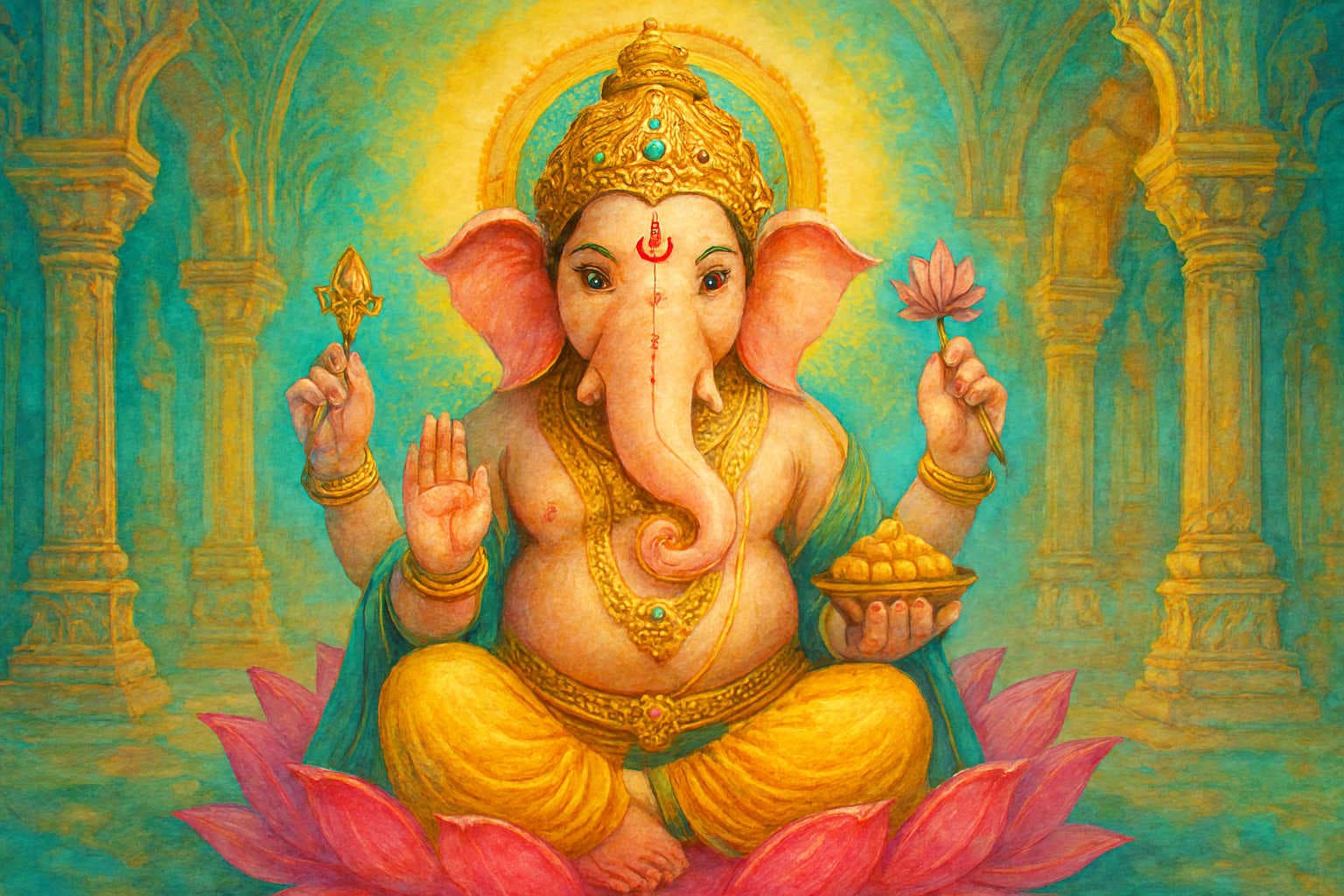
Elephants are considered among the wisest animals, known for their memory and intelligence. Ganesha’s elephant head symbolizes keen intellect, insight, and the wisdom necessary to overcome challenges. Just as elephants navigate dense forests with calmness, Ganesha guides devotees through the forest of life.
b. Strength with Gentleness
An elephant represents immense strength, yet it is also known for gentleness unless provoked. Ganesha’s elephant head signifies the balance of power and compassion, reminding us that true strength is not in aggression but in controlled calmness.
c. Large Ears – Listening and Patience
The large ears of Ganesha symbolize the ability to listen patiently. A true leader or teacher is one who listens more than he speaks. This teaches devotees the importance of absorbing knowledge, listening to others, and practicing patience.
d. Small Eyes – Focus and Concentration
Elephants may have small eyes compared to their size, but they see with focus. Ganesha’s eyes symbolize the importance of concentration and looking beyond illusions to perceive truth.
e. The Trunk – Adaptability
The elephant’s trunk is one of nature’s most versatile tools—it can uproot trees and also pick up a tiny needle. This duality reflects adaptability, efficiency, and versatility, teaching us that one must be both strong and delicate depending on life’s situations.
f. Broken Tusk – Sacrifice and Knowledge
Ganesha’s broken tusk is another important symbol. According to legend, he broke it off to write the epic Mahabharata while Sage Vyasa dictated it. This reflects sacrifice, dedication, and the power of knowledge.
3. Spiritual Lessons from the Elephant Head
The elephant-headed Ganesha is not just a divine form but also a blueprint for human virtues:
-
Humility with Power – Despite his might, the elephant is humble and calm, teaching humility.
-
Openness to Learning – Large ears remind us to listen more and talk less.
-
Clear Thinking – The broad head symbolizes expansive thinking and problem-solving abilities.
-
Detachment and Balance – Just as the elephant lives peacefully yet asserts itself when needed, Ganesha teaches balancing detachment with responsibility.
4. Psychological and Cultural Symbolism
In Hindu psychology, the elephant symbolizes the mind, which can be either destructive like a wild elephant or constructive when tamed. Ganesha, with his elephant head, represents the mastery of the mind through wisdom and self-control.
Culturally, elephants have always been associated with royalty, auspiciousness, and prosperity in India. Kings kept elephants as symbols of strength and wealth, making the elephant-headed Ganesha a divine embodiment of auspicious beginnings.
5. Ganesha in Everyday Life
Every Hindu ritual begins with the invocation of Ganesha, for he clears obstacles and ensures success. His elephant head serves as a reminder in daily life:
-
To approach challenges with calmness.
-
To seek wisdom before action.
-
To balance strength with compassion.
-
To adapt flexibly like the trunk.
These lessons are timeless and make Ganesha relevant not only in spiritual practice but also in personal growth, leadership, and modern problem-solving.
Conclusion
The elephant head of Lord Ganesha is more than a mythological curiosity—it is a profound symbol of wisdom, strength, humility, and adaptability. Through his unique form, Ganesha teaches devotees the path to spiritual progress and practical living.
On festivals like Ganesh Chaturthi, when devotees bring idols of Ganesha into their homes, it is not just his divine presence but also the values represented by his elephant head that inspire them.
Thus, the next time you fold your hands before Lord Ganesha, remember that his elephant head is not merely a form—it is a spiritual guide, a reminder of the qualities that make life successful and meaningful.