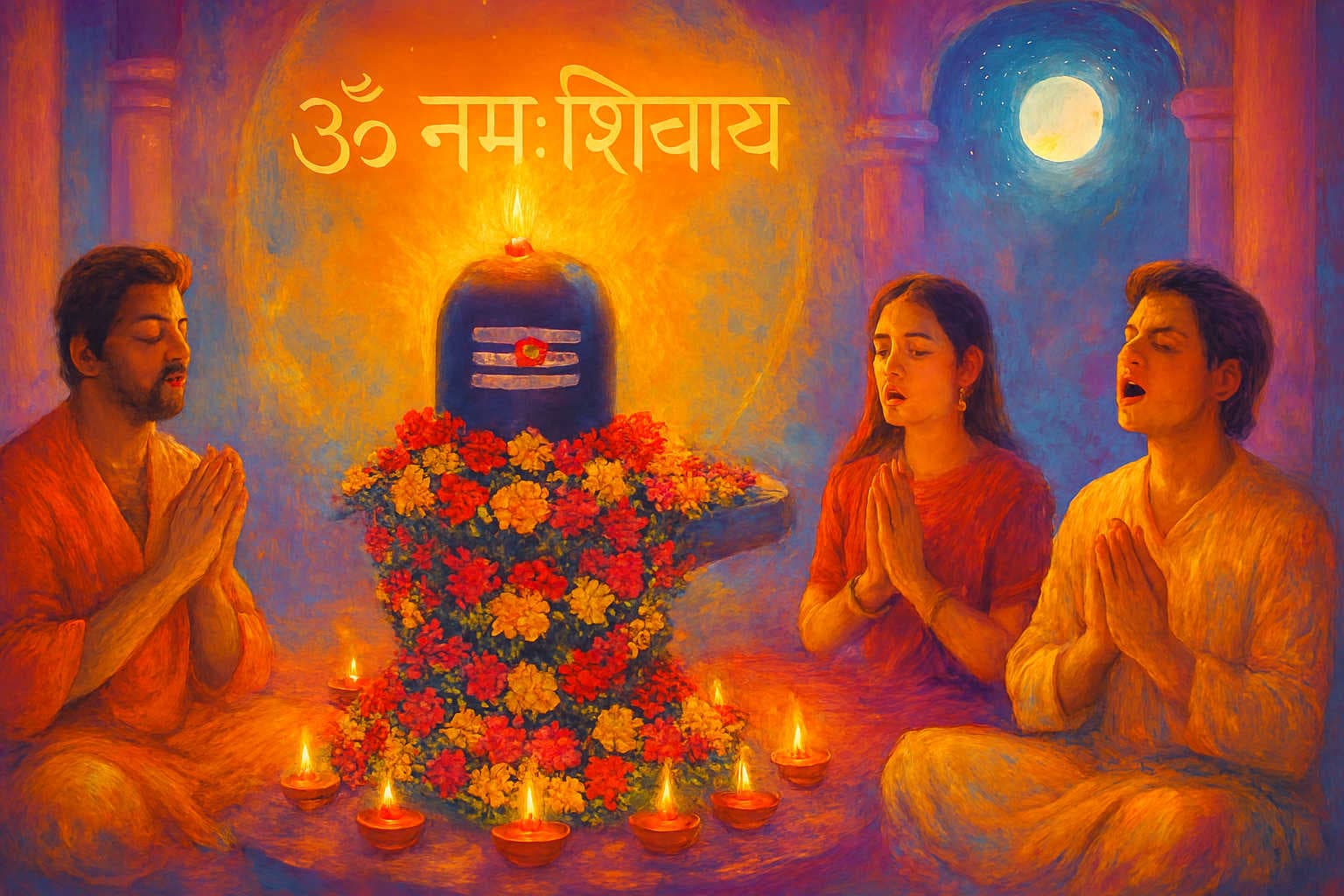
Why Devotees Chant “Om Namah Shivaya” on Mahashivratri
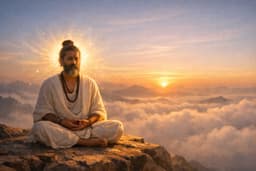
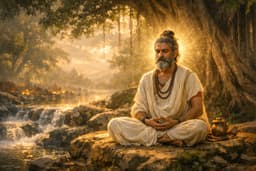
Among the countless mantras in Hinduism, “Om Namah Shivaya” is considered one of the most powerful. Known as the Panchakshari Mantra (five-syllable mantra), it is deeply associated with Lord Shiva, the eternal Yogi, the destroyer of evil, and the embodiment of meditation.
On Mahashivratri, the great night of Lord Shiva, millions of devotees across the world chant this mantra with devotion throughout the night. But why is this mantra so significant, and why is it chanted especially on Mahashivratri?
Let us dive into the meaning, symbolism, and spiritual benefits of chanting Om Namah Shivaya.
1. Meaning of Om Namah Shivaya
The mantra is composed of six parts:
-
Om – the primordial sound, representing the universe and supreme consciousness.
-
Na – represents earth element.
-
Ma – represents water element.
-
Shi – represents fire element.
-
Va – represents air element.
-
Ya – represents sky/ether element.
Together, the mantra means: “I bow to Lord Shiva”—the one who is beyond time, beyond illusion, and the source of creation and destruction.
It is not just a prayer but a vibration that aligns the devotee with the cosmic energy of Shiva.
2. Connection of the Mantra with Mahashivratri
Mahashivratri is celebrated on the 14th night of the dark fortnight in the month of Phalguna (February–March). This night is considered especially powerful for spiritual practices because the planetary alignments and cosmic energies naturally uplift meditation.
Chanting Om Namah Shivaya during this night has profound meaning:
-
It honors Lord Shiva who performed the Tandava (cosmic dance) on Mahashivratri.
-
It invokes Shiva’s blessings of peace, protection, and liberation.
-
The vibrations of the mantra resonate strongly on this night, making spiritual practice more effective.
-
It helps devotees stay awake through the night (jagaran) while keeping the mind focused.
3. Spiritual Benefits of Chanting “Om Namah Shivaya”
-
Purification of Mind and Soul – The mantra removes negative thoughts and cleanses inner consciousness.
-
Balancing of Five Elements – Since each syllable represents an element, chanting harmonizes the body’s energies.
-
Inner Peace and Calmness – It quiets the restless mind, allowing deep meditation.
-
Protection from Negativity – The mantra is believed to create a spiritual shield around the devotee.
-
Path to Moksha (Liberation) – Constant chanting leads to detachment from worldly illusions, guiding one to liberation.
4. How Devotees Chant During Mahashivratri
-
Abhishek Rituals: Devotees perform abhishek (ritual bathing) of the Shiva Lingam with water, milk, honey, ghee, and bilva leaves while chanting the mantra.
-
Jagaran: All-night vigil with group chanting of Om Namah Shivaya, bhajans, and meditation.
-
108 or 1008 Times: Many devotees chant the mantra 108 or 1008 times using a Rudraksha mala.
-
Silent Chanting (Manasik Japa): Some prefer chanting silently in the mind to deepen inner connection.
The collective chanting on Mahashivratri creates a spiritual vibration that is believed to uplift not just individuals but the entire atmosphere.
5. Symbolism of the Panchakshari Mantra
Each syllable of the mantra carries deep symbolism:
-
Na – represents Lord Shiva’s hidden aspect and destruction of ignorance.
-
Ma – symbolizes creation and preservation.
-
Shi – stands for auspiciousness and purity.
-
Va – represents grace and the act of blessing devotees.
-
Ya – signifies the soul’s union with the supreme.
When chanted together, the mantra becomes a cosmic rhythm connecting the soul to Shiva’s infinite energy.
6. Why Chanting Matters More Than Rituals
While Mahashivratri is filled with elaborate rituals—fasting, puja, abhishek—the chanting of Om Namah Shivaya is said to be the purest and most direct form of worship.
Unlike rituals that require materials, this mantra only requires devotion. It can be chanted by anyone, at any place, without restrictions of caste, gender, or background. On Mahashivratri, it bridges the gap between the devotee and the divine in its simplest yet most powerful way.
Conclusion
Mahashivratri is not just a festival but a night of transformation. The chanting of “Om Namah Shivaya” acts as a spiritual key that unlocks peace, strength, and liberation.
By repeating this mantra, devotees align themselves with the cosmic energy of Lord Shiva, who embodies the balance of destruction and creation. On Mahashivratri night, when spiritual energies are at their peak, this mantra becomes the most powerful way to experience the divine presence of Shiva.
So, as lamps glow and bells echo in temples across the world, the simple yet profound chant of Om Namah Shivaya unites millions of hearts in devotion, surrender, and eternal peace.