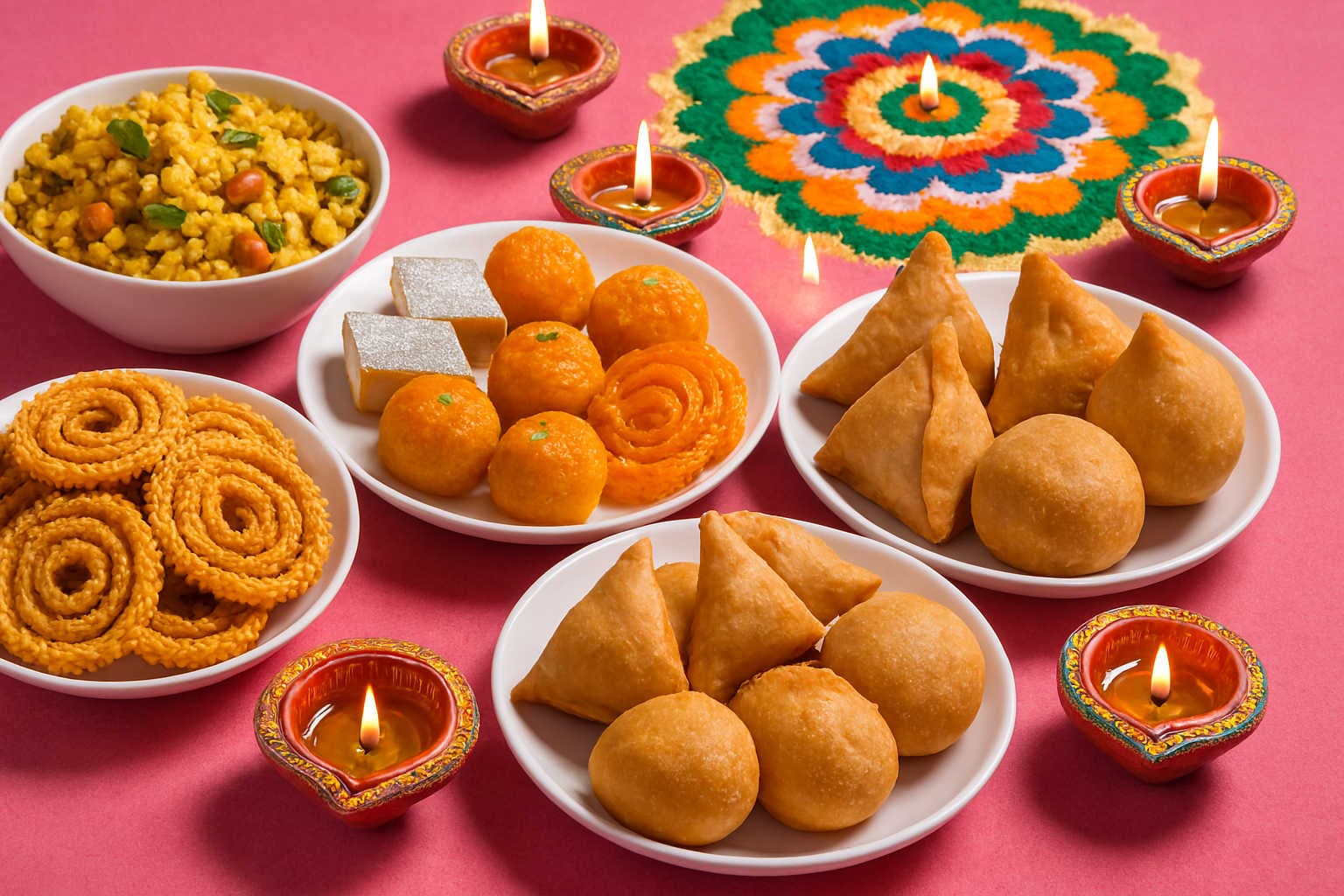
Top 10 Traditional Diwali Foods and Their Meaning
Diwali, the festival of lights, is not just about diyas, crackers, and prayers—it is also about food. Every household comes alive with the aroma of freshly made sweets and snacks, lovingly prepared to celebrate the occasion. These foods are not only a delight for the taste buds but also carry symbolic meanings tied to prosperity, unity, and devotion.
Let’s explore the top 10 traditional Diwali foods and their deeper significance.
1. Laddoo – Symbol of Unity and Sweetness
Laddoos are perhaps the most universal festive sweet in India, made in countless varieties such as besan laddoo, motichoor laddoo, coconut laddoo, and more. Their round shape symbolizes wholeness, unity, and prosperity, while their sweetness represents spreading joy and good fortune. Sharing laddoos during Diwali is a way of strengthening family bonds.
2. Barfi – Prosperity in Every Bite
Barfi, made from condensed milk and sugar, often garnished with silver leaf (varak), is one of the most iconic Diwali sweets. Variants like kaju barfi, pista barfi, and chocolate barfi adorn every Diwali platter. Its richness symbolizes luxury, abundance, and blessings of Goddess Lakshmi. The silver coating is a reminder of wealth and purity.
3. Jalebi – Spirals of Happiness
Jalebis, deep-fried golden spirals soaked in sugar syrup, are a festive favorite. Their spiral shape represents the cyclical nature of life—ups and downs, beginnings and ends—while the sweetness suggests that life’s journey ultimately leads to joy. Jalebis are often shared during gatherings, symbolizing community celebrations.
4. Karanji / Gujiya – A Sweet Surprise
Popular in North and West India, gujiya is a fried pastry filled with khoya, coconut, and dry fruits. Its crescent shape is symbolic of the moon, fertility, and creativity. The hidden filling inside represents the sweet rewards of devotion and effort, reminding devotees that inner goodness is more important than outward appearance.
5. Chakli / Murukku – Spirals of Protection
Chakli, a crunchy spiral-shaped snack made from rice flour and spices, is widely prepared in Maharashtra, Karnataka, and Tamil Nadu. Its intricate spiral shape symbolizes protection against negativity, while its crispy taste adds variety to the festive platter. Chakli is also associated with eternal cycles of time, reminding us of the balance of creation.
6. Karanataka-Style Obbattu / Puran Poli – Sweetness of Sharing
In South India, Diwali isn’t complete without puran poli or obbattu, a flatbread stuffed with jaggery and lentils. This dish represents hospitality and sharing, as it is often made in large quantities and distributed among family and friends. The use of jaggery also symbolizes good health and sweetness in life.
7. Kachori – Symbol of Hidden Richness
Stuffed and deep-fried, kachoris are both savory and filling, often served with chutneys. Their hidden spiced filling reflects life’s hidden treasures, reminding devotees that what is valuable often lies beneath the surface. They are a festive delicacy that adds a savory balance to Diwali feasting.
8. Mysore Pak – Richness of Devotion
This South Indian sweet, made from ghee, sugar, and gram flour, has a melt-in-the-mouth texture. Invented in the royal kitchens of Mysore, it represents royalty, richness, and devotion. Offering Mysore Pak during Diwali is symbolic of sharing wealth and blessings with loved ones.
9. Dry Fruits and Nuts – Wealth and Health
Exchanging dry fruits during Diwali is a long-standing tradition. Almonds, cashews, pistachios, and raisins symbolize health, longevity, and prosperity. Offering dry fruits to guests represents wishing them strength and abundance in the year ahead.
10. Anarsa – A Maharashtrian Specialty of Joy
Anarsa is a Maharashtrian sweet made with rice flour and jaggery, fried and sprinkled with poppy seeds. It is prepared especially during Diwali as a symbol of happiness and festivity. The sweetness of jaggery and the crunch of poppy seeds bring together flavors of joy and celebration.
The Spiritual Significance of Diwali Foods
These dishes are more than just indulgence; they carry spiritual and cultural symbolism:
-
Sweets represent spreading happiness and positivity.
-
Savories symbolize strength and resilience in life.
-
Sharing food reflects generosity, unity, and the joy of togetherness.
-
Ingredients like jaggery, ghee, and dry fruits signify health, energy, and prosperity.
In Hindu tradition, food is also considered prasadam—an offering to the deities before being consumed. This makes Diwali foods sacred, turning every bite into a blessing.
Conclusion
Diwali foods are not just about satisfying cravings—they embody tradition, meaning, and blessings. Each sweet and savory dish carries a message of prosperity, joy, and spiritual richness. Preparing and sharing these foods during Diwali brings families closer, keeps traditions alive, and reminds us of the festival’s deeper essence: light, love, and togetherness.
So, this Diwali, when you savor laddoos, barfi, or chaklis, remember—they are more than treats; they are symbols of abundance and joy.