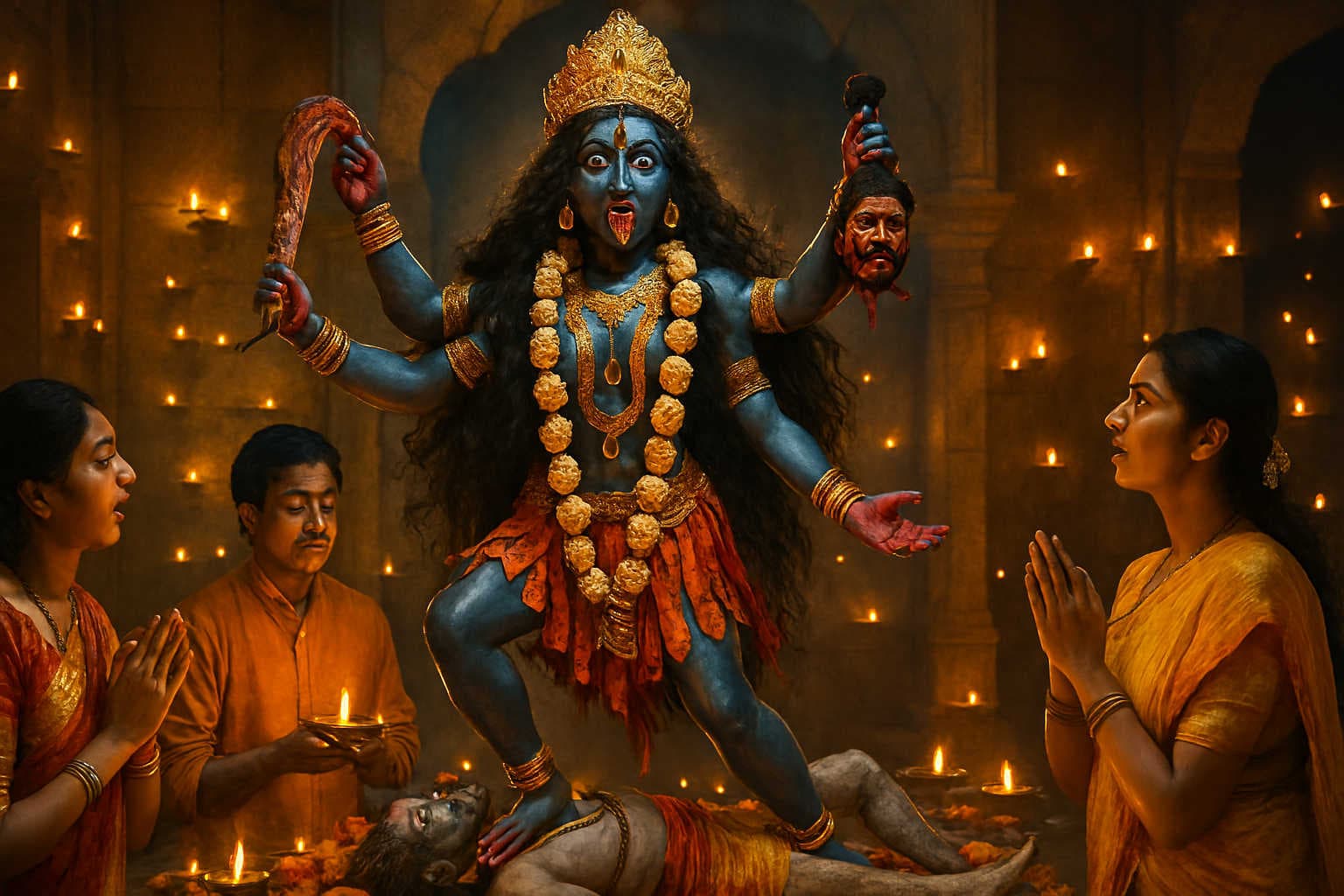
Why Some People Worship Kali on Diwali
When we think of Diwali, the images that come to mind are of glowing diyas, vibrant rangolis, and the worship of Goddess Lakshmi, the deity of wealth and prosperity. Across most of India, families pray to Lakshmi on this night, seeking abundance and blessings for the year ahead. However, in certain regions—especially in West Bengal, Odisha, Assam, and parts of eastern India—Diwali is celebrated in an entirely different way. Instead of Lakshmi Puja, devotees perform Kali Puja, honoring the fierce and powerful form of Goddess Shakti, Maa Kali.
So why do some people worship Kali on Diwali? The answer lies in regional traditions, mythology, and the deeper spiritual symbolism of the Goddess.
1. Who is Goddess Kali?
Goddess Kali is one of the most intense and powerful manifestations of Shakti, the Divine Mother. Unlike the graceful and benevolent Lakshmi, Kali represents:
-
The destruction of evil and ignorance.
-
The protector of devotees against negative forces.
-
The symbol of liberation (moksha), reminding us that life is temporary and true freedom lies in transcending the material world.
With her dark complexion, garland of skulls, and fierce demeanor, Kali may appear terrifying. Yet, for her devotees, she is the most compassionate mother—removing negativity and granting ultimate spiritual freedom.
2. Origins of Kali Puja on Diwali
The tradition of worshipping Kali on Diwali is deeply rooted in Bengal and other eastern regions of India. Historical accounts suggest:
-
King Krishnachandra of Nadia (18th century) popularized Kali Puja during Diwali, making it a grand festival for the people of Bengal.
-
Kali Puja coinciding with Diwali symbolizes the triumph of spiritual energy over darkness. While much of India seeks wealth through Lakshmi, Bengalis seek protection and strength from Kali.
-
It reflects the Tantric influence in eastern India, where Goddess Kali holds supreme importance in spiritual practices.
Thus, Kali Puja became the cultural counterpart of Lakshmi Puja, celebrated on the same night of Amavasya (new moon) during Diwali.
3. Symbolism of Worshipping Kali on Diwali
The night of Diwali is the darkest night of the year. For most regions, lighting diyas and invoking Lakshmi represents illuminating homes with prosperity. In contrast, worshipping Kali on this night represents:
-
Confronting darkness directly – Instead of just lighting lamps, Kali devotees embrace the dark night, calling upon the Mother to destroy evil.
-
Inner transformation – Kali symbolizes freedom from ego, ignorance, and attachments, guiding devotees towards liberation.
-
Balance of life – While Lakshmi represents material abundance, Kali represents spiritual power. Together, they symbolize the balance between worldly success and inner strength.
4. Rituals of Kali Puja on Diwali Night
Kali Puja is celebrated with grandeur, especially in Bengal. The rituals include:
-
Midnight Puja – Since Kali is associated with fierce energy, her worship is performed at midnight on Diwali.
-
Offerings – Flowers, red hibiscus (her favorite), sweets, rice, lentils, and sometimes even symbolic offerings of meat or wine, depending on tradition.
-
Tantric Practices – Some practitioners chant special mantras and perform rituals to invoke Kali’s protective and transformative power.
-
Decorations – Temples and homes are decorated with lights and diyas, just like in other parts of India, but the deity at the center is Kali instead of Lakshmi.
Large-scale pandal celebrations, similar to Durga Puja, are held in Bengal, where massive idols of Kali are worshipped with devotion.
5. Spiritual Meaning for Devotees
For devotees, worshipping Kali on Diwali is not just a ritual—it is a profound spiritual practice:
-
Destroying inner demons – Just as Kali slays external demons, devotees pray for freedom from anger, greed, jealousy, and ego.
-
Seeking courage – Kali gives strength to face life’s challenges, especially in difficult times.
-
Ultimate freedom – While Lakshmi blesses with wealth, Kali blesses with moksha, reminding devotees that true joy comes from liberation, not possessions.
6. Coexistence of Lakshmi and Kali Worship
Interestingly, in many Bengali households, both Kali and Lakshmi are worshipped, either together or at different times. This represents the harmony between material well-being (Lakshmi) and spiritual strength (Kali).
In philosophy, this balance is crucial: prosperity without strength is fragile, and strength without prosperity can be difficult. By worshipping both forms of the Divine Mother, devotees seek a holistic life filled with both abundance and resilience.
7. Regional Differences in Diwali
-
North & West India – Lakshmi Puja dominates, with prayers for prosperity and happiness.
-
South India – Diwali is often associated with the victory of Lord Krishna over Narakasura.
-
Eastern India – The focus shifts to Goddess Kali, embodying a deeper spiritual meaning of conquering darkness within and without.
These differences highlight the diversity and richness of Hindu traditions, where the same festival can take on varied forms of expression.
Conclusion
The worship of Kali on Diwali is not a contradiction but a complement to the larger meaning of the festival. While most of India celebrates the night with Lakshmi’s blessings for prosperity, Kali Puja reminds devotees of the power of inner strength, destruction of negativity, and the ultimate goal of liberation.
Both forms of worship together tell us that life is about balancing the material and the spiritual, the light and the dark, the gentle and the fierce.
So, the next time you hear about Kali Puja during Diwali, remember—it is the same celebration of light over darkness, only expressed in the fierce, protective embrace of the Mother Goddess Kali.