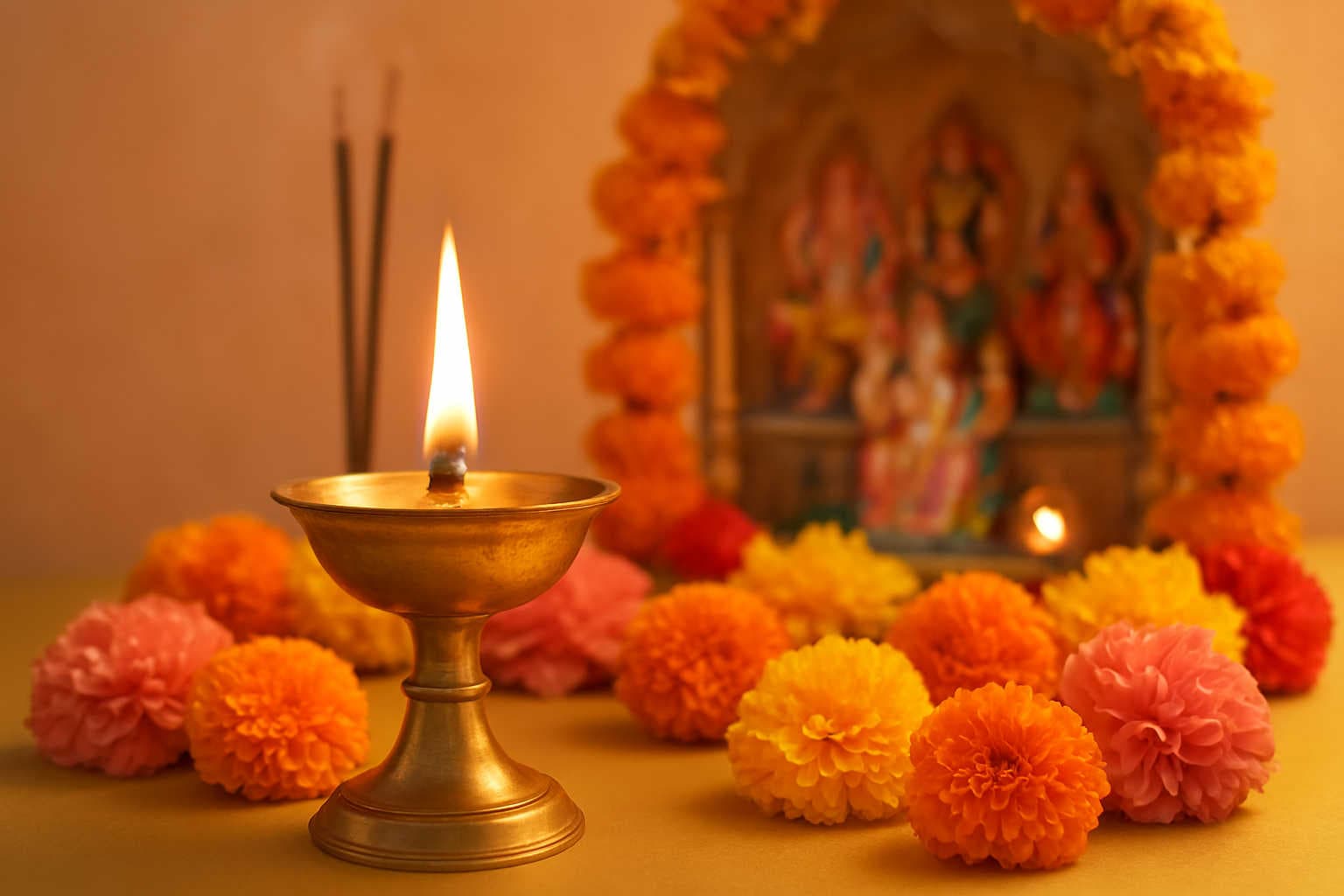
The Story Behind Lighting Akhand Jyot
In Hinduism, the act of lighting a diya (lamp) is one of the most sacred rituals, symbolizing the removal of darkness and the arrival of divine light. Among the many types of lamps lit during festivals and pujas, the Akhand Jyot—a continuously burning flame—holds a special place. “Akhand” means unbroken or eternal, while “Jyot” means flame. Together, Akhand Jyot represents the eternal divine presence and an unshaken devotion that continues without interruption.
But what is the story behind this tradition? Why is it so important to keep the flame burning continuously? Let’s explore the spiritual, cultural, and symbolic aspects of the Akhand Jyot.
1. Mythological Origin of Akhand Jyot
The tradition of Akhand Jyot is closely linked to the worship of deities like Goddess Durga, Lord Vishnu, and Lord Shiva. During festivals such as Navratri, devotees light an Akhand Jyot at home or in temples and keep it burning for nine days as an offering of uninterrupted devotion to the Goddess.
-
In the Durga Saptashati, it is mentioned that the Goddess is pleased by continuous worship, and the Akhand Jyot represents that unwavering faith.
-
Some traditions link the Akhand Jyot to Lord Vishnu’s Sudarshan Chakra, symbolizing an eternal, protective energy that never fades.
-
In Shaivism, the continuous flame is seen as a representation of the infinite cosmic energy of Lord Shiva, who is beyond birth and death.
Thus, the Akhand Jyot is not just a lamp but a symbolic form of the divine itself.
2. Spiritual Meaning of the Eternal Flame
The flame of a diya has always held deep symbolism in Hindu dharma. When it burns continuously as Akhand Jyot, it represents:
-
Unbroken Faith – Just as the flame does not extinguish, true devotion should remain constant in the heart of the devotee.
-
Victory of Light over Darkness – The Jyot symbolizes knowledge, truth, and wisdom dispelling ignorance and negativity.
-
Presence of Divinity – Many believe that as long as the Jyot is burning, the deity remains present in the home or temple, protecting the family.
-
Inner Consciousness – The Akhand Jyot reflects the Atman (soul), which is eternal and indestructible, much like the flame that continues to shine.
3. The Ritual of Lighting an Akhand Jyot
Lighting an Akhand Jyot is considered a sacred act and requires special care:
-
Choosing the Diya – Traditionally, brass or clay lamps are used. The lamp should be placed in a safe, sacred spot.
-
Type of Oil or Ghee – Pure cow ghee or sesame oil is commonly used, as both are believed to attract positive spiritual vibrations.
-
Continuous Care – Family members or temple priests take turns to ensure the Jyot does not go out, refilling oil or ghee as required.
-
Protecting the Flame – The lamp is often covered with a glass shield or kept in a protected space so that wind does not extinguish it.
During Navratri, Satyanarayan Katha, or special vrata (fasts), families light an Akhand Jyot and keep vigil, believing it brings blessings, harmony, and divine grace.
4. Symbolism in Festivals and Vrats
The Akhand Jyot is especially significant during major Hindu festivals and religious observances:
-
Navratri – Devotees light an Akhand Jyot for nine days as an offering to Goddess Durga, signifying her eternal presence in their homes.
-
Diwali – In many traditions, families light an Akhand Jyot on Diwali night to invite Goddess Lakshmi into their homes and ensure continuous prosperity.
-
Satyanarayan Puja – The Jyot is lit during the katha, symbolizing Lord Vishnu’s protective light.
-
Mundan, Weddings, and Sanskar Ceremonies – The Akhand Jyot is often lit to invoke divine blessings for the occasion.
5. Stories and Beliefs Associated with Akhand Jyot
-
According to belief, if an Akhand Jyot remains burning without interruption during Navratri, it ensures the victory of dharma over adharma in the devotee’s life.
-
In some regions, it is said that Goddess Lakshmi never leaves a home where an Akhand Jyot is burning during Diwali night.
-
Some saints and gurus have explained that watching the flame of an Akhand Jyot during meditation can help steady the mind and awaken spiritual insight.
6. The Deeper Symbol – Our Inner Flame
On a more philosophical level, the Akhand Jyot is a reminder of the eternal flame of consciousness within each person. Just as the lamp needs oil to keep burning, our inner flame of devotion requires the oil of faith, discipline, and good deeds.
If neglected, it may weaken; but if cared for with love and devotion, it shines brightly, guiding us on the spiritual path.
Conclusion
The Akhand Jyot is more than just a lamp burning continuously—it is a sacred symbol of divine presence, unbroken faith, and eternal spiritual energy. Lighting it connects devotees to the infinite cosmic power and serves as a reminder of the soul’s indestructible nature.
In every flicker of its flame, there lies a message: keep your devotion unwavering, your faith constant, and your inner light shining eternally.
As long as the Akhand Jyot burns, it assures us that divinity is present, watching, and blessing us with light, love, and protection.