Five Things You Should Not Do During Diwali
Diwali, the festival of lights, is one of the most awaited celebrations in India and across the world. It is a time for joy, family bonding, prayers, and festive gatherings. From cleaning homes to decorating with rangoli, lighting diyas, preparing sweets, and performing Lakshmi Puja, every ritual carries deep significance.
However, just as Diwali is about inviting prosperity, light, and positivity, it is equally important to avoid certain actions that may bring negativity, disrupt peace, or go against the very spirit of the festival. Many traditions and cultural practices highlight what should not be done during Diwali to maintain spiritual balance and harmony.
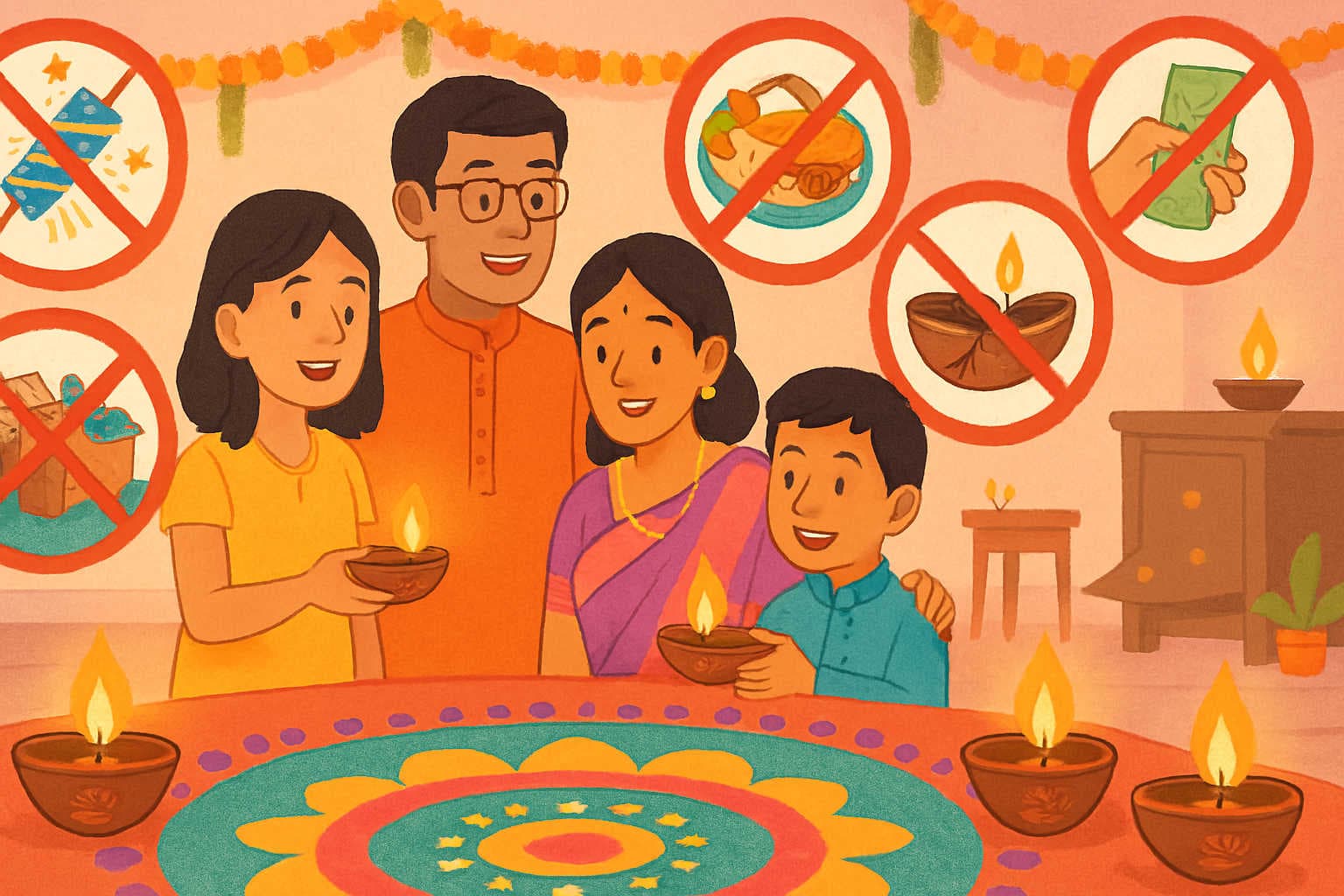
Here are the five key things you should never do during Diwali:
1. Do Not Leave Your Home Untidy
One of the core rituals of Diwali is thorough house cleaning and decoration. Goddess Lakshmi, the goddess of wealth and prosperity, is believed to visit clean and well-lit homes. An untidy or cluttered space is considered inauspicious and is said to block the flow of positive energy.
-
Spiritual meaning: A clean home invites divine blessings and reflects readiness to welcome new opportunities.
-
Practical aspect: Cleaning removes dust, germs, and negativity, creating a fresh, vibrant environment for family and guests.
So, make sure your home is neat, organized, and bright with diyas or lamps on Diwali night.
2. Avoid Borrowing or Lending Money
It is considered inauspicious to borrow or lend money during Diwali, especially on Lakshmi Puja day. Financial exchanges on this day are thought to disrupt wealth flow in the household. Instead, people often make symbolic purchases of gold, silver, or new items to attract prosperity.
-
Cultural belief: Lending money is seen as giving away your fortune, while borrowing is inviting debt during a time meant for abundance.
-
Modern interpretation: Financial discipline during festivals prevents unnecessary stress and ensures spending within limits.
Instead of borrowing or lending, focus on wisely managing your resources and making meaningful purchases.
3. Do Not Waste Food or Resources
Diwali feasts are grand, with tables filled with sweets, savories, and festive meals. However, wasting food or throwing away offerings made to deities is seen as disrespectful. Sharing food with neighbors, staff, or the underprivileged is encouraged, as it spreads joy and blessings.
-
Spiritual meaning: Food is prasad (a blessed offering). Wasting it dishonors the divine and the efforts of nature.
-
Practical meaning: It teaches gratitude, conservation, and social responsibility.
So, cook mindfully, distribute generously, and honor the food prepared during this sacred festival.
4. Avoid Excessive Use of Firecrackers
Although firecrackers are traditionally associated with Diwali celebrations, their excessive use is discouraged. The smoke, noise, and pollution caused harm not only to the environment but also to health and animals. Many families now choose eco-friendly Diwali celebrations with diyas, rangolis, and cultural gatherings instead.
-
Spiritual meaning: Diwali is about inner light, peace, and harmony, not chaos and disturbance.
-
Practical aspect: Reducing crackers saves money, protects health, and contributes to environmental balance.
Choose symbolic lighting of sparklers or eco-friendly celebrations over loud fireworks.
5. Do Not Use Broken Diyas or Negative Symbols
Lighting diyas is one of the most sacred rituals of Diwali. Diyas symbolize light triumphing over darkness and positivity entering our lives. Using broken, dirty, or cracked diyas is considered unlucky, as they represent neglect and imperfection.
Similarly, avoid keeping symbols of negativity, such as torn calendars, broken idols, or unused clutter, during Diwali. Instead, decorate with fresh flowers, rangolis, and intact diyas to maintain auspiciousness.
-
Spiritual meaning: Intact diyas invite positive energy and the blessings of Lakshmi.
-
Practical meaning: Maintaining care in small details reflects respect for traditions and devotion.
Conclusion
Diwali is more than just lights and celebrations—it is a festival of discipline, gratitude, and spiritual awakening. By avoiding certain actions, we ensure that the festival truly brings harmony and prosperity into our lives.
To summarize, here are the five things you should not do during Diwali:
-
Don’t leave your home untidy.
-
Avoid borrowing or lending money.
-
Don’t waste food or resources.
-
Avoid excessive use of firecrackers.
-
Don’t use broken diyas or negative symbols.
By following these simple yet meaningful guidelines, you can experience a more fulfilling, eco-friendly, and spiritually uplifting Diwali. Remember, the true light of Diwali lies not outside but within—spreading positivity, joy, and peace in every corner of our lives.