Story of Lord Vishnu’s Vamana Avatar and Onam
The festival of Onam, celebrated with grandeur in Kerala, is not just a harvest festival but also a spiritual reminder of humility, devotion, and divine grace. Its roots lie in the Vamana Avatar of Lord Vishnu, one of the ten Dashavatara (incarnations) where the Lord incarnated as a dwarf Brahmin boy to restore cosmic balance. At the heart of this story is the legendary King Mahabali, whose devotion and generosity won him immortality in the hearts of people.
Let us explore the fascinating story of Vamana Avatar and its connection to Onam celebrations.
King Mahabali – The Noble Asura King
King Mahabali, also called Maveli, was a mighty ruler from the Asura (demon) dynasty, but unlike his ancestors, he was known for his righteousness, generosity, and devotion to Lord Vishnu. His kingdom was said to be so prosperous that there was no poverty, sorrow, or crime. People lived happily, and Mahabali was deeply loved by his subjects.
However, his growing power and popularity worried the Devas (gods). They feared that Mahabali might dominate not just earth but also the heavens. Though he was a devotee of Lord Vishnu, his Asura lineage made the gods insecure. They sought Vishnu’s help to restore cosmic balance.
Vishnu’s Incarnation as Vamana
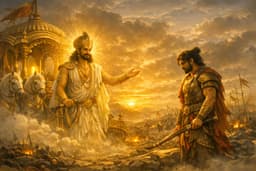
To protect dharma and keep balance between Devas and Asuras, Lord Vishnu took the form of Vamana, a young Brahmin boy of small stature. With a kamandalu (water pot), umbrella, and sacred thread, Vamana appeared at the grand yajna (sacrifice) organized by King Mahabali, where the king was granting boons and gifts to all.
The moment Mahabali saw the divine boy, he warmly welcomed him and promised to fulfill any wish he had.
The Three Paces of Land
Vamana humbly asked for three paces of land measured by his own tiny feet. The court burst into laughter at such a modest request, but Mahabali, known for his generosity, readily agreed. His guru, Shukracharya, recognized Vamana as none other than Lord Vishnu and warned the king not to grant the request. But Mahabali, true to his word and devotion, refused to step back.
He said, “What is greater than keeping one’s promise? Even if the Lord himself has come to test me, I must give.”
Vamana’s Cosmic Transformation
The moment the boon was granted, the dwarf boy Vamana grew into a gigantic form – Trivikrama, covering the heavens, earth, and all the worlds.
-
With his first step, he measured the heavens.
-
With his second step, he covered the earth.
-
There was no space left for the third step.
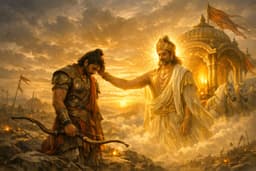
Mahabali humbly bowed and offered his own head for Vamana’s third step.
Mahabali’s Humility and Vishnu’s Blessing
Pleased by Mahabali’s devotion, humility, and selflessness, Lord Vishnu placed his third step on the king’s head, pushing him down to the netherworld (Patalaloka). However, Vishnu granted him a boon:
-
Mahabali would be allowed to visit his people once every year.
-
His memory would live eternally through Onam celebrations, when people welcome him with joy, music, dance, and feasting.
Thus, Onam is not merely a harvest festival—it is a celebration of the eternal bond between Mahabali and his people, and a reminder of humility and surrender before the divine.
Onam Traditions Rooted in the Story
The legend of Mahabali and Vamana forms the spiritual backdrop of Onam, which is celebrated with great enthusiasm in Kerala. The traditions of Onam reflect the prosperity and joy of Mahabali’s reign:
-
Pookalam (Flower Rangoli) – Colorful flower decorations at entrances symbolize a grand welcome for King Mahabali.
-
Onasadya (Feast) – A lavish vegetarian meal served on banana leaves, representing abundance during Mahabali’s rule.
-
Vallamkali (Boat Race) – Snake boat races symbolize unity, strength, and festive joy.
-
Pulikali (Tiger Dance) – Folk dance where men paint themselves as tigers and hunters, showcasing cultural vibrancy.
-
Thiruvathira Dance – Traditional women’s dance performed around lamps, evoking devotion and joy.
Every ritual is infused with the spirit of Mahabali’s return and the joy of being blessed by Vishnu’s leela.
Symbolism of Vamana Avatar
The story of Vamana Avatar holds deep spiritual meaning:
-
Ego vs Humility – Mahabali symbolizes devotion but also the pride of power, while Vamana reminds us that the divine can humble anyone.
-
Keeping Promises – Mahabali kept his word even when warned, teaching us integrity and dharma.
-
Divine Grace – Vishnu did not destroy Mahabali but blessed him, showing that sincere devotion always earns divine compassion.
-
Onam’s Message – Prosperity, equality, and devotion are the true values of life, beyond material wealth.
Conclusion
The story of Lord Vishnu’s Vamana Avatar and King Mahabali is at the heart of Onam. It teaches us that power and wealth are temporary, but humility, generosity, and devotion are eternal virtues. Onam is therefore more than a cultural festival—it is a spiritual celebration of devotion and divine blessings.
When families decorate homes with flowers, cook feasts, and celebrate Onam, they are not just celebrating harvest but also welcoming King Mahabali back into their hearts—and remembering Lord Vishnu’s eternal presence in protecting dharma.