Importance of Rangoli in Hindu Festivals
India’s festivals are incomplete without the splash of colors that brighten homes, temples, and streets. Among the many cultural traditions, Rangoli holds a special place. Known by different names across regions—Kolam in Tamil Nadu, Muggulu in Andhra Pradesh, Alpana in Bengal, and Mandana in Rajasthan—Rangoli is more than an art form. It is a spiritual and cultural expression that transforms ordinary spaces into auspicious ones during Hindu festivals.
Let us explore the importance, symbolism, and regional diversity of Rangoli in Hindu celebrations.
What is Rangoli?
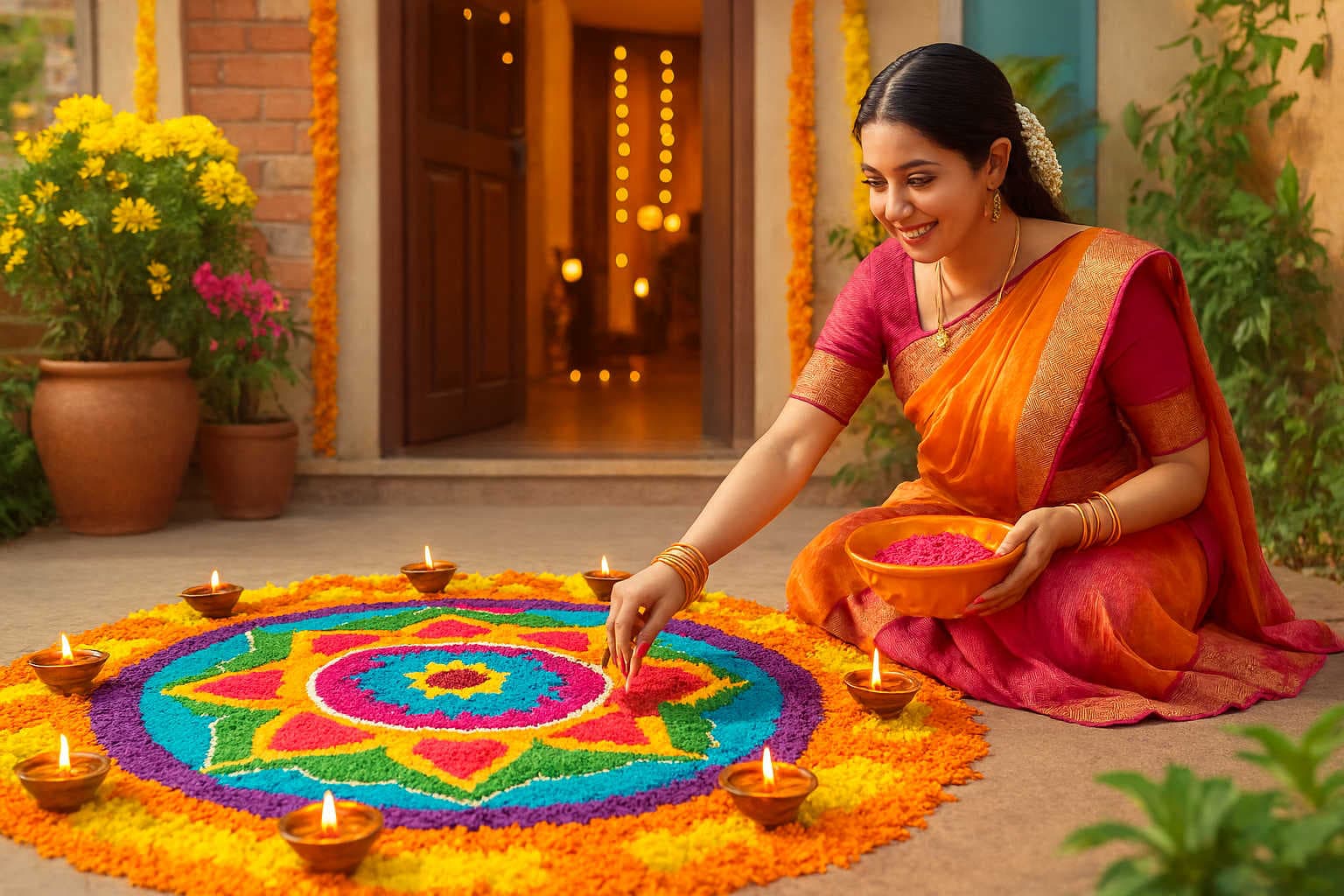
Rangoli is a traditional Indian decorative art created on the ground, usually at the entrance of homes or temples. It is made using colored powders, rice flour, flower petals, turmeric, vermillion, and even grains.
-
Designs may be geometric, floral, or mythological motifs.
-
They are often created during festivals like Diwali, Pongal, Navratri, Sankranti, and Onam.
-
The purpose is not just beautification but also to invite positivity, prosperity, and divine blessings.
Spiritual Significance of Rangoli
-
Welcoming the Divine – Rangoli is believed to create a sacred space, inviting gods and goddesses into the home. For example, in Diwali, Rangoli is drawn to welcome Goddess Lakshmi, the bringer of wealth.
-
Symbol of Auspiciousness – The colorful patterns represent happiness, harmony, and prosperity, setting a positive atmosphere for rituals.
-
Energy and Vibration – The geometric patterns and symmetrical designs are thought to channel cosmic energy, bringing balance and peace.
-
Protective Symbol – Traditionally, it was believed that drawing Rangoli at the entrance protected the household from negative energies and evil spirits.
Rangoli in Different Hindu Festivals
1. Diwali – Welcoming Goddess Lakshmi
The festival of lights is incomplete without Rangoli.
-
Women decorate the entrance of their homes with elaborate Rangolis.
-
Diyas (lamps) are placed around to enhance the glow.
-
The belief is that Lakshmi Devi follows the trail of light and color into homes, blessing them with wealth and prosperity.
2. Pongal & Sankranti – Kolam Traditions
In Tamil Nadu and Andhra Pradesh, Kolam or Muggulu are drawn daily, but they take special significance during Pongal and Sankranti.
-
Designs are usually made with rice flour to feed ants, birds, and insects—reflecting harmony with nature.
-
Geometric and symmetrical patterns represent cosmic order and prosperity in agriculture.
3. Navratri – Devotional Patterns
During Navratri, Rangoli patterns often depict deities, lotus flowers, or shankha (conch shells).
-
They symbolize devotion to Goddess Durga and the celebration of feminine energy (Shakti).
-
In Gujarat, Rangoli is combined with Garba decorations, making festival nights more colorful.
4. Onam – Pookalam (Floral Rangoli)
In Kerala, during Onam, Rangoli takes the form of Pookalam, created entirely with fresh flowers.
-
The Pookalam grows in size each day of the festival.
-
It is made to welcome King Mahabali and honor the spirit of prosperity and unity.
5. Other Festivals
-
Karva Chauth & Teej – Women make Rangoli as part of vrat rituals.
-
Holi – Bright colors of Rangoli complement the festival of colors.
-
Marriage ceremonies – Rangoli is often used as a decorative and auspicious part of wedding rituals.
Cultural Importance of Rangoli
-
Artistic Expression – Rangoli showcases creativity, passed down from generation to generation.
-
Social Bonding – Women often come together to create Rangolis, fostering community spirit.
-
Eco-Friendly Tradition – Traditionally, only natural materials like turmeric, rice, and flowers were used, making it a sustainable art form.
-
Daily Ritual to Festival Grandeur – While simple Rangolis are drawn daily in many households, they become elaborate and majestic during major festivals.
Modern Adaptations of Rangoli
While traditional Rangolis used natural ingredients, modern versions often use colored powders, paints, and even LEDs. Competitions are organized in schools and communities, where artists create intricate and large-scale designs.
Social media has also given Rangoli a new platform, where unique designs are shared and admired globally. Yet, despite the modern twists, the core purpose remains—to invoke positivity and celebrate Indian culture.
Conclusion
Rangoli is not just a decorative art but a spiritual and cultural symbol woven into Hindu festivals. Whether it is the vibrant Diwali Rangoli welcoming Goddess Lakshmi, the Pongal Kolam feeding tiny creatures, or the floral Pookalam of Onam, every design tells a story of faith, creativity, and community.
By creating Rangoli, people invite not only beauty into their homes but also auspiciousness, energy, and divine blessings. This tradition continues to remind us of the harmony between humans, nature, and the divine, making festivals truly vibrant and meaningful.