Arjuna’s Dilemma – A Mirror of Our Confusion
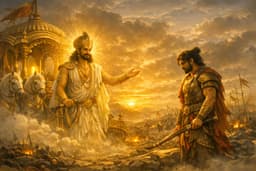
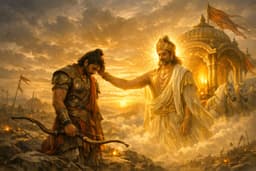
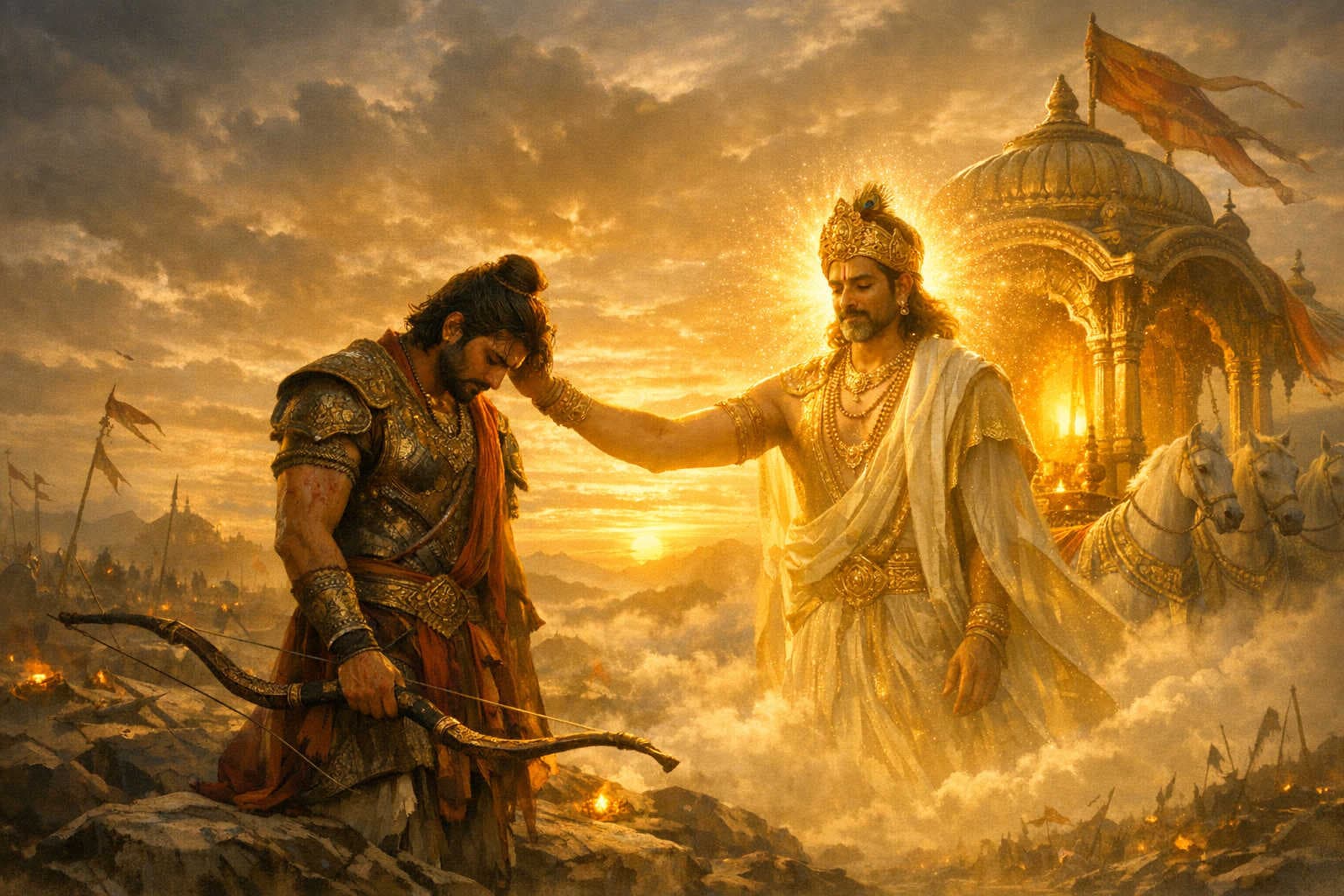
Arjuna’s dilemma, as presented in the sacred dialogue of the Bhagavad Gita, is not merely an episode from an ancient epic—it is a timeless reflection of the inner conflicts that define human life. Standing on the battlefield of Kurukshetra, Arjuna, a महान warrior and skilled archer, finds himself overwhelmed by doubt, fear, and moral confusion. Faced with the prospect of fighting against his own relatives, teachers, and loved ones, he experiences a deep psychological and emotional crisis. His bow slips from his hands, his body trembles, and his mind becomes clouded. In this moment of vulnerability, Arjuna represents each one of us when we are confronted with difficult choices and uncertain paths.
The battlefield of Kurukshetra symbolizes more than a physical war—it represents the inner battleground of the human mind. Every individual faces situations where values conflict, responsibilities feel burdensome, and the right course of action is unclear. Like Arjuna, we often find ourselves caught between duty and emotion, logic and compassion, action and inaction. This state of confusion is not a sign of weakness but a natural part of the human experience. It is the starting point of deeper inquiry and transformation.
Arjuna’s hesitation stems from his attachment and identification with his relationships. He sees not warriors on the opposing side, but his grandfather Bhishma, his teacher Drona, and his cousins. This emotional entanglement clouds his judgment, leading him to question the very purpose of the battle. He wonders whether victory is worth the cost of destroying his own kin and whether such an act would lead to lasting happiness or unbearable guilt. These questions echo the dilemmas we face in our own lives—whether in career decisions, relationships, or ethical challenges.
What makes Arjuna’s dilemma profound is not just the situation itself, but his willingness to confront it honestly. Instead of suppressing his confusion or blindly following expectations, he pauses and seeks clarity. He turns to Krishna, his charioteer and guide, and openly expresses his doubts. This act of seeking guidance is crucial. It highlights the importance of humility and the recognition that we do not always have all the answers.
Krishna’s response to Arjuna forms the essence of the Bhagavad Gita’s teachings. Rather than offering a simple solution, Krishna provides a comprehensive framework for understanding life, duty, and the nature of the self. He begins by addressing Arjuna’s misplaced identification with the physical body and transient relationships. Krishna explains that the true self, or Atman, is eternal and beyond birth and death. From this perspective, the fear of loss and the attachment to outcomes begin to dissolve.
Another key teaching that emerges from this dialogue is the concept of Dharma, or righteous duty. Krishna emphasizes that each individual has a unique role to play in the larger order of life. For Arjuna, as a warrior, his duty is to uphold justice and protect righteousness. Avoiding the battle out of emotional discomfort would mean abandoning his responsibility. This idea challenges the common tendency to equate comfort with correctness. Sometimes, the right action is not the easiest or the most pleasant one, but the one aligned with a higher principle.
Equally important is the principle of detached action, or Karma Yoga. Krishna advises Arjuna to perform his duty without attachment to the results. This teaching addresses one of the root causes of human anxiety—the desire to control outcomes. When we become overly focused on success or failure, we lose clarity and become paralyzed by fear. By shifting attention to the action itself and letting go of expectations, we can act with greater freedom and effectiveness.
Arjuna’s dilemma also highlights the role of the mind in shaping our perception of reality. His initial reaction is driven by emotional overwhelm and negative anticipation. However, as he listens to Krishna’s wisdom, his perspective gradually shifts. He begins to see the situation more clearly, not as a personal tragedy but as part of a larger cosmic order. This transformation underscores the power of knowledge and self-awareness in overcoming confusion.
In modern life, Arjuna’s dilemma manifests in countless ways. A professional may struggle between financial stability and personal passion. A leader may face decisions that impact many lives, balancing ethical considerations with practical constraints. Even in everyday situations, we often grapple with choices that test our values and priorities. The essence of Arjuna’s experience lies in this universal struggle to align our actions with our deeper understanding.
One of the most reassuring aspects of this narrative is that confusion is not the end—it is the beginning of wisdom. Arjuna’s crisis becomes the catalyst for his growth. By questioning, reflecting, and seeking guidance, he moves from despair to clarity. This journey reminds us that uncertainty can be a powerful teacher if approached with openness and sincerity.
Furthermore, Arjuna’s story emphasizes the importance of inner alignment. When thoughts, emotions, and actions are in conflict, confusion arises. Through the teachings of the Gita, Arjuna learns to integrate these aspects, acting from a place of understanding rather than impulse. This integration is essential for leading a balanced and meaningful life.
Another significant lesson is the value of perspective. In moments of crisis, our vision often narrows, and we become consumed by immediate concerns. Krishna’s teachings expand Arjuna’s दृष्टि, helping him see beyond the present moment and understand the broader context of his actions. This shift in perspective can transform how we approach challenges, enabling us to respond with wisdom rather than react with fear.
Ultimately, Arjuna’s dilemma is a mirror of our own confusion. It reflects the complexities of human life and the struggles inherent in making conscious choices. Yet, it also offers a path forward—a reminder that clarity is attainable through self-inquiry, guidance, and a willingness to act in alignment with truth.
In essence, the story of Arjuna is not about war, but about awakening. It teaches that within every moment of doubt lies the potential for insight, and within every conflict lies the opportunity for growth. By embracing our dilemmas rather than avoiding them, we can transform confusion into clarity and uncertainty into purpose, walking our path with greater confidence and awareness.