Vishwamitra and the Divine Weapons
In the grand epic of the Ramayana, numerous sages and kings play vital roles in shaping the destiny of Lord Rama. Among these figures, Sage Vishwamitra holds a special place. Once a powerful king himself, Vishwamitra transformed into a Brahmarishi, driven by intense tapasya and divine wisdom.
But perhaps the most intriguing and transformational part of his journey is his training of young Rama and Lakshmana, and his gifting of celestial weapons. This event was not merely a passing episode—it was a pivotal moment that prepared Rama for his life’s mission.
Let us explore this remarkable tale: the union of a sage, two divine princes, and the weapons of the gods.
From King to Sage – The Story of Vishwamitra
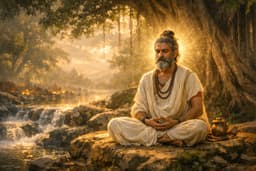
Before becoming a revered rishi, Vishwamitra was a mighty king from the Kshatriya clan. However, a deep conflict with Sage Vashishta—another great rishi—changed the course of his life. Jealous of Vashishta's spiritual power, Vishwamitra initially sought to overpower him with force, but failed.
Realizing that spiritual strength outweighed military might, Vishwamitra gave up his kingdom and performed severe penance to gain mastery over spiritual knowledge and divine weapons. His journey of transformation—from ego to enlightenment—earned him the title of Brahmarishi, a sage who had conquered the senses and realized the truth.
A Disturbance in the Forest – Vishwamitra Seeks Rama’s Help
Years later, when performing a powerful yajna (sacrificial ritual) in the forest, Vishwamitra’s rituals were repeatedly disturbed by Rakshasas (demons) like Tataka, Subahu, and Maricha, who were sent by Ravana to disrupt the penance of sages.
Rather than summon armies, Vishwamitra made a bold choice: he went to Ayodhya, seeking the help of young Rama, the son of King Dasharatha. Though hesitant at first, Dasharatha agreed on Sage Vashishta’s advice, and Rama, along with his younger brother Lakshmana, accompanied Vishwamitra to the forest.
This marked the beginning of their spiritual and martial training—a foundational journey for both princes.
The Divine Teachings – Celestial Weapons and Mantras
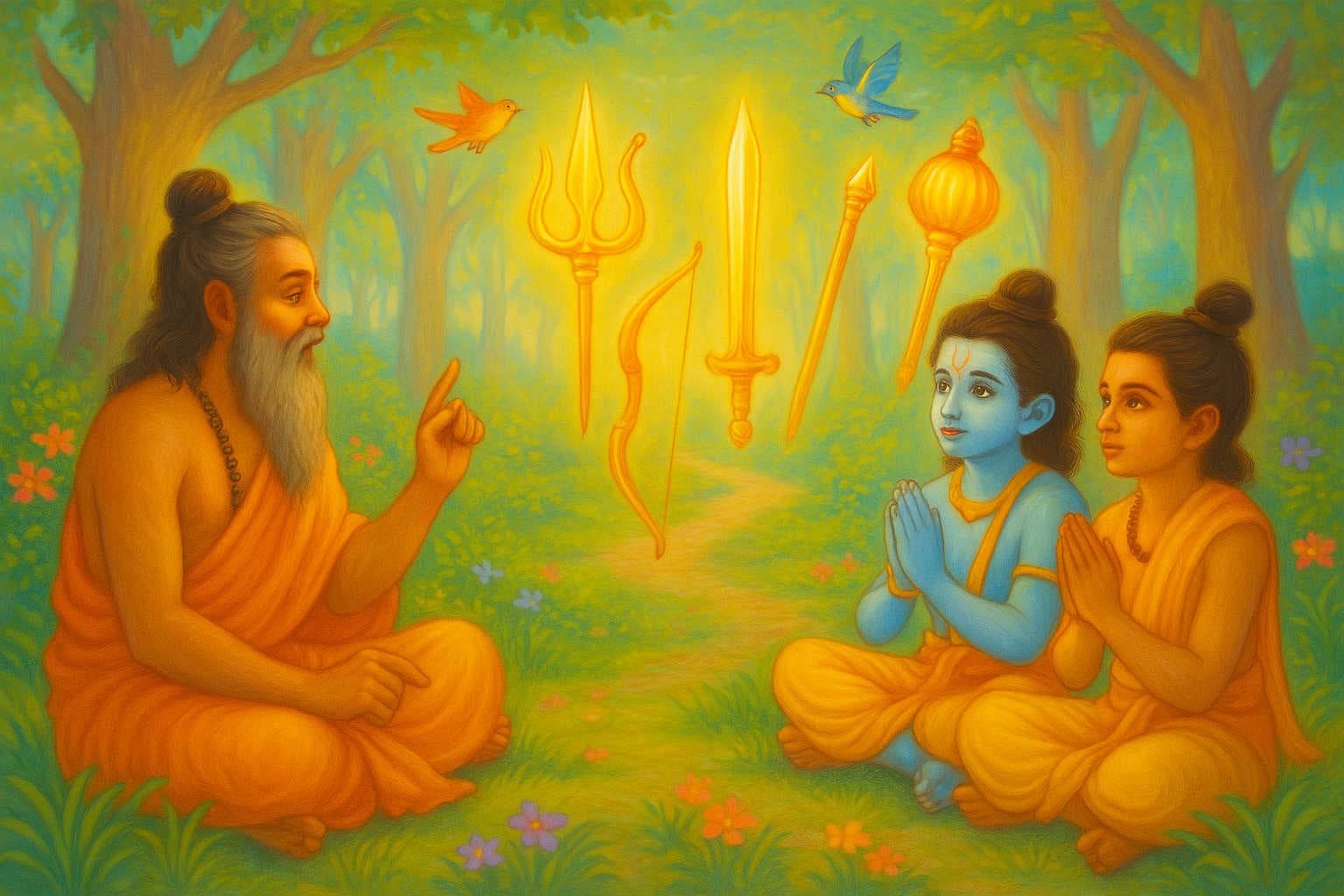
In the forest, Vishwamitra not only protected the boys but mentored them like a guru. He taught them ancient knowledge of dharma, dhyana (meditation), and most importantly, dhanurveda—the science of warfare.
He blessed Rama with a series of divine astras (celestial weapons), rarely bestowed upon mortals. These included:
-
Brahmastra – the ultimate weapon created by Lord Brahma
-
Vayavyastra – a weapon of wind
-
Agneyastra – weapon of fire
-
Varunastra – weapon of water
-
Indrastra – the thunderbolt of Indra
-
Gandharvastra, Garudastra, and many more
Each of these weapons was not merely a physical tool but came with mantras and inner control. Vishwamitra taught Rama the art of invoking, directing, and withdrawing them. This was crucial, as these weapons could destroy entire armies—or the world—if misused.
Rama, with divine humility, accepted them with grace, but never used them in arrogance. His restraint was as powerful as his skill.
Rama’s First Battles – Tataka and Subahu
Soon, the first test arrived. Deep within the forest lived Tataka, a cursed Yakshini turned Rakshasi who terrorized sages. Vishwamitra asked Rama to destroy her.
Though hesitant to kill a woman, Rama followed his guru’s command and killed Tataka, marking his first act as a protector of dharma. The forest was free, and the sages resumed their rituals.
Later, Subahu and Maricha attacked during the yajna. Rama used the Manavastra to slay Subahu and push Maricha far away, into the sea. These battles showcased not only his martial prowess but also his spiritual discipline—a perfect blend of strength and ethics.
Why This Episode Matters
This story may seem like a simple warrior’s training, but it holds deep spiritual symbolism.
-
Vishwamitra symbolizes the teacher or guide, who helps awaken the inner potential of a seeker.
-
The divine weapons represent the tools of the soul—like wisdom, focus, courage, and discipline.
-
Rama, though an avatar of Vishnu, humbly learns as a disciple, showing that learning never ends, even for the divine.
It also shows that power must be guided by wisdom. Without spiritual grounding, weapons can lead to destruction. Vishwamitra ensured that Rama did not just become a warrior—but a protector of righteousness.
Legacy in the Ramayana
This phase of Rama’s life was foundational. Without the weapons, without the discipline, and without Vishwamitra’s guidance, Rama may not have been ready for his future battles—against Ravana, against adharma.
It also reminds us that every great soul has a guide, a teacher who silently shapes them. Vishwamitra may not have fought in Lanka, but his impact echoed throughout the Ramayana.
Modern Lessons from the Ancient Sage
Even today, the story of Vishwamitra and Rama carries timeless lessons:
-
Seek knowledge from those wiser than you.
-
Discipline and humility are the marks of a true warrior.
-
Power must be earned, not claimed.
-
The tools to face life’s battles—whether divine weapons or inner strength—must be respected and used wisely.
Whether you're a student, a leader, or a seeker, Vishwamitra's example urges you to transform ego into wisdom, and knowledge into action.
Conclusion
The bond between Vishwamitra and Lord Rama is a story of divine training, spiritual trust, and righteous preparation. It is a tale that teaches us how even gods must learn and grow, and how great teachers can shape the future of the world through their students.
As we remember this epic tale, let us too look for the Vishwamitra within us—the part of us willing to guide, protect, and awaken greatness in others.
Jai Shri Ram!